 Image
Image
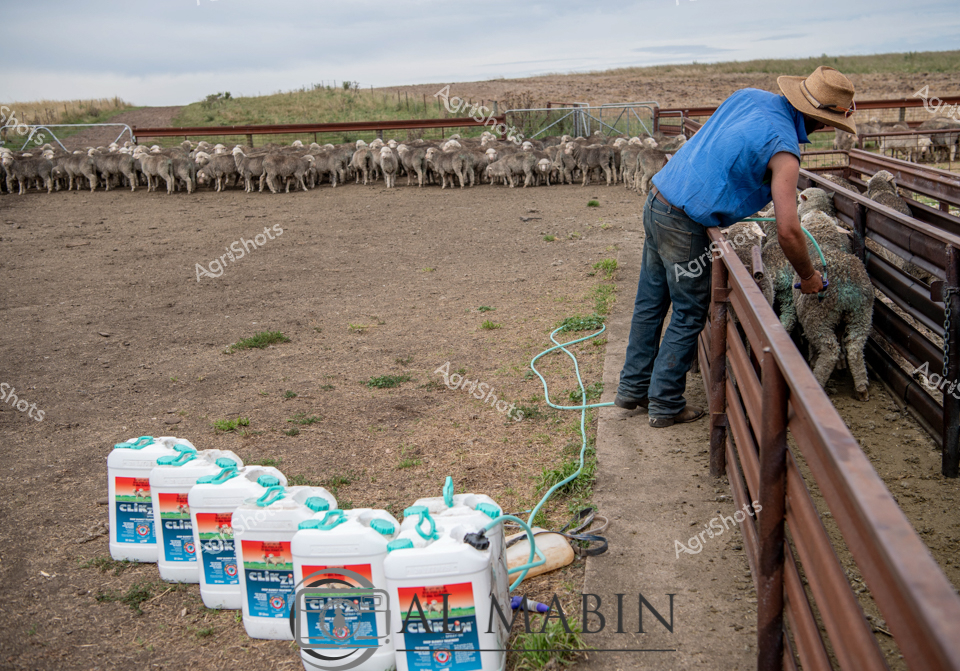
Australian sheep station: A crisp morning unfolds in the dusty yards as a worker in a vivid blue shirt and straw hat meticulously prepares for lamb management. A substantial flock of Merino sheep huddles compactly against the metal gates, their dense woolly coats displaying soft gray and white textures. In the foreground, multiple white Elanco animal health product containers with distinctive teal caps stand ready - likely a sheep treatment or parasite management solution crucial to livestock care. The rugged landscape speaks of resilience: packed earth, sparse grassland, and sturdy metal yard infrastructure frame a quintessential scene of Australian pastoral agriculture. The worker bends purposefully, handling equipment and preparing for the day's critical livestock management tasks, embodying the quiet determination of rural agricultural professionals who sustain the nation's crucial sheep farming industry.
 Image
Image
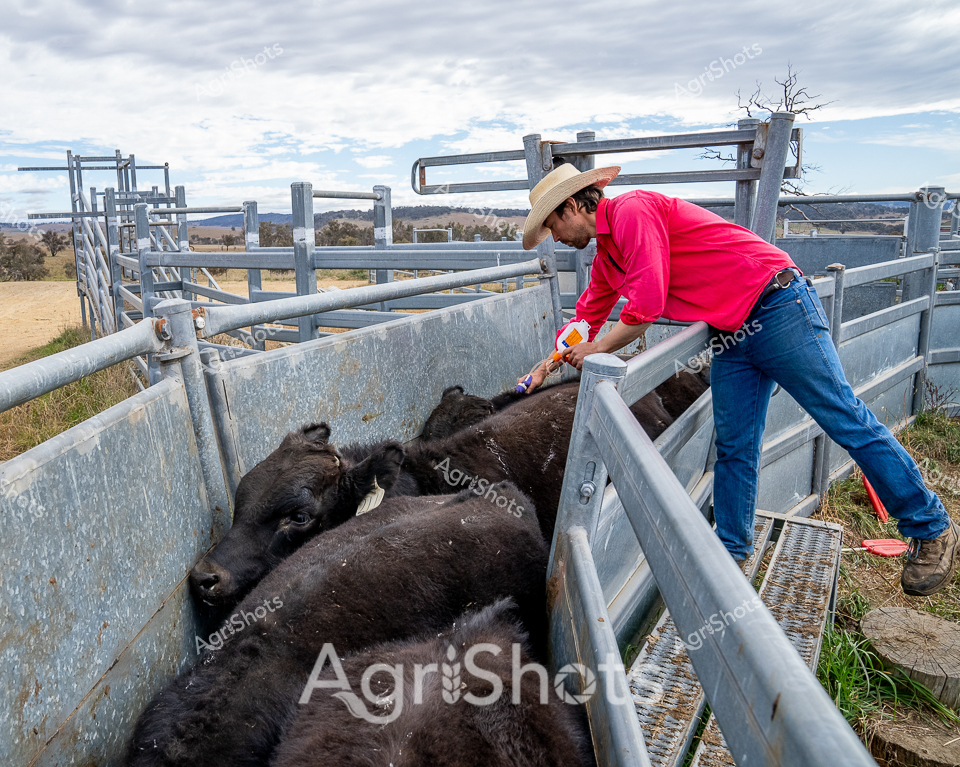
In the rolling pastoral landscape of rural New South Wales, a stockman in a vibrant pink long-sleeved shirt and straw hat administers cattle vaccination within a sturdy steel livestock handling facility. Sleek black Wagyu cattle are carefully restrained in galvanized steel gates and chutes, their muscular frames and dark coats creating a striking contrast against the muted winter grasslands and overcast sky. The stockman leans purposefully into the pen, expertly preparing to deliver an animal health treatment, demonstrating the precision and care integral to modern cattle management. Rugged steel infrastructure with grated walkways and robust railings speak to the sophisticated engineering of contemporary agricultural infrastructure, designed for both animal welfare and worker safety. Bare trees in the distant landscape and the soft, diffused light suggest a cool season, capturing the resilient spirit of Australian agricultural practice. This image encapsulates the intersection of animal husbandry, veterinary science, and the meticulous attention to livestock health that defines progressive beef production.
 Image
Image
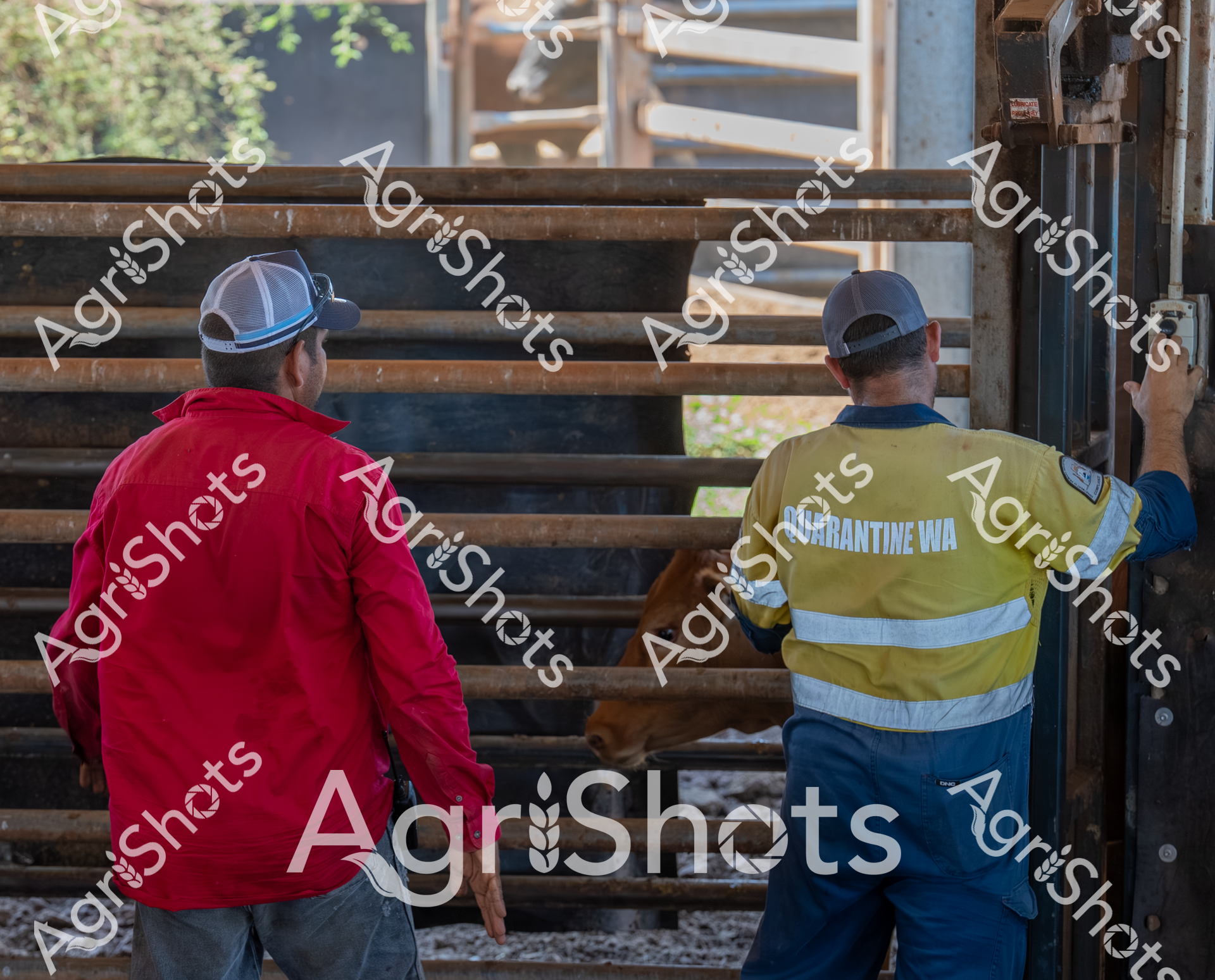
In the intense livestock management environment of a Western Australian quarantine station, two workers carefully monitor a bovine in the stock yards. The worker in a vivid red jacket and the other wearing a high-visibility yellow vest with "QUARANTINE WA" markings stand attentively alongside metal livestock handling gates. Their positioned backs suggest focused professional assessment, likely conducting a critical veterinary health check or export preparation process. The scene captures the precision and care of Australian agricultural biosecurity protocols, with the metallic yards creating a structured containment space. Soft natural light filters through nearby foliage, suggesting a mild spring morning in the Kimberley region. The workers' protective clothing and deliberate stance communicate the serious professional standards of livestock management, where every animal's health and welfare is meticulously evaluated before potential export or movement. The robust infrastructure - heavy steel gates, carefully constructed holding pens - reflects the sophisticated approach to animal handling in contemporary Australian agriculture. Their positioning suggests a moment of careful professional observation, a critical checkpoint in maintaining the nation's rigorous agricultural health standards.
 Image
Image
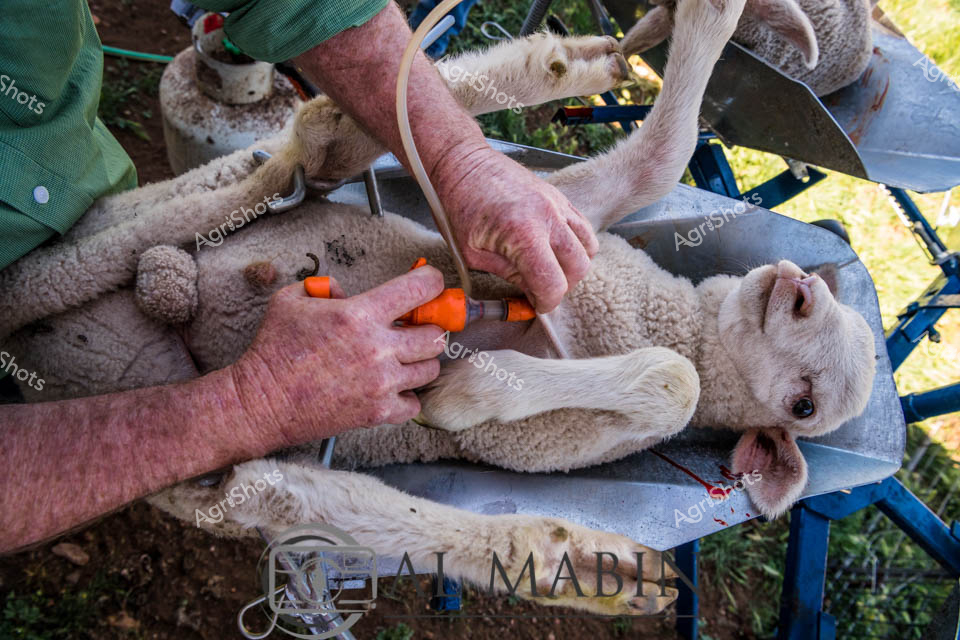
Merino lamb receives essential healthcare during annual marking season, secured on a blue metal cradle in a sunlit sheep yard. Weathered, experienced hands carefully administer a vaccine, using an orange syringe to protect the young animal's future health. The lamb's dense, creamy white fleece contrasts against the metal equipment, while surrounding lambs wait their turn in the pastoral setting. Robust green farm attire and the meticulously organized agricultural environment speak to generations of strategic livestock management in rural New South Wales. Precise veterinary procedures like this ensure the wellbeing and productivity of Australia's critical sheep industry, representing centuries of agricultural expertise. The scene captures the careful balance between animal welfare and agricultural efficiency, with soft natural light highlighting the delicate yet resilient nature of farm life.
 Image
Image
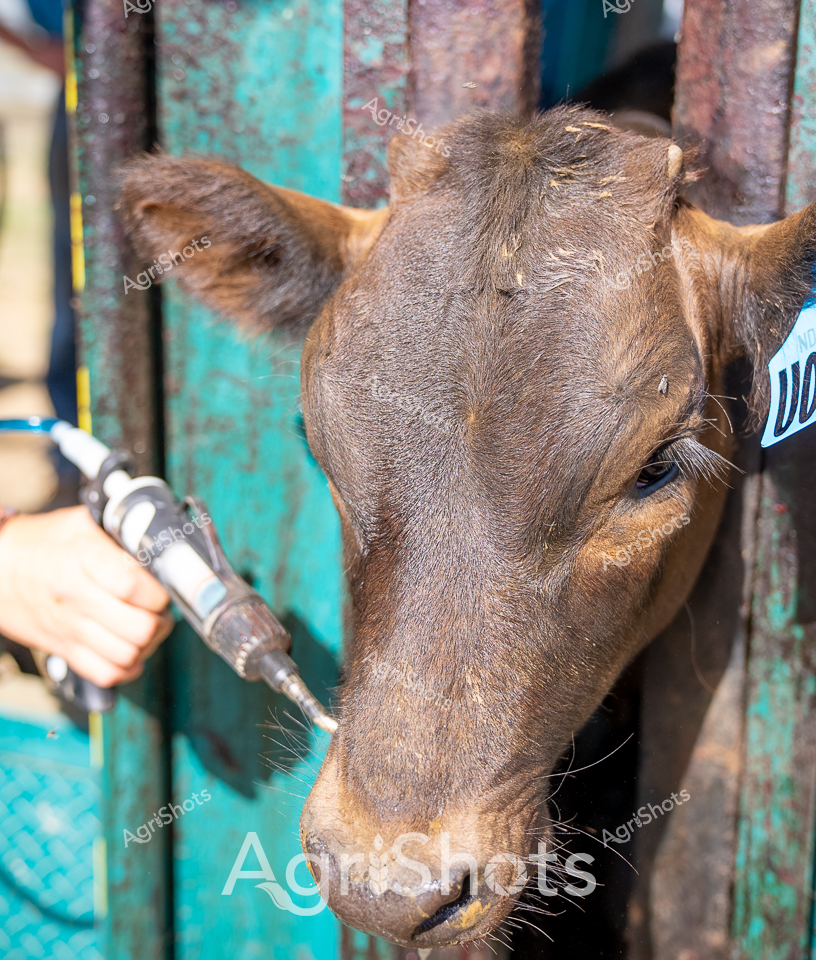
A young dairy calf stands stoically in a weathered turquoise cattle crush, its soft brown coat catching the warm light of a late summer afternoon in New England, New South Wales. The precision of animal health management unfolds as a gloved hand prepares to administer a drench medication, reflecting the careful husbandry practices of Australian cattle farmers. Rusted metal gates and worn wooden surfaces frame the scene, telling stories of generations of agricultural practice and careful animal care. The calf's ear tag hints at meticulous record-keeping, while its calm demeanor suggests the gentle handling techniques critical to modern livestock management. Soft animal hair contrasts with the industrial metalwork, capturing the delicate balance between agricultural technology and natural animal welfare. This moment represents the intersection of compassionate farming, veterinary science, and the ongoing commitment to maintaining healthy livestock in the challenging environments of rural Australia.
 Image
Image
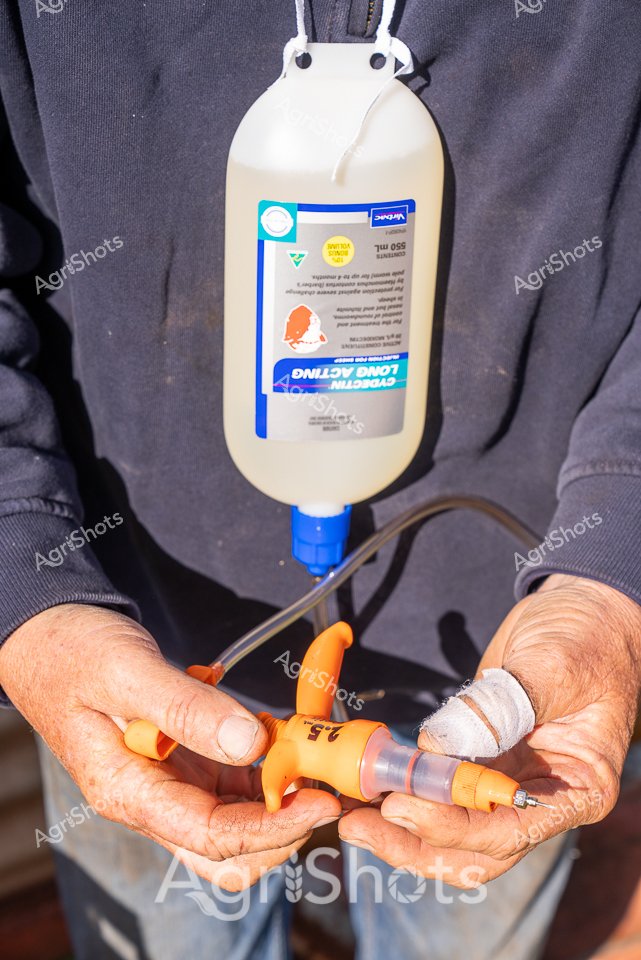
Weathered hands expertly manage a veterinary infusion set, preparing to administer long-acting medication to a flock of merino sheep. A Virbac pharmaceutical bottle hangs suspended, its white plastic container contrasting against a dark jacket, while orange-handled medical equipment is carefully manipulated. The rough, sun-weathered skin tells a story of decades spent caring for livestock across Western Australia's expansive pastoral regions. Precise movements reveal the practiced skill of an experienced agricultural worker managing animal health protocols, ensuring the wellbeing of valuable merino stock. The sterile medical implement and professional-grade medication underscore the sophisticated approach to livestock management in modern Australian agriculture. This image captures the nuanced intersection of traditional farming craft and contemporary veterinary science, where individual animal care remains central to successful sheep production.
 Image
Image
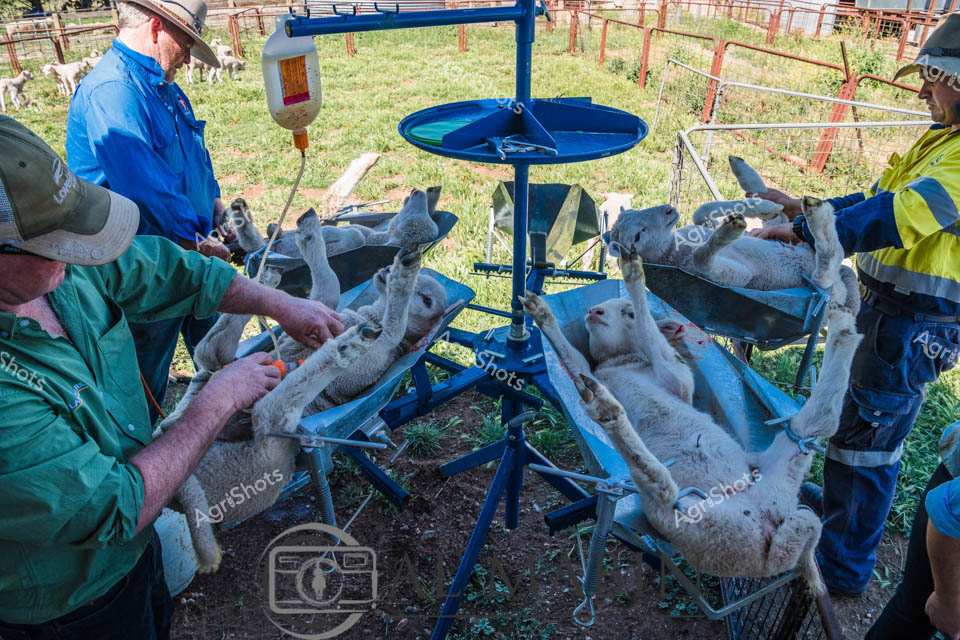
Lamb Marking Day: Rural Agricultural Practice Skilled farmhands execute a precision sheep husbandry operation in a sunlit pastoral setting, using a specialized blue rotary lamb marking platform. Lambs are carefully secured in angled cradles, allowing efficient administration of essential healthcare treatments. Workers in distinctive agricultural workwear - forest green, bright blue, and high-visibility yellow shirts - methodically process each young animal, likely administering vaccinations and performing identification procedures. The blue metal marking station represents modern agricultural technology, enabling quick and humane handling of livestock during this critical seasonal farm management task. Rustic metal yard fencing surrounds the grassy work area, suggesting a typical Australian sheep farming landscape in regional New South Wales. The scene captures the methodical, professional approach of contemporary agricultural workers, balancing animal welfare with practical farming necessities.
 Image
Image
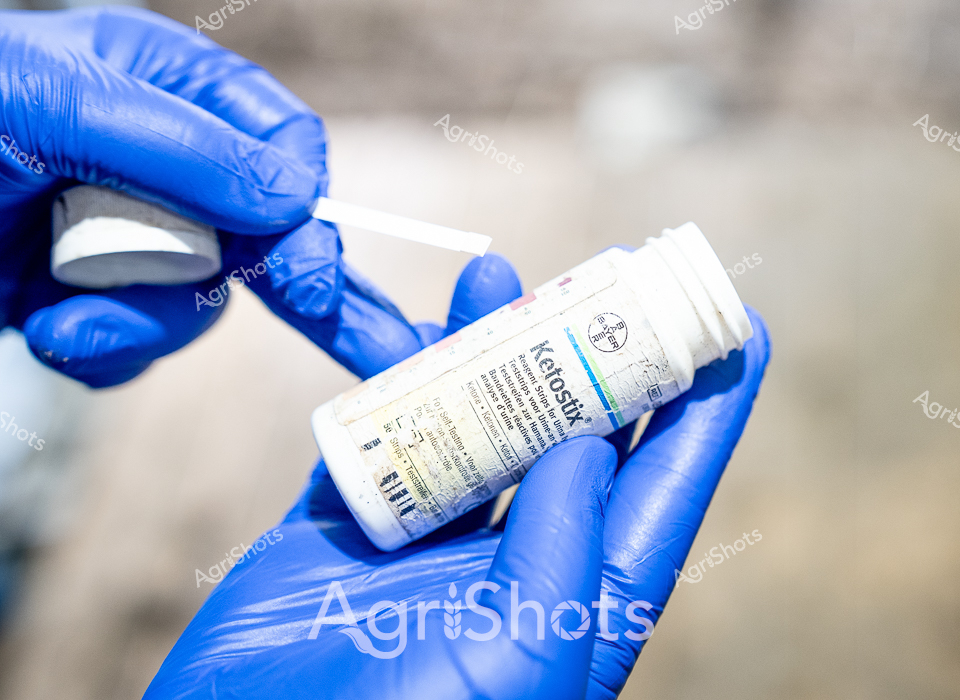
Precision and care define this veterinary diagnostic moment. Blue-gloved hands meticulously handle a Ketostix diagnostic test strip, part of critical livestock health monitoring protocols. The crisp white medical packaging bears the distinctive Bayer logo, signaling professional-grade scientific equipment used in agricultural animal wellness assessments. Against a soft, blurred background, the detailed close-up captures the careful choreography of veterinary diagnostics - each movement deliberate and focused on ensuring animal health. The vivid blue nitrile gloves represent modern agricultural safety standards, protecting both the practitioner and the diagnostic process. This image epitomizes the intersection of agricultural science, animal care, and meticulous professional practice characteristic of contemporary Australian veterinary medicine.
 Image
Image
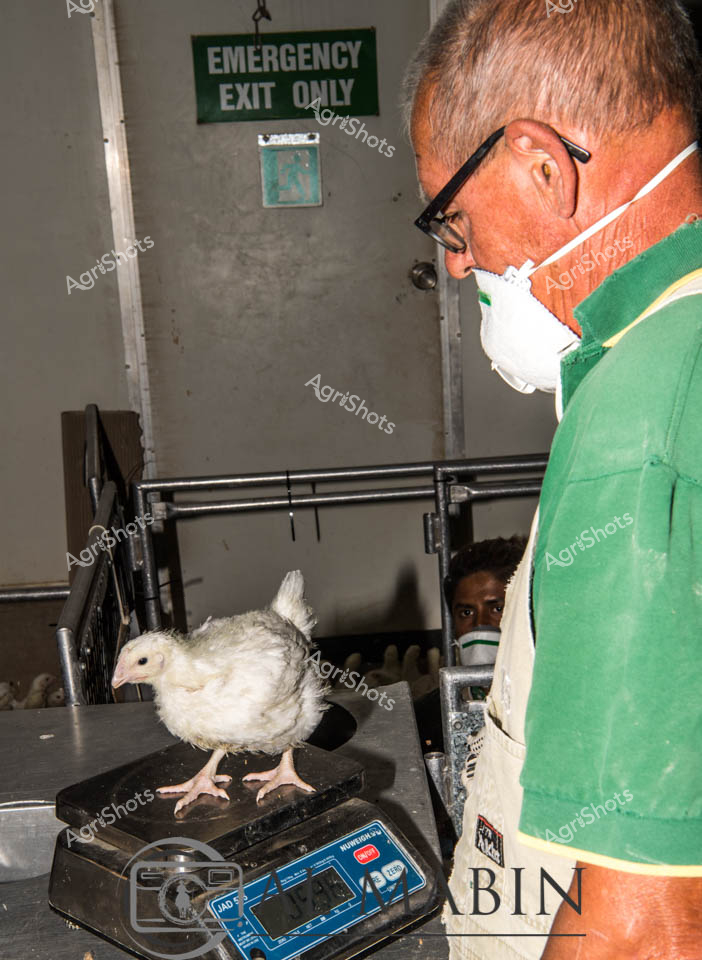
A young broiler chicken stands poised on a digital scale, its pristine white feathers contrasting against the industrial backdrop of a biosecure poultry facility. A worker wearing protective green clothing and a white face mask carefully monitors the bird's weight, part of a meticulous health and growth tracking process. An "Emergency Exit Only" sign hangs in the background, highlighting the controlled environment of modern intensive farming operations. The precise digital readout and careful handling demonstrate the scientific approach to animal husbandry in contemporary Australian poultry production. Stainless steel equipment, crisp white protective gear, and the soft downy texture of the young bird create a clinical yet careful atmosphere that speaks to advanced agricultural practices. The scene captures the intersection of animal welfare, technological precision, and agricultural expertise typical of New South Wales' sophisticated poultry farming sector.
 Image
Image
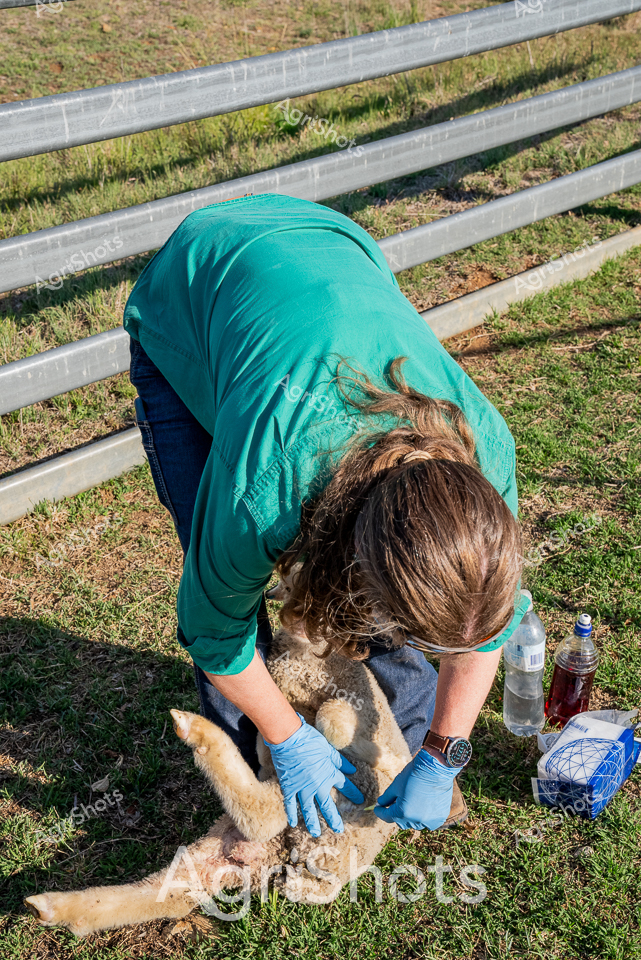
A dedicated agricultural professional tends to a young Merino lamb alongside a rural highway guardrail. Wearing a vivid teal work shirt and blue protective gloves, the individual carefully examines the lamb, likely treating a medical condition or performing routine healthcare procedures. The lamb's soft, pale fleece contrasts against the grassy roadside verge, with water and medical bottles positioned nearby, suggesting a professional veterinary intervention. Harsh midday sunlight casts sharp shadows, highlighting the meticulous care being administered in this roadside agricultural scene. Rural infrastructure and grassland provide a classic Australian agricultural backdrop, emphasizing the constant vigilance required in livestock management. The image captures the essential, often unseen work of veterinary and agricultural professionals who ensure the health and wellbeing of livestock in challenging environments.
 Image
Image
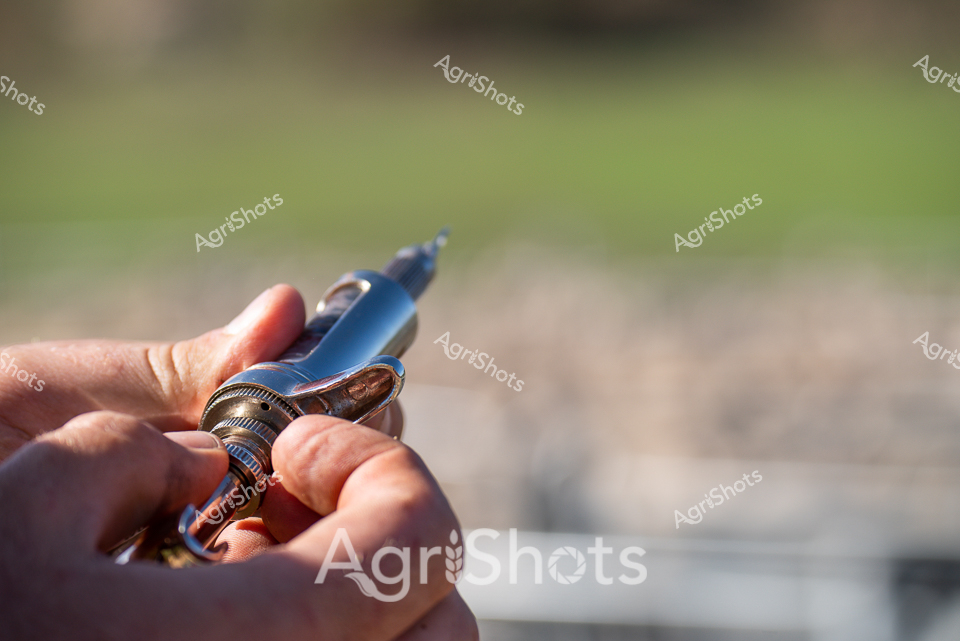
A weathered hand grips a precise veterinary vaccination tool, its metallic blue shaft gleaming against a soft, out-of-focus rural landscape. The close-up reveals the intricate mechanism of a sheep vaccination device, a critical instrument in maintaining the health of a valuable Merino flock. Sunlight catches the metallic edges, highlighting the tool's precision engineering designed for efficient animal health management. The blurred background suggests an open pastoral setting, typical of Western Australia's expansive sheep country, where careful livestock care is fundamental to agricultural success. Every curve and connection of the vaccination tool speaks to the careful, methodical approach of modern sheep farmers in protecting their investment and ensuring the wellbeing of their animals. This image captures the intersection of agricultural technology and animal husbandry, embodying the meticulous care that defines Australian sheep farming.
 Image
Image
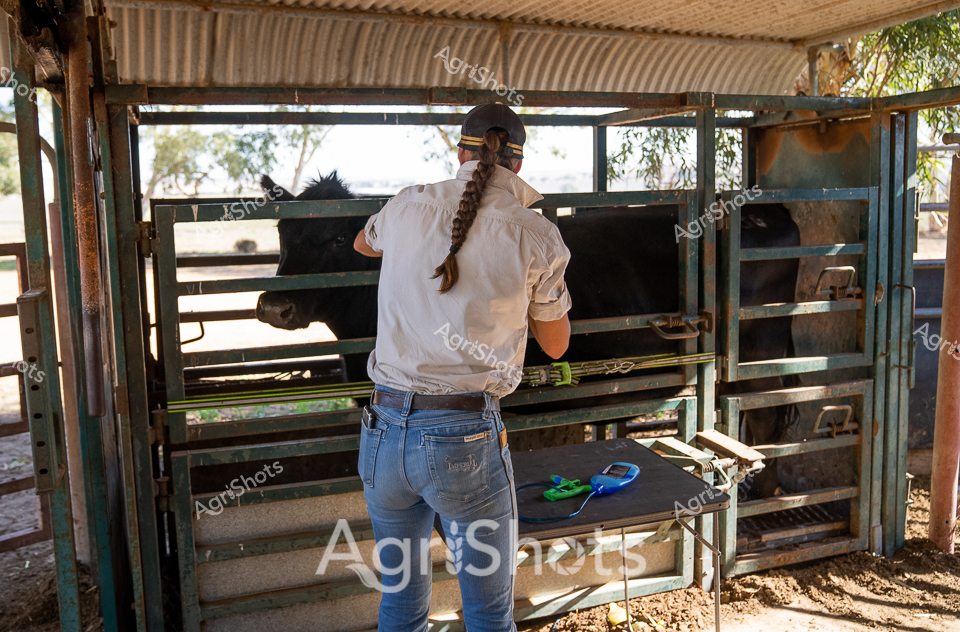
A seasoned agricultural worker tends to cattle in a sturdy metal livestock handling facility, her braided hair tucked under a cap as she prepares to administer veterinary care. The corrugated metal roof provides shade in what appears to be a typical West Australian cattle yard, with glimpses of sparse trees and open landscape visible through the metal bars. Dressed in a crisp white work shirt and well-worn blue jeans, she stands focused near a Warwick cattle crush - a critical piece of equipment that safely restrains cattle for medical procedures, vaccinations, and health checks. Vibrant green and blue tools sit nearby, suggesting a methodical approach to animal health management. The metal gates and crush are a weathered green-grey, telling a story of countless seasons of agricultural work. This scene captures the precision, care, and quiet expertise of modern livestock management - a testament to the skilled professionals who ensure the health and welfare of Australia's beef cattle herds.
 Image
Image
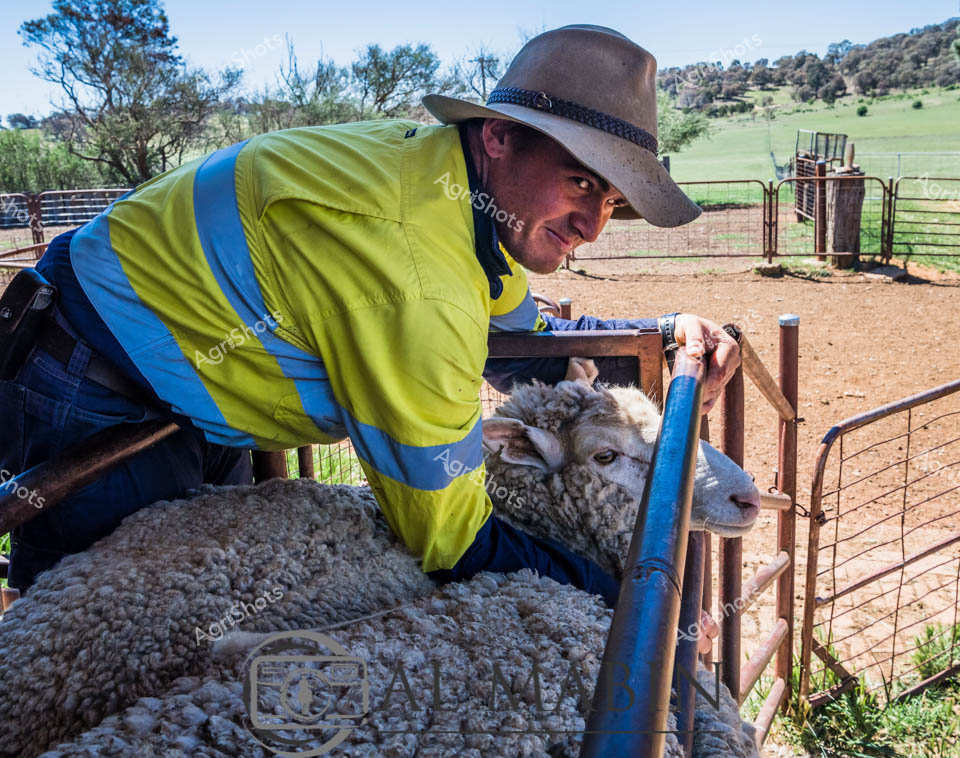
An agricultural worker in a high-visibility yellow and blue safety vest and classic rural felt hat tends to sheep in a rustic livestock holding yard. Set in the rolling pastoral landscape of rural New South Wales, the scene captures an intense moment of animal husbandry as the worker carefully manages a flock of woolly merino ewes. The dry, packed earthen yard surrounds a blue metal livestock handling gate, with verdant paddocks and sparse trees visible in the background. Precise and methodical, the worker is positioned closely with the sheep, likely performing a critical health inspection or treatment process such as backlining - a technique for protecting livestock from parasites. The rich texture of the sheep's dense fleece contrasts with the worker's modern safety equipment, symbolizing the blend of traditional farming practices and contemporary agricultural safety standards. Warm natural light illuminates the scene, suggesting a mid-morning workflow in the late winter or early spring season when sheep require careful management before shearing.
 Image
Image
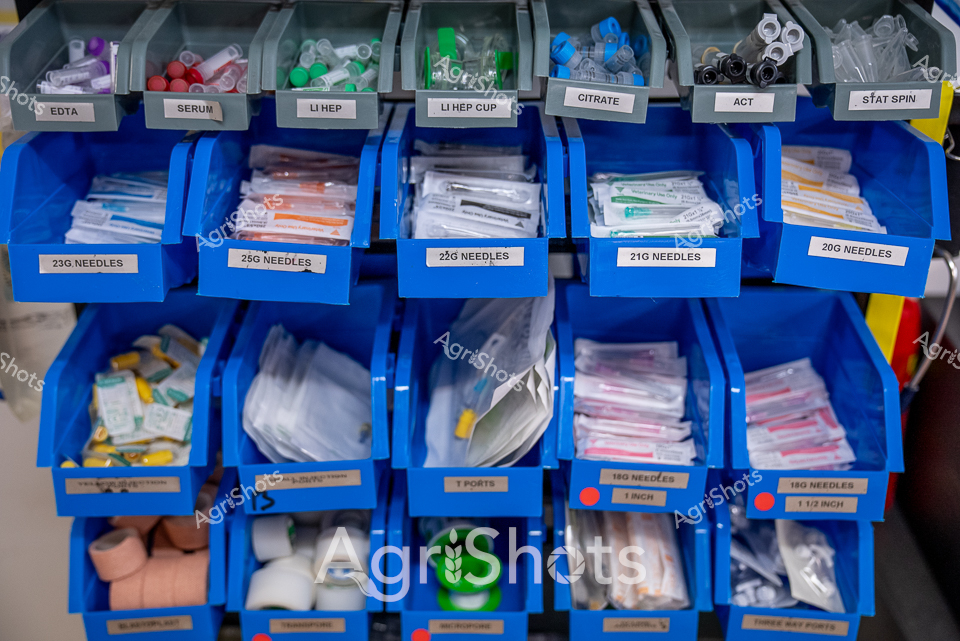
Medical precision meets agricultural care in this meticulously organized veterinary supply station. Rows of azure blue storage bins cascade with carefully labeled compartments, housing an array of medical supplies critical for livestock health management. Precise labels for needle sizes - ranging from 20G to 23G - sit alongside specialized collection tubes marked with scientific identifiers like EDTA, Serum, and Citrate, revealing the sophisticated medical infrastructure supporting animal healthcare. Transparent plastic containers in the top row contain various colored caps and collection tools, suggesting a systematic approach to blood draws, testing, and diagnostic procedures typical of modern veterinary practice. The regimented arrangement speaks to the clinical expertise required in agricultural animal health, where every instrument and specimen represents a crucial link in maintaining livestock wellbeing. This organizational system exemplifies the intersection of scientific rigor and agricultural stewardship, highlighting the advanced medical technologies employed in contemporary rural veterinary care.
 Image
Image
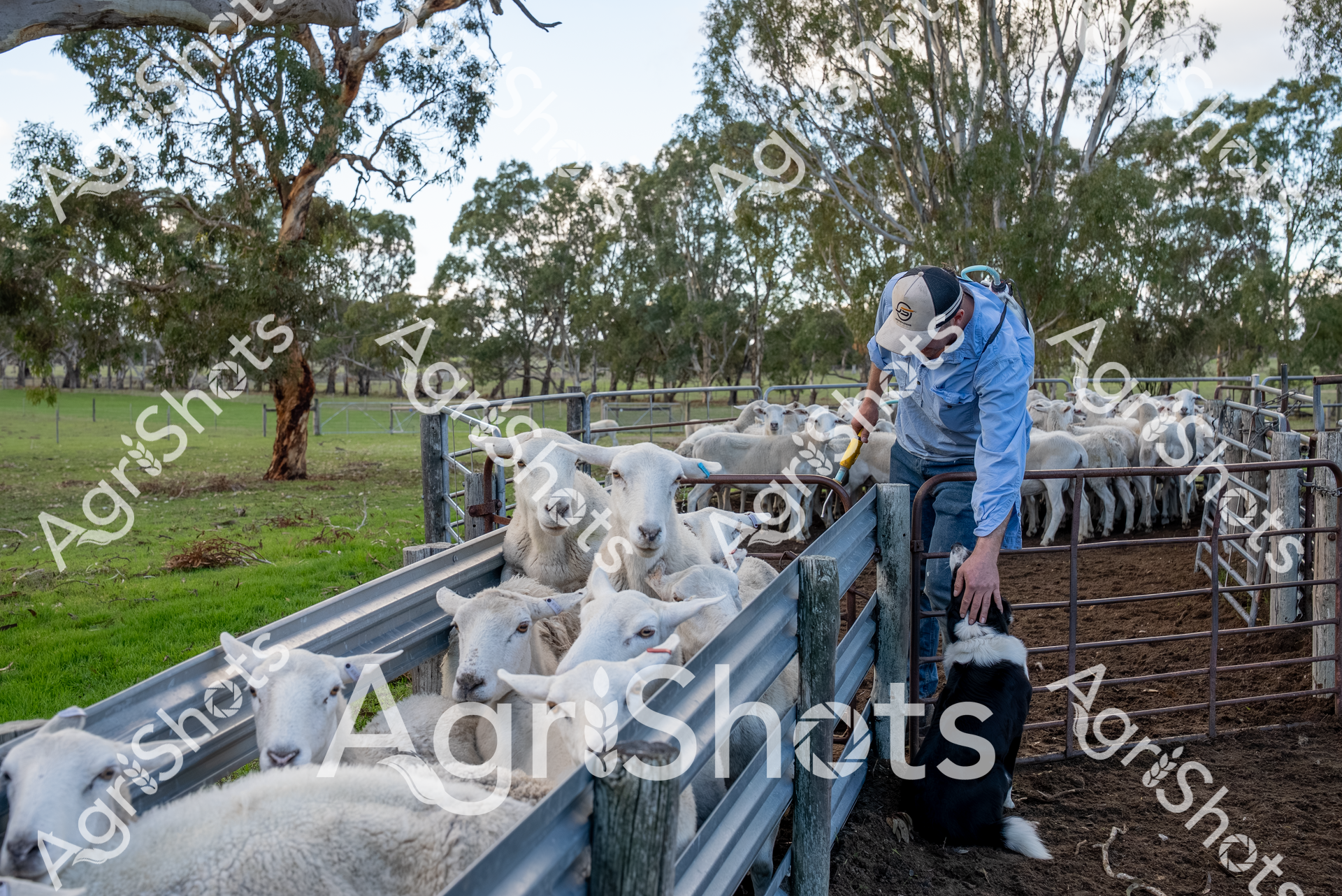
Merino lambs crowd the steel gate of a rural sheep yard, their pristine white fleece contrasting against the muddy earth and weathered wooden fence posts. A skilled farmworker in a blue workshirt and cap carefully administers animal health treatment, methodically drenching the young stock to ensure their wellbeing during what appears to be a green winter season in South Australia's southeast region. Towering eucalyptus trees frame the pastoral landscape, offering a backdrop of silvery-green foliage that speaks to the resilience of Australian agricultural environments. A loyal working dog sits attentively beside the yards, ready to assist with livestock management, embodying the traditional partnership between farmer, canine, and sheep that has defined rural Australian life for generations. The scene captures a moment of quiet diligence - a routine yet critical task in maintaining the health of a valuable Merino flock during what looks like a mild winter with unexpected green pasture growth, known locally as a "green drought". Every detail speaks to the careful, considered approach of modern Australian sheep farming - a delicate balance of animal husbandry, environmental awareness, and generational agricultural expertise.
 Image
Image
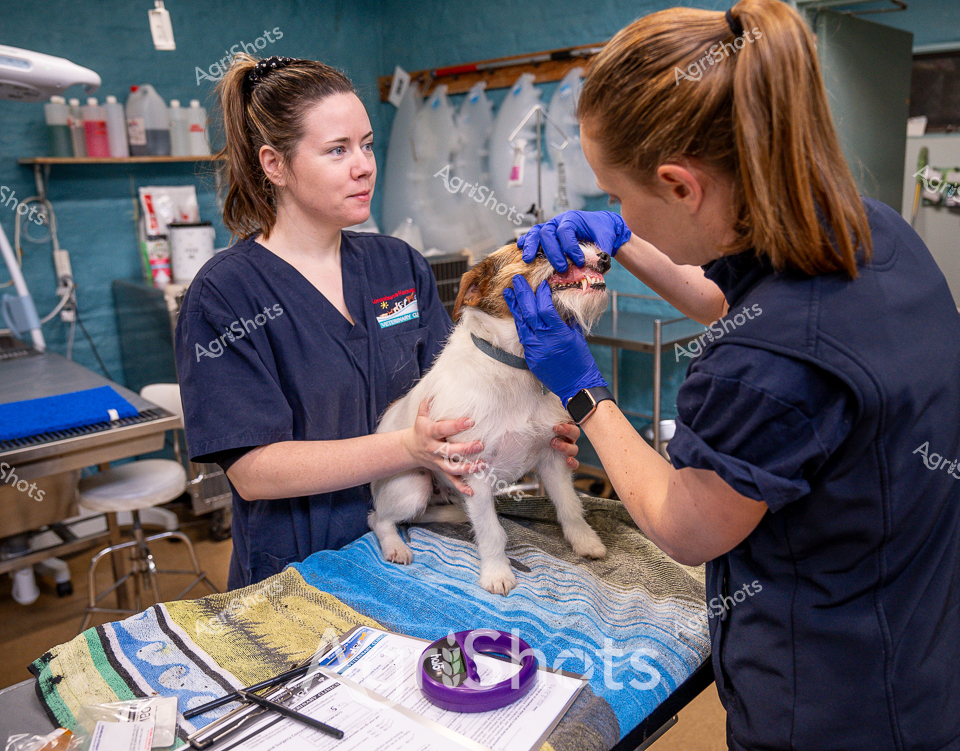
Veterinary professionals perform a thorough dental examination on a small white and tan dog in a clinical setting. Dressed in navy blue scrubs and wearing protective blue gloves, two veterinary nurses carefully assess the animal's oral health on a blue and yellow striped examination towel. One nurse holds the dog steady while the other gently pulls back its lips to inspect its teeth, demonstrating precise and compassionate animal care. Surrounding them, the room is equipped with medical supplies, bottles, and diagnostic tools, creating a sterile and professional environment typical of a modern veterinary clinic. The image captures the meticulous attention to detail required in animal healthcare, showcasing the skill and dedication of veterinary staff in providing comprehensive medical treatment. The soft teal walls and clinical equipment underscore the scientific and caring nature of veterinary medicine, highlighting the important role of animal health professionals in maintaining the well-being of companion animals.
 Image
Image
Rural veterinary care unfolds in a robust steel cattle crush, where two agricultural workers prepare to administer livestock health treatment. A lean beef cattle stands calmly within the narrow metal gates of the processing unit, surrounded by sturdy steel panels and a corrugated iron roof casting dappled shade. One worker in a white top and blue jeans stands with focused concentration, while another in a vibrant raspberry-colored jacket observes from the side, representing the collaborative nature of modern agricultural practice. The yard's sandy floor and glimpses of native trees in the background suggest a classic Western Australian pastoral setting, highlighting the essential work of animal health management. Precise veterinary equipment sits on a nearby table, ready for vaccination or treatment, symbolizing the careful, professional approach to livestock welfare. This scene captures the quiet expertise of women in agriculture, demonstrating their critical role in maintaining the health and productivity of Australia's beef cattle industry.
 Image
Image
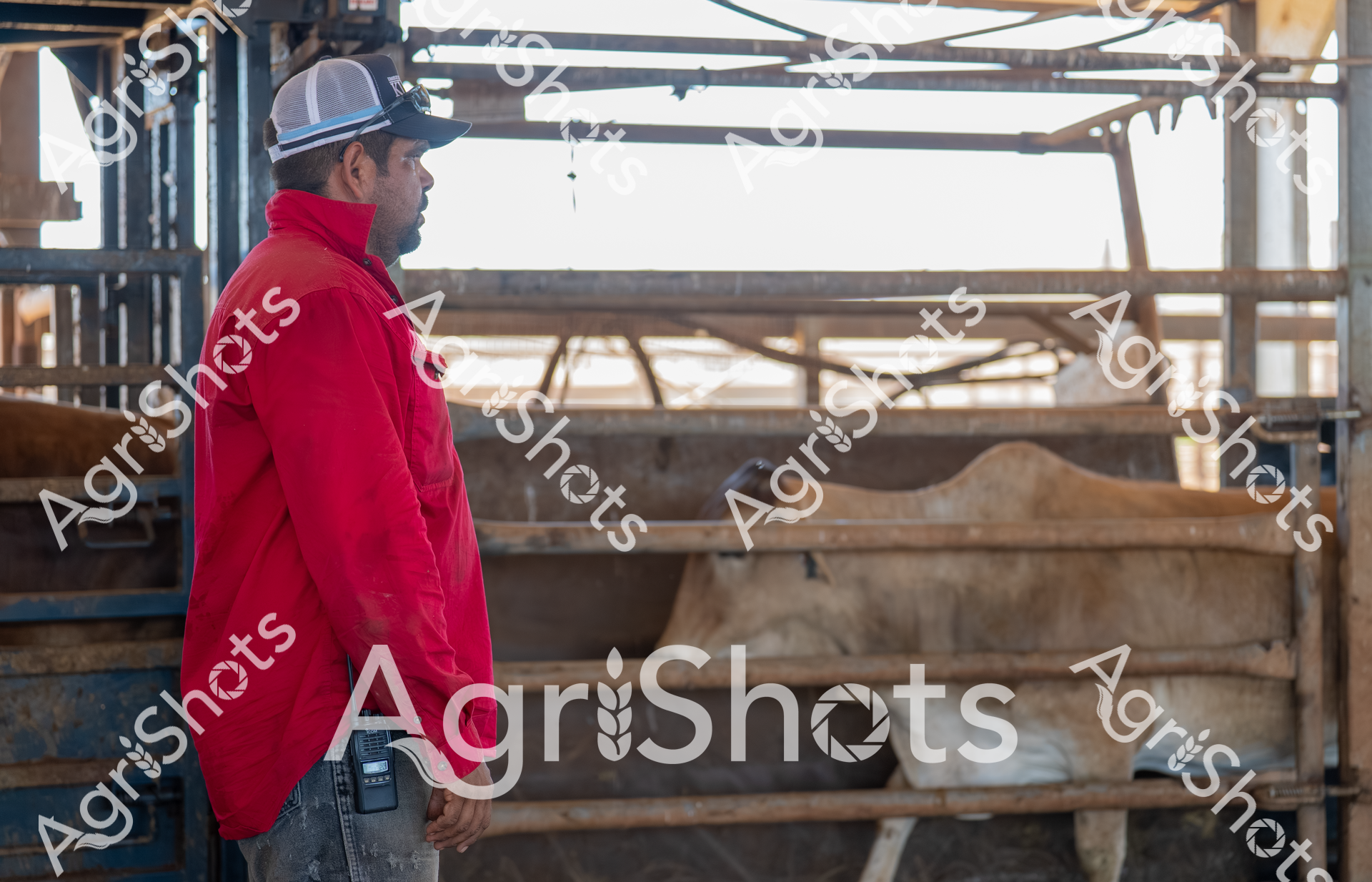
In the expansive cattle yards of Western Australia's Kimberley region, a stockman in a vibrant red jacket stands sentinel, monitoring the health of cattle during a critical quarantine and veterinary inspection. Wearing a mesh-backed cap and with a handheld radio at his hip, he surveys the holding pens with a professional's attentive gaze. The robust steel infrastructure of the export yards creates a structured environment, with sturdy metal fencing and strategic architectural elements that facilitate safe livestock management. A light-colored beast rests quietly in the adjacent pen, embodying the calm efficiency of this agricultural setting during a spring season health check. The muted tones of the cattle yard contrast sharply with the stockman's bright red jacket, symbolizing both the practical safety protocols and the human presence in Australia's expansive livestock industry. The scene captures the meticulous care and professional oversight essential to maintaining the health and export readiness of Australian cattle.
 Image
Image
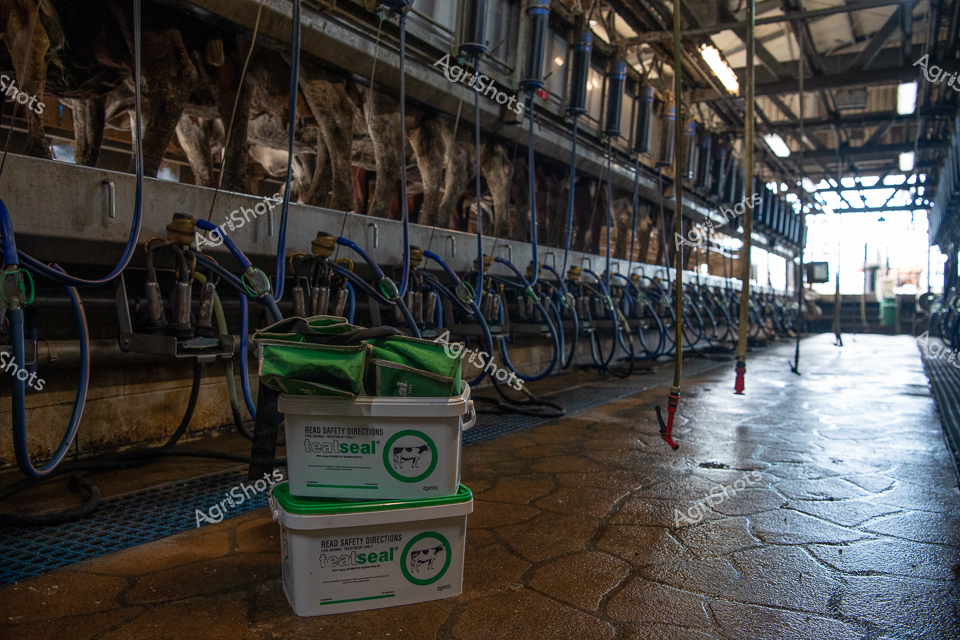
Milking time in a classic New South Wales dairy shed reveals the precision of modern livestock management. Stainless steel milking clusters hang in perfect alignment along a concrete platform, blue tubes connecting each station in a rhythmic industrial landscape. In the foreground, white buckets of Teat Seal product stand ready - a critical component of dairy cow udder health and preparation between milking cycles. Soft morning light filters through the shed's high windows, casting long shadows across the textured concrete floor and illuminating the gleaming metal infrastructure. This meticulously organized space speaks to the careful science of dairy production, where animal welfare and agricultural efficiency intersect. The green and white branding of the Zoetis Teat Seal containers signals a commitment to progressive animal health practices, typical of contemporary Australian dairy operations.
 Image
Image
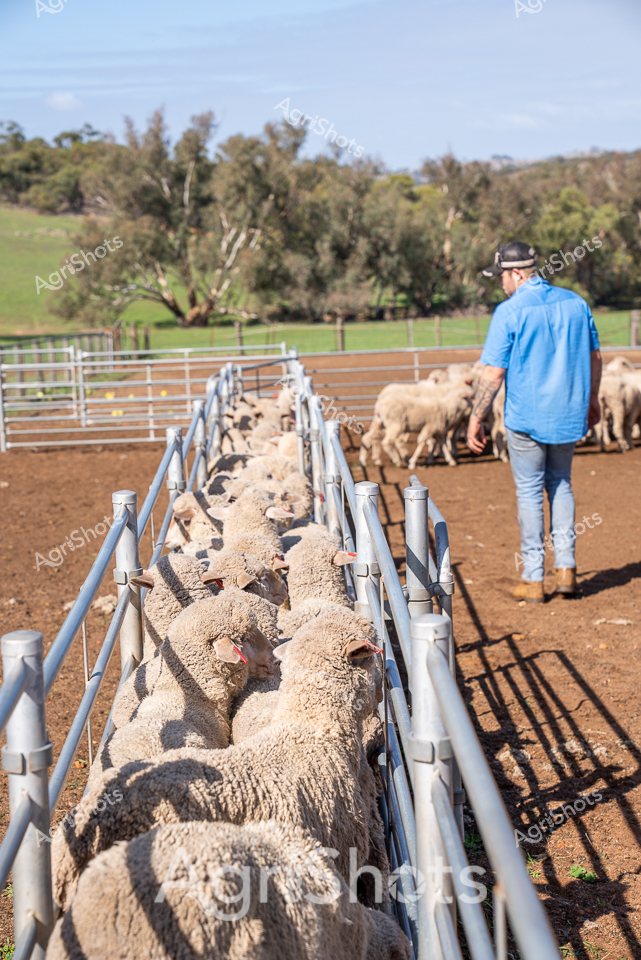
Merino ewes line up methodically in steel holding yards, their dense, creamy-white wool gleaming under the clear West Australian midday sunlight. A farm worker in a bright blue shirt and classic denim jeans carefully monitors the flock, standing watchfully beside the metal livestock race. The carefully constructed yards sit on rich brown earth, with a verdant paddock and scattered eucalyptus trees softening the background landscape. These carefully managed sheep represent the pinnacle of Australian agricultural precision - each animal a potential asset in the critical wool and meat production chain. The steel yards' clean lines and strategic design demonstrate modern livestock management techniques, allowing controlled movement and efficient health monitoring. Shadows cast by the animals and yards create intricate patterns across the ground, highlighting the geometric intersection of agricultural infrastructure and living creatures in this quintessential rural Australian scene.
 Image
Image
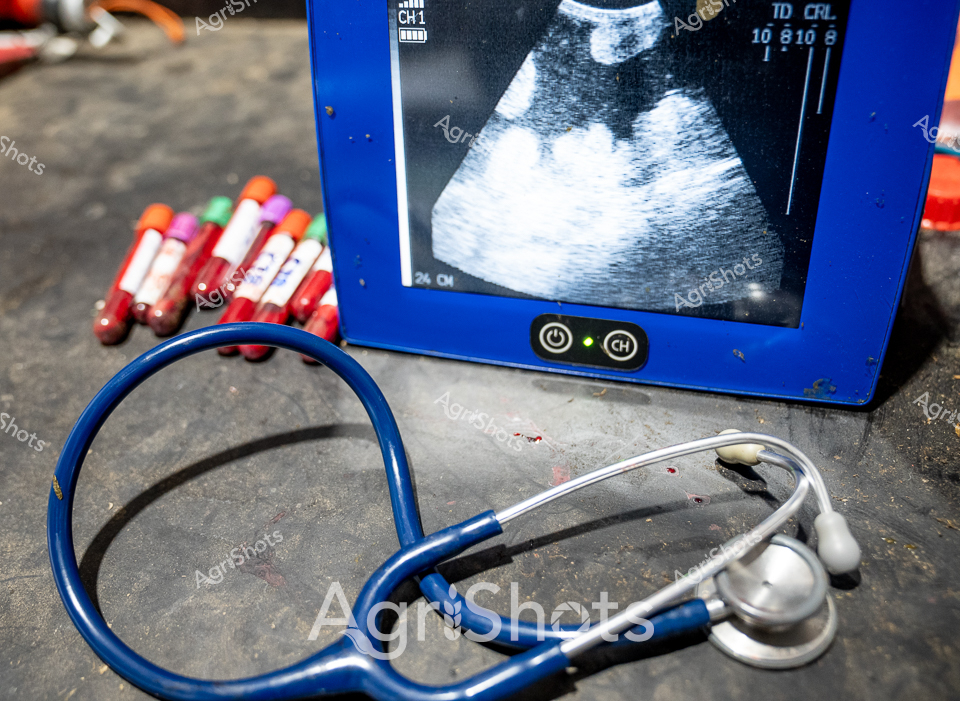
Ultrasound technology stands ready in a rustic veterinary diagnostics setting, with a blue portable ultrasound monitor displaying a crisp grayscale image of what appears to be a pregnancy scan. A navy blue stethoscope curves alongside an array of vibrant test tubes in shades of red, orange, and purple, suggesting comprehensive animal health testing procedures. The precision medical equipment rests on a weathered concrete surface, hinting at a robust rural veterinary practice focused on livestock reproductive health and diagnostics. The sophisticated Easi Scan device represents cutting-edge agricultural science, enabling farmers and veterinarians to efficiently monitor livestock breeding programs with advanced technological tools. Rich blues of the medical equipment contrast against the warm metallic tones of the test tubes, creating a clinical yet purposeful atmosphere that speaks to the meticulous care and scientific approach of modern agricultural animal management. This scene captures the intersection of agricultural expertise, veterinary science, and technological innovation in supporting livestock health and productivity.
 Video
Video
Australian cattle yards pulse with methodical precision during a critical livestock management moment. A worker in a vivid orange safety vest stands adjacent to a robust Proway steel cattle handling system, with an array of veterinary equipment suspended from the central processing pole. Multicolored restraint straps and vaccination tools hang ready for animal health interventions, suggesting a carefully choreographed process of cattle treatment and welfare monitoring. The earthen floor and metallic yard infrastructure create a textural landscape of agricultural infrastructure, highlighting the robust engineering designed to safely manage livestock. Soft natural light filters through the open-sided shelter, casting subtle shadows across the controlled workspace and emphasizing the systematic approach to beef cattle management. This scene represents the intersection of animal husbandry, technological innovation, and professional agricultural practice characteristic of modern Australian cattle production.
 Image
Image
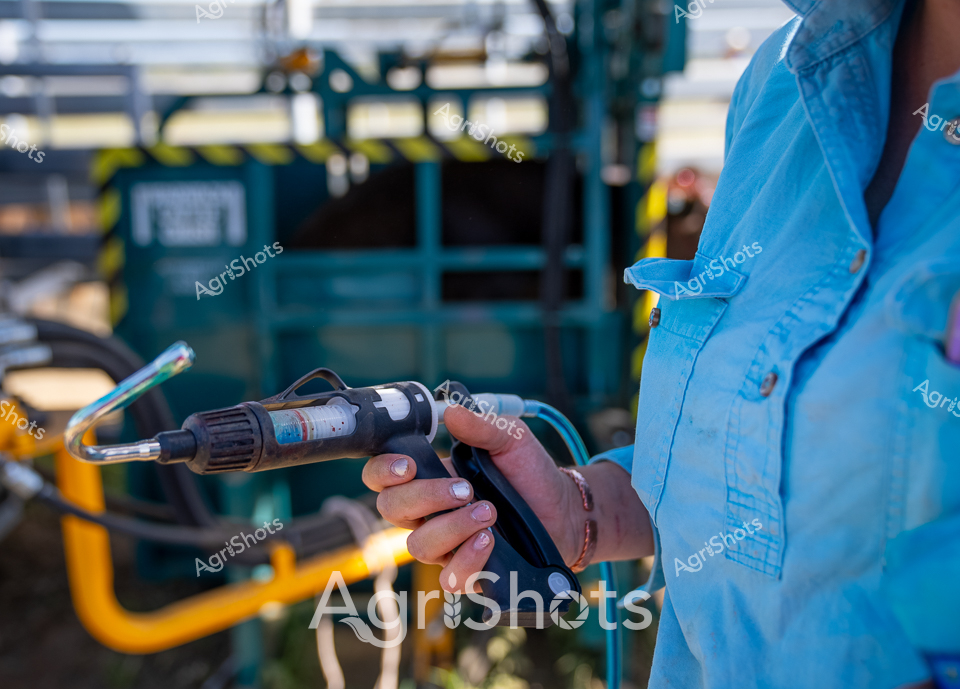
A seasoned agricultural worker in a crisp blue chambray shirt operates a precision drenching gun within the robust steel framework of a cattle crush at a livestock facility. The metallic blue-green equipment surrounds the worker, providing a controlled environment for administering veterinary treatments to young cattle. Carefully gripping the specialized dosing instrument, the worker demonstrates practiced skill and care in managing animal health protocols. Yellow safety barriers and structural elements frame the scene, highlighting the systematic approach to livestock management in the New England region of New South Wales. The cool, measured action speaks to the meticulous nature of modern agricultural practice, where technology and expertise combine to ensure the wellbeing of valuable livestock. Warm sunlight filters across the scene, suggesting a summer or early autumn day, when routine animal health procedures are typically conducted with efficiency and professionalism.
 Image
Image
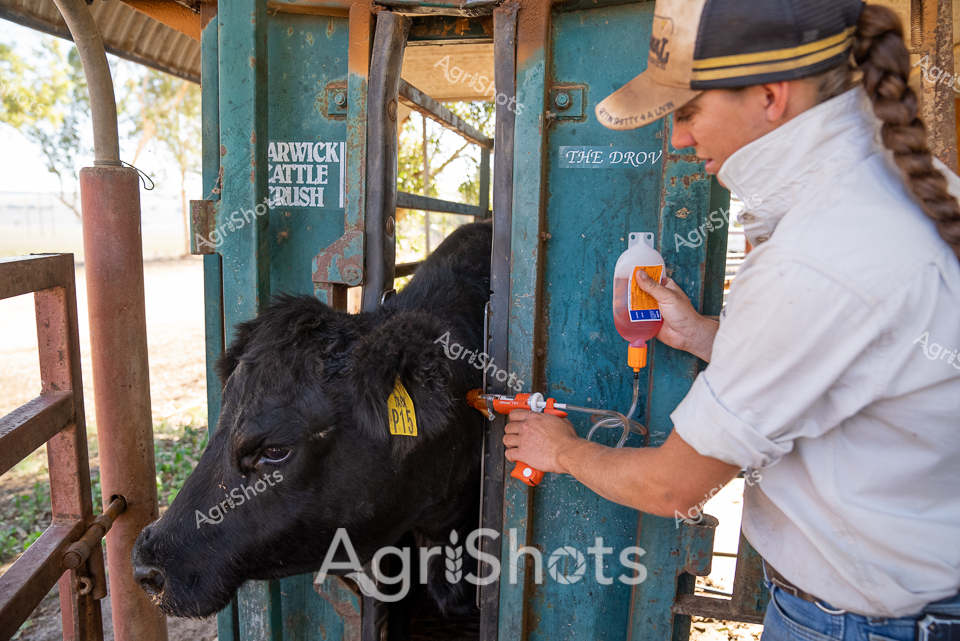
Warwick Cattle Crush captures a critical moment of livestock management in the golden light of a rural morning. A sleek black beef cow stands restrained in a teal-blue steel cattle crush, her yellow ear tag identifying her within the herd. A skilled agricultural worker, wearing a white shirt and cap, carefully administers a vaccination, her hands steady and precise with the orange-handled syringe and medication bottle. The crush, branded with "Warwick Cattle Crush" markings, provides a secure environment for essential animal health procedures, highlighting the meticulous care and professional approach of modern agricultural practice. Dappled sunlight filters through nearby trees, casting soft shadows on the rustic metal infrastructure of the cattle yards. This scene embodies the intersection of animal welfare, veterinary science, and the dedicated expertise of contemporary farming professionals in Western Australia.
 Image
Image
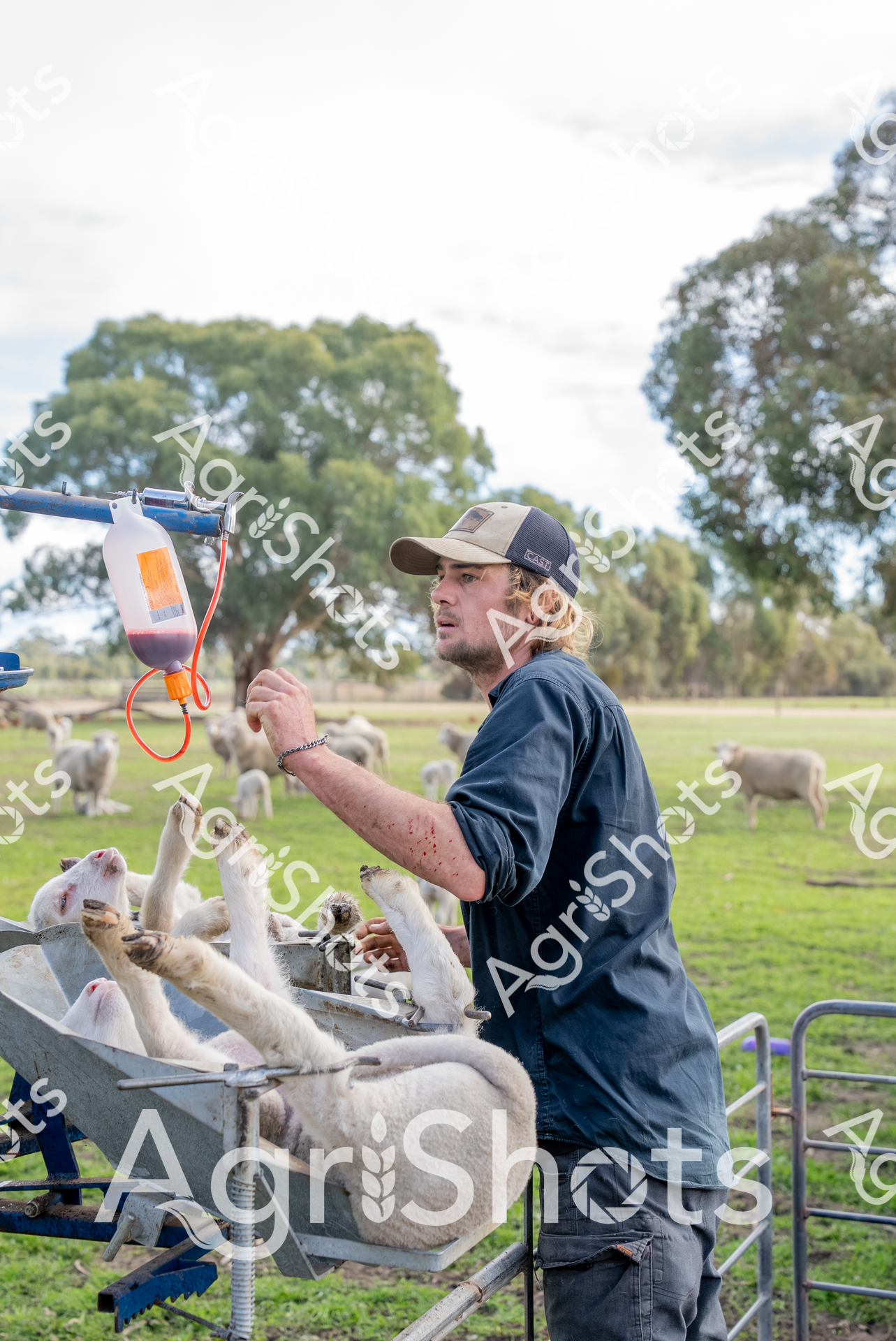
A skilled farmhand administers a Glanvac vaccination to young lambs during a winter marking session in the lush paddocks of South Australia's southeast region. Dressed in a navy work shirt and a two-tone cap, the agricultural worker carefully handles each lamb in the metal cradle, methodically preparing them for critical animal health treatments. The surrounding landscape tells a story of a "green drought" - verdant pastures masking the underlying agricultural challenges, with mature gum trees softening the background and a small flock of sheep grazing peacefully in the distance. An intravenous bag hangs from a blue metal frame, ready to deliver essential immunizations that protect the livestock's future productivity. The scene captures the meticulous care and expertise of modern sheep farming, where animal welfare and health management are paramount to sustainable agricultural practices. Blood spatters on the worker's arm speak to the hands-on, sometimes messy reality of livestock management, highlighting the gritty authenticity of rural work.
 Image
Image
A cattle yard operator in a white jacket and pink-trimmed cap stands attentively at a sophisticated agricultural monitoring station, interfacing with a Catagra cattle management system. Precision hydraulic controls and digital screens display complex livestock handling technology, with multiple valve controls and a rugged yellow handheld device mounted alongside a large touchscreen computer. The metallic infrastructure suggests a modern, high-tech approach to animal health and livestock management, typical of advanced Australian cattle operations. Sleek stainless steel equipment, complex piping, and integrated digital interfaces reveal a sophisticated approach to livestock handling and monitoring, representing the cutting edge of agricultural technology in rural Australia. The cool blue sky and glimpse of trees in the background suggest a crisp morning in a well-maintained agricultural facility, likely in New South Wales cattle country. This scene captures the intersection of traditional farming practices with contemporary digital innovation, showcasing how technology is transforming livestock management.
 Image
Image
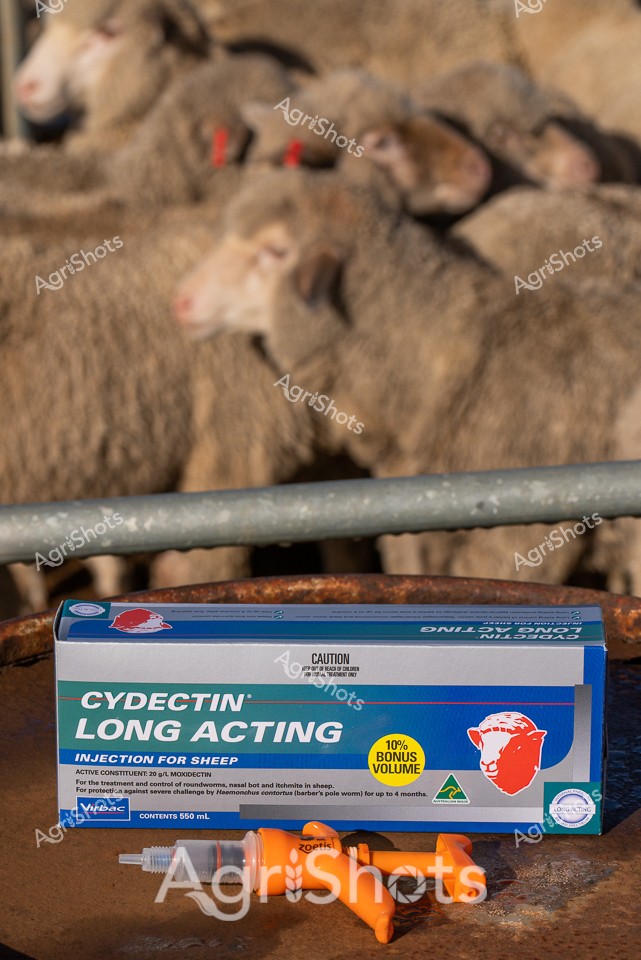
Merino ewes cluster tightly in weathered wooden sheep yards, their dense, cream-colored fleece creating a textural backdrop of woolly bodies. A Cydectin Long Acting injection kit sits prominently in the foreground, its blue and white packaging promising crucial parasite control for the flock. The distinctive orange veterinary applicator suggests precision livestock management, critical to maintaining the health of these valuable agricultural assets. Rusted metal railings and a galvanized steel pipe frame the scene, capturing the robust, no-nonsense environment of a working Western Australian sheep station. The soft winter light suggests early morning, with the muted tones of the landscape highlighting the importance of animal health interventions in maintaining productive livestock. This image encapsulates the meticulous care and strategic management required in modern sheep farming, where preventative treatments like this long-acting injectable are essential to flock welfare and agricultural productivity.
 Image
Image
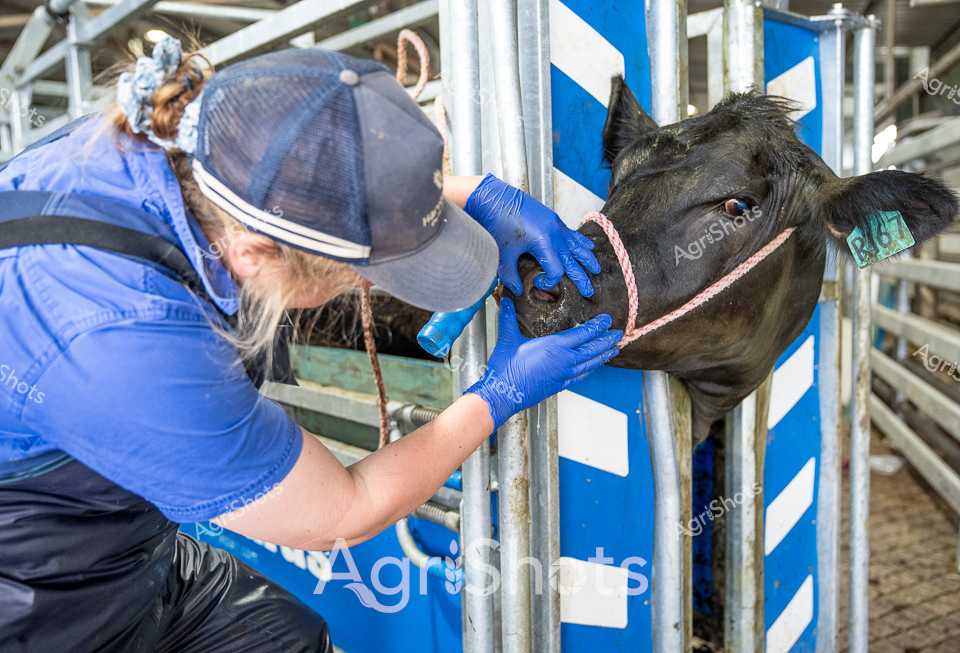
Rural veterinarian performs a detailed health check on a young Angus heifer in a modern blue and white cattle crush. Wearing protective blue latex gloves and a navy mesh-backed cap, the professional carefully examines the dark-coated animal's head and facial features. The livestock handling equipment, manufactured by Te Pari, provides a secure and controlled environment for precise animal diagnostics. Soft morning light filters through the metal yard infrastructure, highlighting the careful, gentle interaction between the veterinarian and the calm black bovine. The heifer's green ear tag indicates precise record-keeping and individual animal tracking, typical of modern Australian agricultural management practices. This scene captures the critical intersection of animal welfare, professional veterinary science, and sustainable livestock production in regional Victoria.
 Image
Image
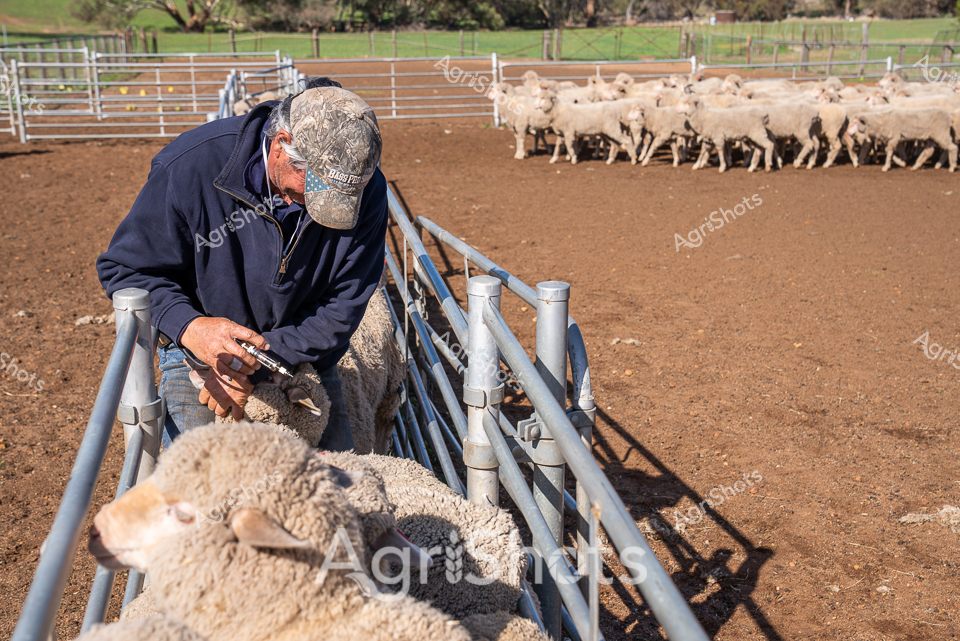
Merino sheep cluster in a compact yard of rusty earth and metal gates under soft midday light, while a seasoned farmer in a navy jacket and camouflage cap carefully administers vaccination. The weathered agricultural worker leans into the steel livestock handling system, methodically treating each animal with practiced precision. Woolly Merino bodies press against the galvanized steel rails, their cream and tan fleeces contrasting with the rich brown paddock ground. In the background, green pasture and distant tree lines suggest a classic Western Australian sheep farming landscape - open, sunlit, and purposeful. The scene captures the quiet concentration of rural veterinary work, where animal welfare and agricultural productivity intersect with generations of farming expertise. Every detailed movement speaks to the careful, unsentimental care that defines Australian sheep husbandry.
 Image
Image
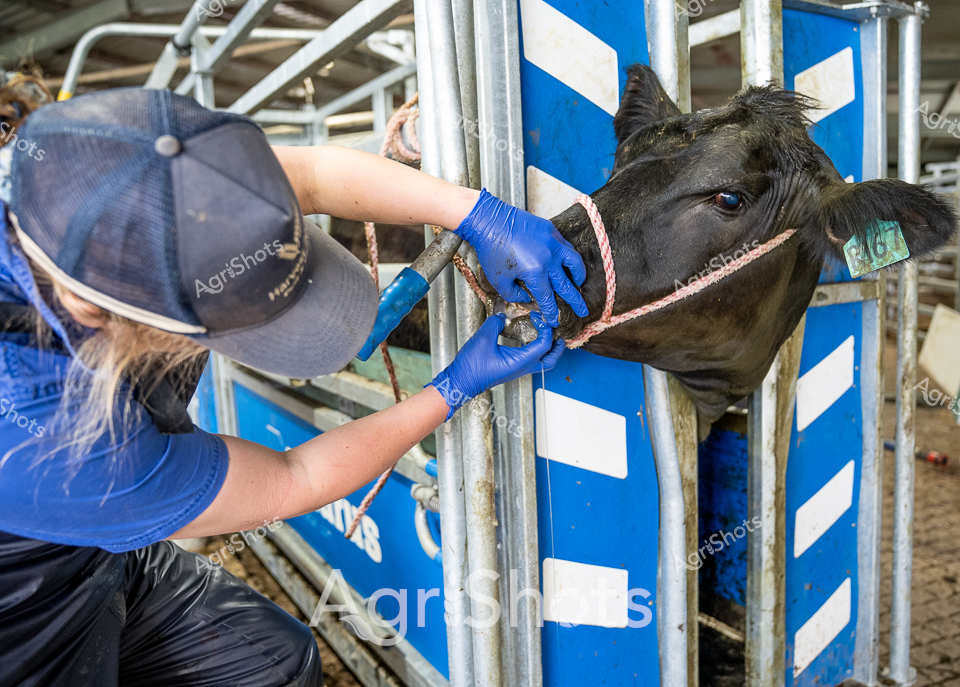
A veterinarian in blue gloves and a navy cap tends to a young Angus heifer within a precision-engineered blue and white cattle handling system. The animal stands calmly in a Te Pari cattle crush, an essential piece of livestock management infrastructure that allows safe, controlled examination and treatment. Wearing protective blue nitrile gloves, the professional gently approaches the dark-coated bovine, likely performing a routine health check or diagnostic procedure. The metallic infrastructure's bold blue and white striped panels provide a clinical, structured backdrop that highlights the careful interaction between agricultural professional and livestock. The heifer, marked with a green ear tag, demonstrates the quiet trust developed through expert animal handling techniques. This scene captures the critical intersection of animal welfare, veterinary science, and modern agricultural practice, showcasing the meticulous care fundamental to successful livestock management in rural Victoria.
 Image
Image
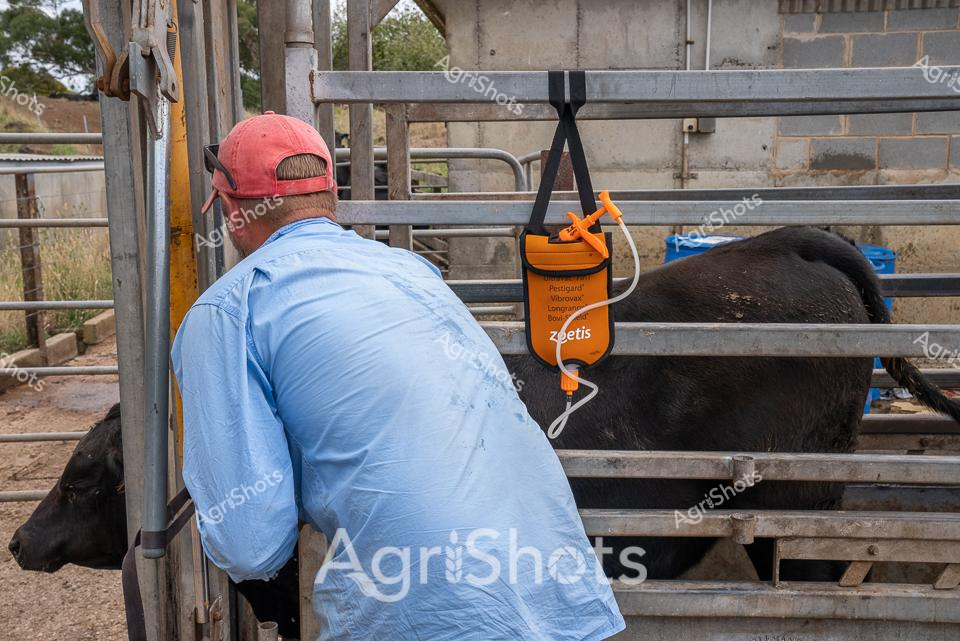
Cattle management unfolds in a weathered Victorian livestock yard, where an experienced farm worker tends to a group of black Angus cattle. Wearing a pale blue work shirt and a red cap, the individual carefully administers a veterinary treatment using a bright orange Zoetis vaccination device. The robust cattle stand patiently in metal holding pens, their deep black coats contrasting against the concrete block wall and rusted metal infrastructure. Harsh midday sunlight casts sharp shadows, highlighting the utilitarian nature of this essential agricultural routine. The scene captures the precision and care of modern livestock health management, where animal welfare and systematic preventative treatments ensure the ongoing productivity of a beef cattle operation. Every element - from the specialized equipment to the carefully designed yard infrastructure - speaks to the professional approach of contemporary Australian agricultural practices.
 Image
Image
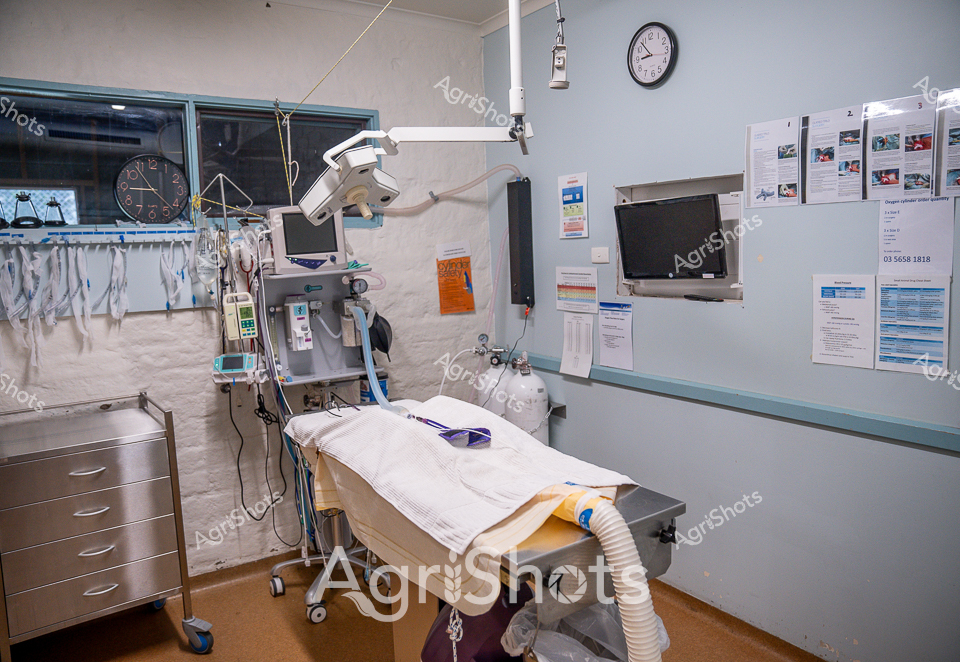
Sterile and precise, this veterinary operating theatre captures the meticulous environment of animal healthcare. Crisp white walls frame a clinical workspace with advanced medical equipment, including a sophisticated monitoring system and articulated surgical lamp. A white-draped examination table awaits a patient, with carefully organized medical instruments and documentation charts visible on the surrounding walls. Stainless steel drawers and a wall-mounted computer screen underscore the professional, high-tech nature of modern veterinary medicine. Soft blue-grey tones and pristine surfaces create an atmosphere of calm preparation and scientific precision, reflecting the critical care provided to agricultural livestock. Two wall clocks suggest careful timing and monitoring are essential in this specialized medical environment, highlighting the sophisticated approach to animal health management in Victoria's agricultural sector.
 Image
Image
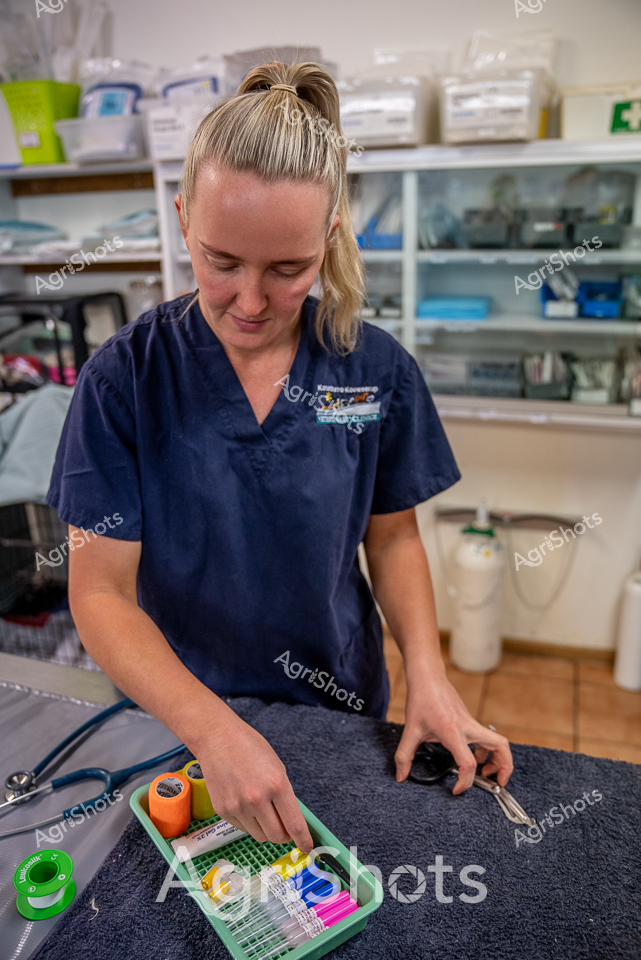
A veterinary professional prepares for diagnostic testing in a meticulously organized clinical setting. Wearing deep navy medical scrubs, the clinician stands at a charcoal-colored examination table surrounded by shelved storage of medical supplies. Her blonde hair pulled back precisely, she focuses intently on arranging a tray of color-coded test tubes and medical instruments. Vibrant green and orange supply containers punctuate the clinical white and blue background, suggesting a modern, well-equipped veterinary facility. Precision and care are evident in her careful positioning of diagnostic tools, reflecting the critical role of animal health professionals in agricultural medicine. The scene captures the technical expertise and methodical approach required in contemporary veterinary practice, highlighting the intersection of scientific rigor and compassionate animal care.
 Image
Image
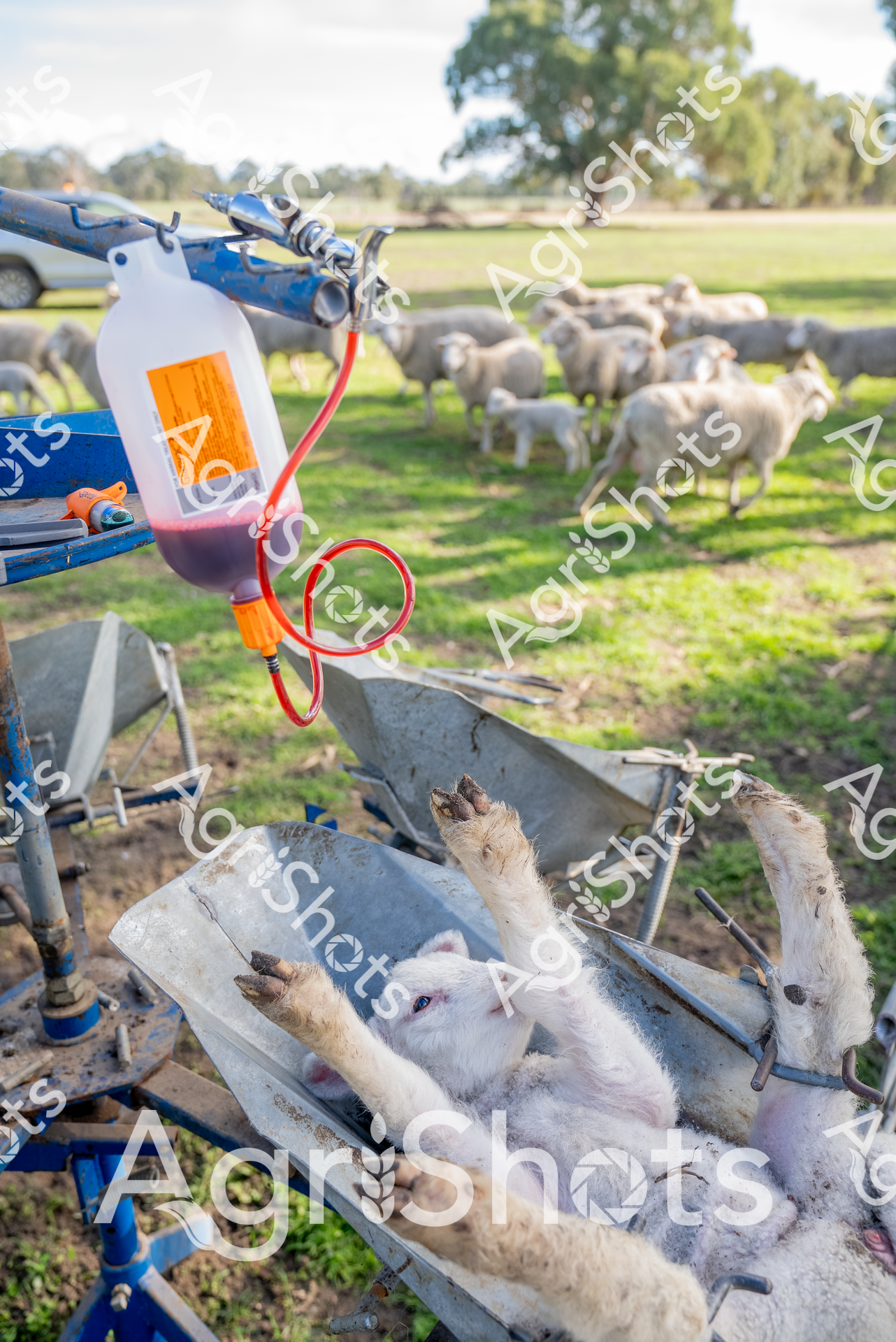
Lamb marking season unfolds on a crisp winter morning in South Australia's verdant southeast. A cluster of young lambs nestles in a steel marking cradle, their woolly bodies positioned for essential health treatments. A Glanvac vaccination bottle hangs from the blue metal framework, its red-orange label and tube poised to deliver critical immunization. The surrounding pasture reveals a green drought landscape - lush grass concealing the underlying moisture stress, with mature sheep grazing peacefully in the background. Precision and care mark this agricultural moment, where animal welfare meets farming necessity. The scene captures the delicate balance of livestock management, with modern veterinary technology ensuring the flock's resilience against potential disease in challenging environmental conditions.
 Image
Image
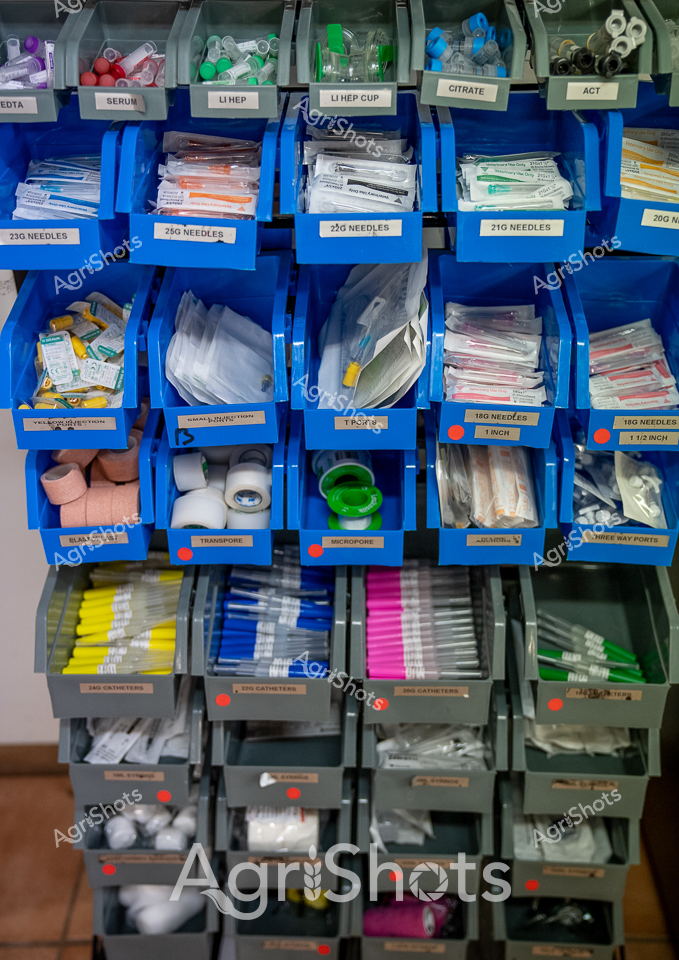
A meticulously organized medical supply storage system reveals the precision of veterinary healthcare, with rows of blue and grey compartments systematically housing an array of essential medical implements. Carefully labeled sections contain an intricate collection of needles in various gauges, sterile tubes, surgical supplies, and specialized veterinary equipment, each neatly sorted and readily accessible. The clinical organization speaks to the exacting standards of animal health management, with color-coded containers and precise labeling indicating a professional approach to livestock medical care. Transparent containers in the upper shelves hold different colored medical components - green, white, and clear vessels suggesting a comprehensive range of diagnostic and treatment tools. The systematic arrangement reflects the careful, methodical approach required in veterinary medicine, where every item must be quickly identifiable and within immediate reach. This storage system represents the backbone of rural veterinary practice, ensuring that animal health professionals can respond swiftly and accurately to the medical needs of livestock across Victoria's agricultural regions.
 Image
Image
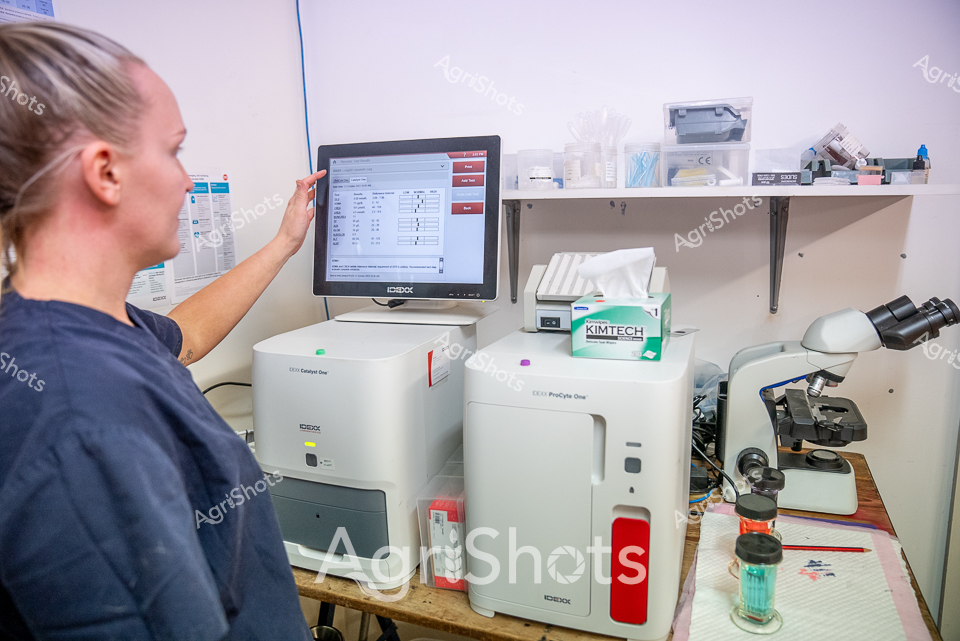
Precision animal health diagnostics unfold in this state-of-the-art veterinary laboratory. A professional in deep blue medical attire operates a sophisticated diagnostic workstation, carefully monitoring data on a crisp computer screen. Advanced laboratory equipment—including a high-resolution microscope and specialized testing devices—creates a meticulously organized workspace. White medical devices with distinctive red accents stand alongside scientific instruments, suggesting cutting-edge veterinary research and diagnostic capabilities. Kimtech laboratory tissues and carefully arranged scientific glassware underscore the technical rigor of agricultural animal health monitoring. The cool, clinical environment speaks to the critical intersection of technology and veterinary science, where detailed analysis supports the health and productivity of livestock populations across rural Australia.
 Video
Video
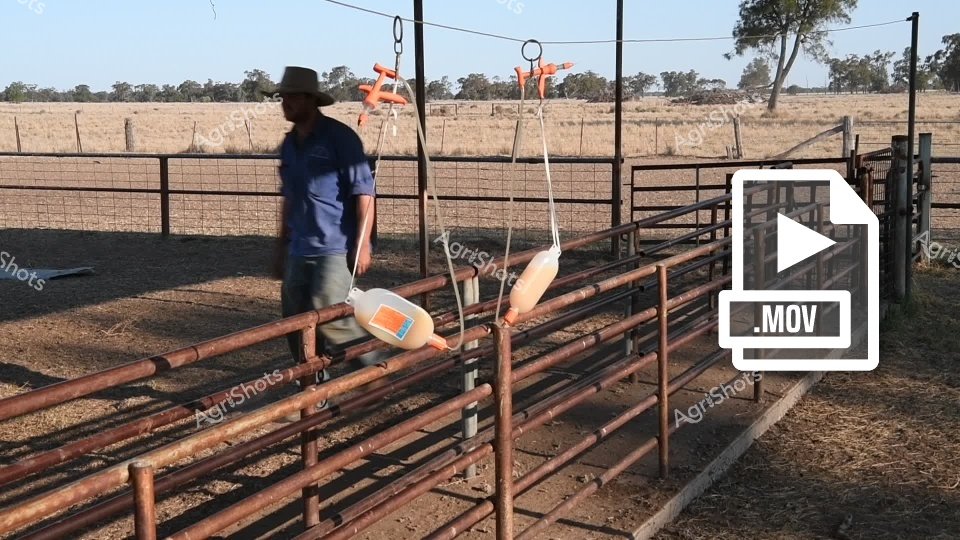
In the expansive sheep yards of New South Wales, a dedicated farm worker meticulously prepares for the vaccination of Merino sheep. The warm afternoon sun casts a golden hue over the landscape, highlighting the earthy tones of the dusty ground and the rustic metal fencing. With a well-worn wide-brimmed hat shielding him from the sun, he dons a deep blue shirt that contrasts with the neutral colors of the surroundings and the woolly coats of the sheep. Tethered against the backdrop of gentle rolling hills, the sheep gather in anticipation, their fleece shimmering softly under the light. Vibrant orange vaccination equipment hangs strategically, ready for use, while loyal dogs navigate the space, ensuring the sheep remain calm and orderly. The atmosphere is filled with a sense of purpose and low-key camaraderie, evoking the timeless bond between farmers and their livestock. As the sound of soft bleating fills the air, the scene embodies the essence of rural life—hard work, dedication, and the vital role of animal health in agriculture. Dust motes dance in the sunlight, enhancing the tranquil yet industrious mood of this vital moment in the farming calendar.
 Image
Image
A veterinarian in a soft blue paisley shirt and hair neatly gathered in a top knot performs a careful health examination on a dark Angus steer. Kneeling intently across the animal's broad back, she uses her stethoscope to listen closely, her yellow-tinted glasses catching the dappled sunlight filtering through tree branches overhead. The rich black coat of the cattle contrasts against the grassy ground, suggesting this pastoral scene is likely set in the New England region of New South Wales during late summer or early autumn. Insects hover lightly around the animal, and the ground shows signs of dry seasonal conditions typical of rural Australian agricultural landscapes. Her professional and gentle approach reflects the critical role of veterinary care in maintaining livestock health, embodying the expertise and dedication of women working in agricultural sciences. The image captures a moment of precise, compassionate animal husbandry - a testament to the skill and commitment required in modern cattle management.
 Image
Image
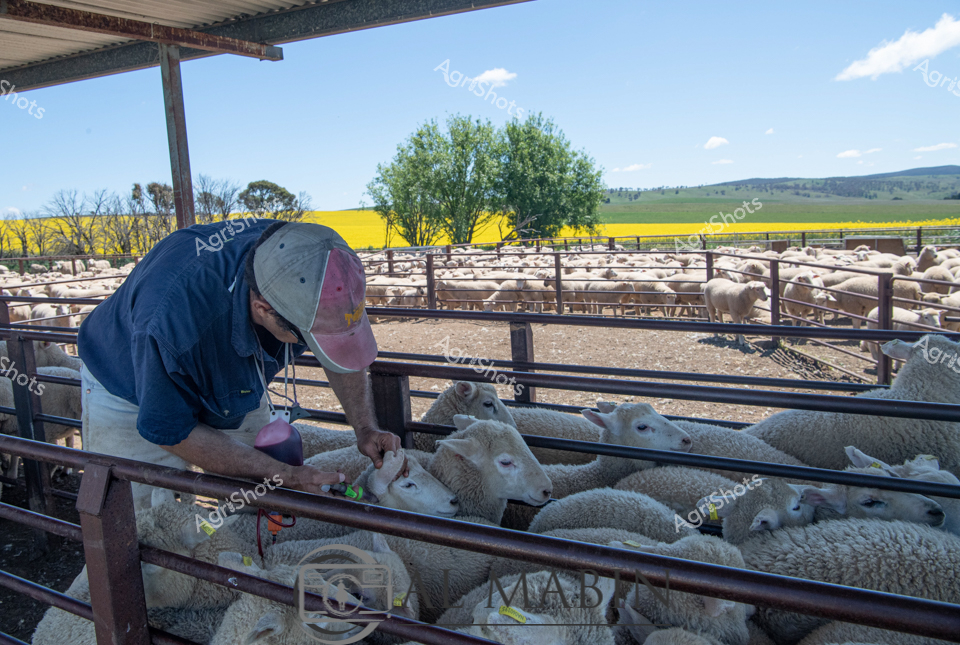
Merino lambs cluster in steel yard panels as a seasoned agricultural worker carefully administers vaccination during spring marking and weaning. Brilliant yellow canola fields bloom in the background, creating a vibrant landscape contrast with the dusty livestock paddock. Wearing a navy work shirt and protective cap, the farmer leans intently over the fence, handling each young lamb with practiced efficiency. The crisp blue sky and distant green hills frame a quintessential Australian agricultural scene of livestock management. Yellow-green canola crops stretch across the horizon, signaling the fertile agricultural heartland of New South Wales. This moment captures the precision and care fundamental to modern sheep production, where animal health interventions ensure the ongoing productivity of the flock.
 Image
Image
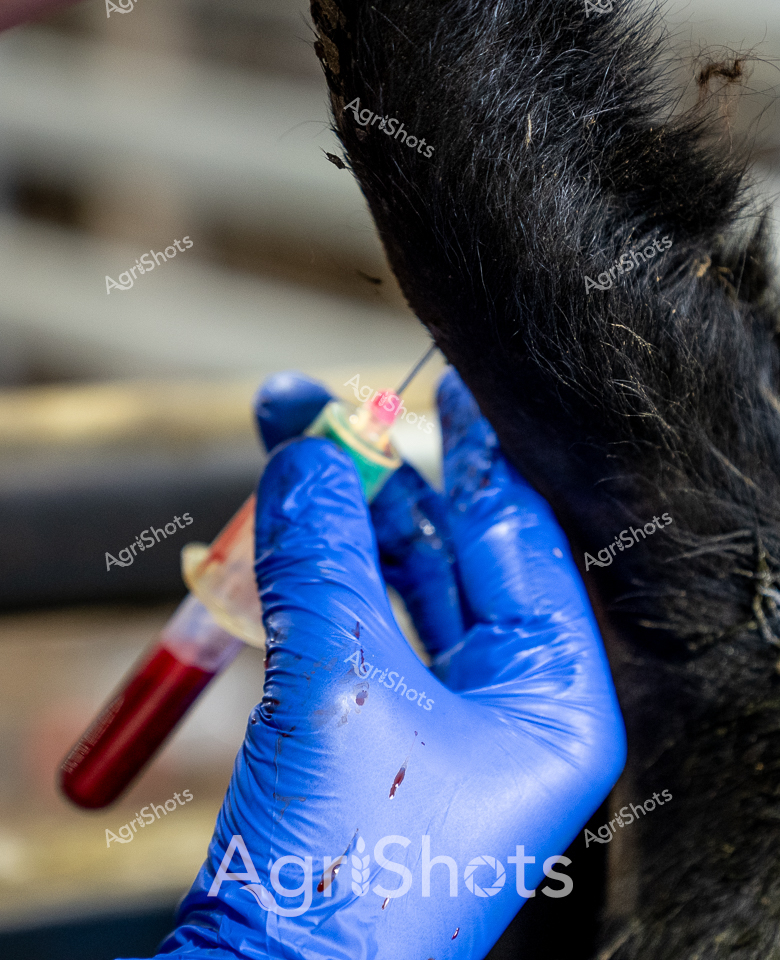
A veterinarian's gloved hand carefully extracts a blood sample from a black Angus cattle during a routine health diagnostic procedure. The vivid blue nitrile glove stands in sharp contrast against the deep, dense black hair of the animal, capturing the precision and care of modern agricultural veterinary practice. Droplets of blood cling to the glove's surface, indicating the delicate moment of sample collection. The test tube, filled with a rich crimson liquid, represents critical data gathering for herd health monitoring and potential disease prevention. This close-up image reveals the meticulous attention to biosecurity and animal welfare standards in contemporary livestock management. The clinical yet compassionate approach underscores the sophisticated health protocols employed in Australian cattle farming, particularly in Victoria's renowned beef production regions.
 Image
Image
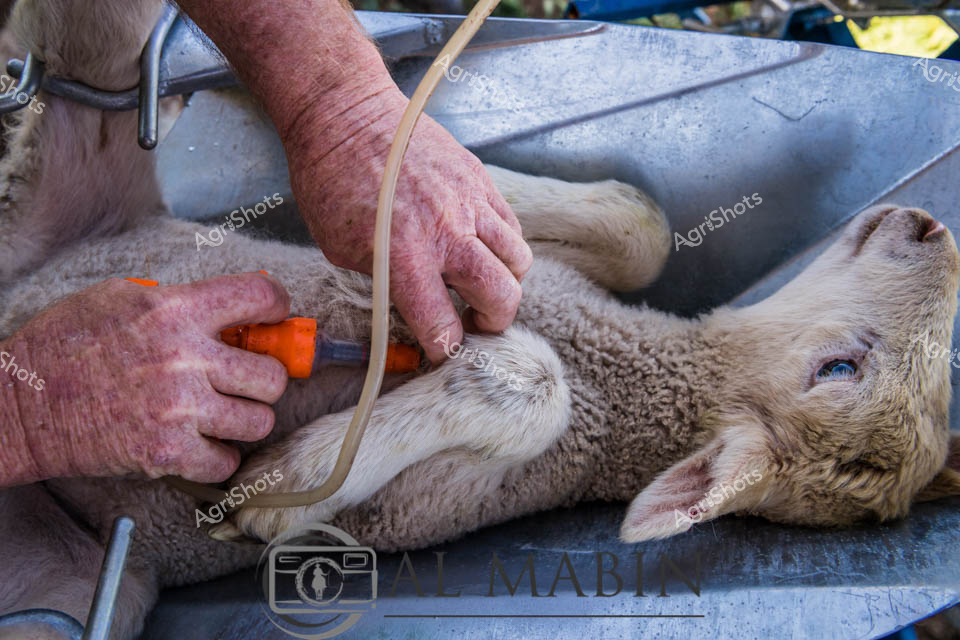
Weathered hands steady a young lamb during critical husbandry practices in a corrugated steel sheep yard, typical of rural New South Wales livestock management. The delicate procedure of lamb marking involves precise veterinary care, with an orange-handled vaccination being carefully administered to the woolly merino lamb. Pale, sun-weathered hands move with practiced skill, holding the lamb securely on the metallic processing surface, demonstrating generations of agricultural expertise. Soft cream and tan wool covers the lamb's body, contrasting against the silvery blue metallic yard infrastructure, capturing the raw authenticity of Australian farm life. This intimate moment reveals the careful attention and professional animal health practices essential to successful sheep farming in the harsh Australian agricultural landscape. The scene speaks to the quiet professionalism of farmers who balance animal welfare with necessary agricultural management techniques.
 Image
Image
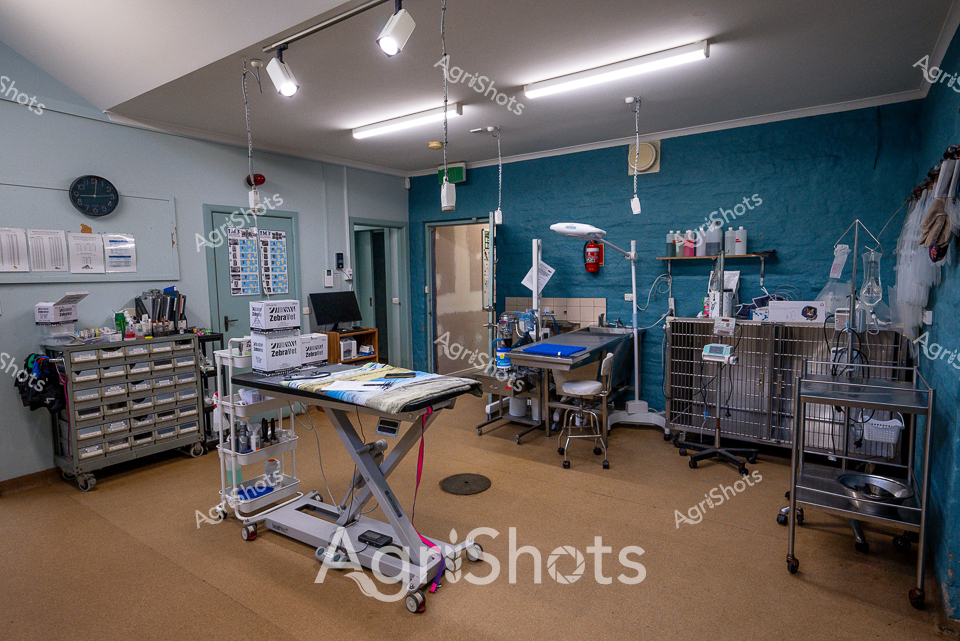
Pristine veterinary examination room captures the precision and care of modern agricultural animal healthcare. A hydraulic examination table stands centered, its adjustable height and blue padding ready for patient assessment. Stainless steel equipment carts and medical grade kennels line the teal-accented walls, reflecting the clinical yet compassionate environment of contemporary livestock medical treatment. Soft overhead lighting illuminates detailed medical charts, medication storage drawers, and specialized veterinary diagnostic equipment, highlighting the technological sophistication of rural animal health management. The neutral floor and organized workspace suggest a meticulously maintained professional setting where agricultural animal welfare receives expert, methodical attention. Medical-grade infrastructure and strategic equipment placement demonstrate the critical intersection of agricultural practice and advanced veterinary science, showcasing the commitment to animal health in professional agricultural contexts.
 Image
Image
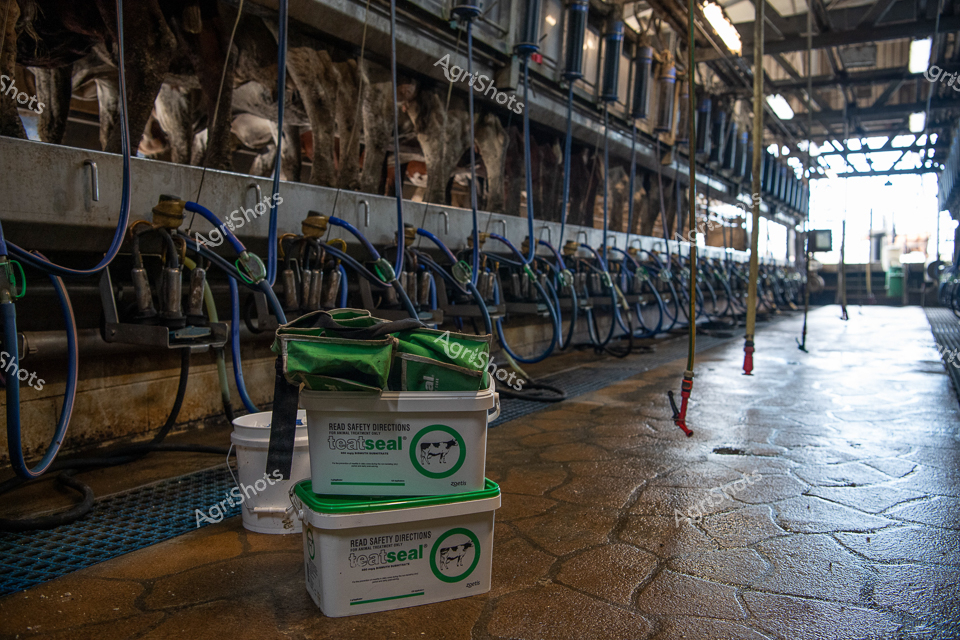
Inside a classic Australian dairy shed, milking equipment stands ready against a backdrop of weathered concrete and steel infrastructure. Stacked white and green Zoetis containers with teat seal products sit in the foreground, signaling meticulous animal health practices. Blue milking clusters hang suspended from overhead pipelines, creating a rhythmic industrial landscape typical of modern dairy operations. The stone-textured floor reflects soft ambient light filtering through high windows, suggesting early morning or late afternoon - prime milking times in rural dairy country. This precision-engineered environment represents the intersection of agricultural tradition and contemporary veterinary science, where each detail is carefully managed to ensure livestock wellbeing and production efficiency. The scene captures the quiet, methodical essence of Australian dairy farming - a sophisticated agricultural practice that balances technological innovation with deep respect for animal care.
 Image
Image
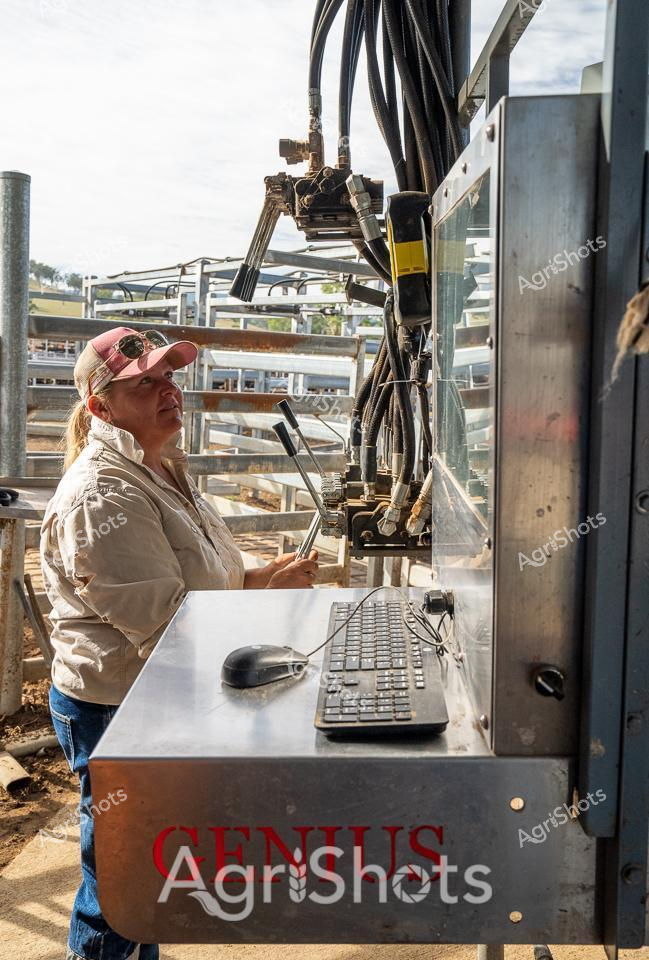
Outback Innovation: Agricultural Technology at Work A seasoned agricultural professional stands vigilant at the control station of a sophisticated cattle management system, her pink-capped silhouette framed against the rugged infrastructure of modern livestock handling. The Genius AgriShots branded control panel houses a standard keyboard and interface, suggesting a high-tech approach to animal health and safety monitoring. Industrial hydraulic mechanisms of the cattle crush surround her, representing precision engineering designed to minimize stress during veterinary procedures or livestock processing. Dressed in practical workwear - a neutral-toned shirt and blue jeans - she embodies the technical expertise of contemporary agricultural workers who seamlessly blend traditional farming knowledge with cutting-edge technology. Metallic frames, pipework, and processing equipment create a complex industrial backdrop of rural infrastructure, hinting at the sophisticated systems underpinning Australia's livestock management practices. The scene captures a moment of focused concentration, where human skill and mechanical innovation intersect to support efficient, humane animal husbandry in the challenging environments of regional Australia.
 Image
Image
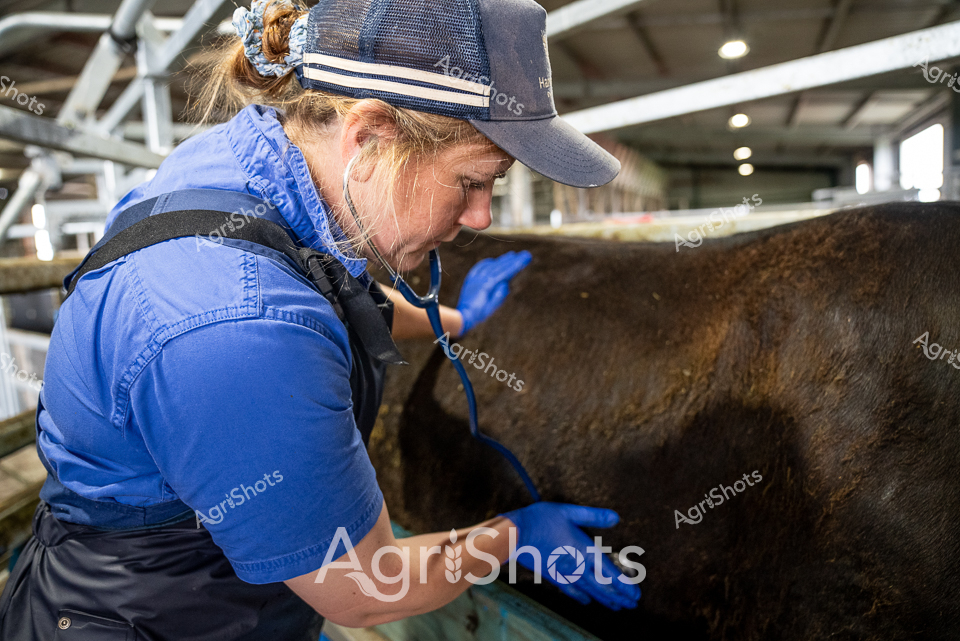
A veterinarian in a blue denim shirt and navy cap conducts a detailed health examination of an Angus beef cattle inside a modern agricultural facility. Her gloved hands and stethoscope carefully assess the animal's condition, moving methodically across its dark, rich-textured coat. Overhead industrial lighting illuminates the metal-framed cattle yards, creating a crisp, professional environment typical of contemporary livestock management in Victoria. The practitioner's focused posture and precise movements reflect the sophisticated approach to animal healthcare in Australian agricultural practice. Her blue ensemble and protective equipment underscore the technical and compassionate nature of veterinary work in the livestock sector. This image captures the critical intersection of animal welfare, scientific diagnostics, and agricultural expertise that defines modern cattle management.
 Image
Image
Nestled under a crisp white pop-up tent, a robust Warwick Cattle Crush stands ready in the golden light of a rural Queensland morning. The deep teal machinery, accented with vibrant yellow safety markings, represents precision agricultural engineering designed to safely manage livestock during critical handling procedures. Hydraulic arms and control levers gleam with mechanical readiness, positioned within a sturdy metal livestock yard that stretches into the soft-focused background of pale grasses and distant fencing. The equipment's industrial color palette contrasts beautifully with the earthy landscape, symbolizing the sophisticated technology supporting modern Australian agricultural practices. Strategically positioned under shelter to protect both equipment and operators from intense summer or autumn sunlight, this cattle crush embodies the careful intersection of animal welfare and efficient farm management. The scene speaks to generations of agricultural innovation, where sophisticated machinery enables careful, humane livestock handling across Australia's expansive rural landscapes.
 Image
Image
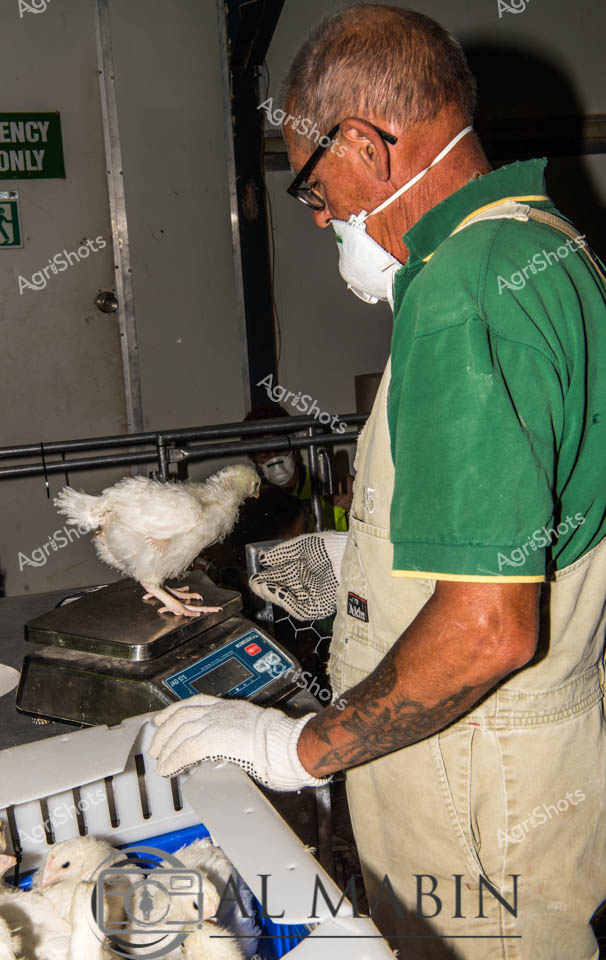
In a sterile agricultural processing facility, an experienced farm worker meticulously weighs and examines a young white chicken, demonstrating precise animal health management protocols. Wearing protective green and cream attire, with a white respiratory mask and gloves, the worker carefully handles the delicate bird on a digital scale, part of a systematic vaccination and monitoring procedure. The stark white of the chicken contrasts sharply with the industrial background, where an "Emergency Only" sign indicates the controlled environment of modern poultry production. An additional chicken waits in a nearby carrier, suggesting a methodical approach to livestock management typical of intensive farming practices in New South Wales. The worker's tattooed arm and focused posture reveal years of professional experience in animal husbandry, highlighting the technical skill required in contemporary agricultural operations. This scene captures the intersection of scientific precision and animal care, showcasing the detailed processes behind commercial poultry production.
 Image
Image
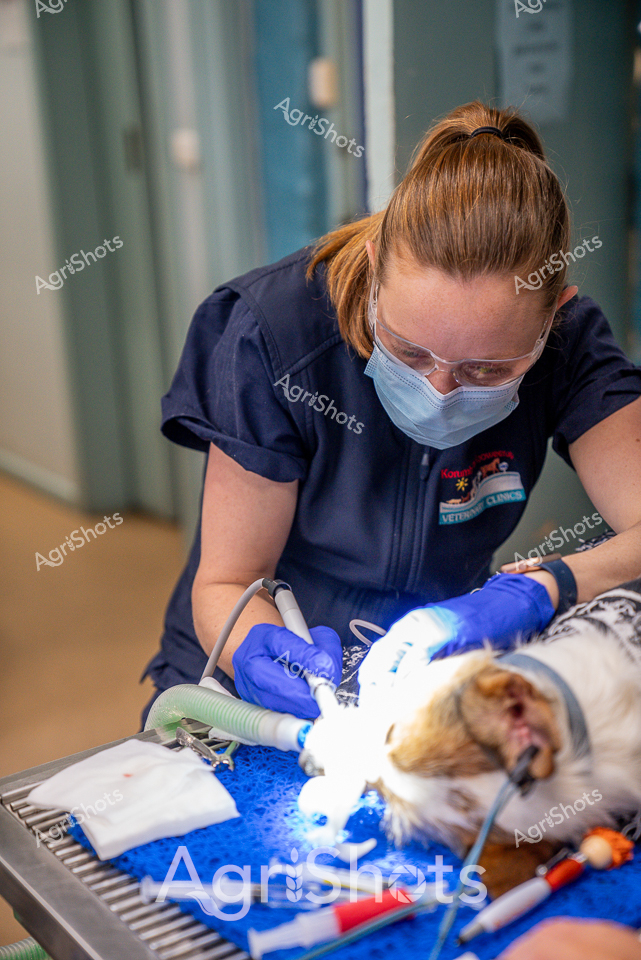
Precision and care define this veterinary surgical scene, with a skilled vet nurse performing delicate dental work on a sedated animal patient. Dressed in a navy blue professional uniform and protective gear - including a surgical mask, safety glasses, and deep blue medical gloves - the nurse leans intently over the patient positioned on a blue textured surgical mat. Specialized dental equipment, including a sleek handheld tool emitting a focused blue light, suggests an advanced veterinary procedure is underway. The sterile, controlled environment of the operating theatre highlights the meticulous nature of modern animal healthcare, with crisp green background walls and professional-grade medical surfaces creating an atmosphere of clinical expertise. The nurse's concentrated posture and careful hand movements underscore the precision and compassion required in veterinary medicine, representing the critical role of skilled professionals in maintaining animal health and wellbeing.
Well, you've ploughed through the whole field!
No more crops to harvest here, mate.
Try searching for something else in our library of 50,000+ royalty-free media: