 Image
Image
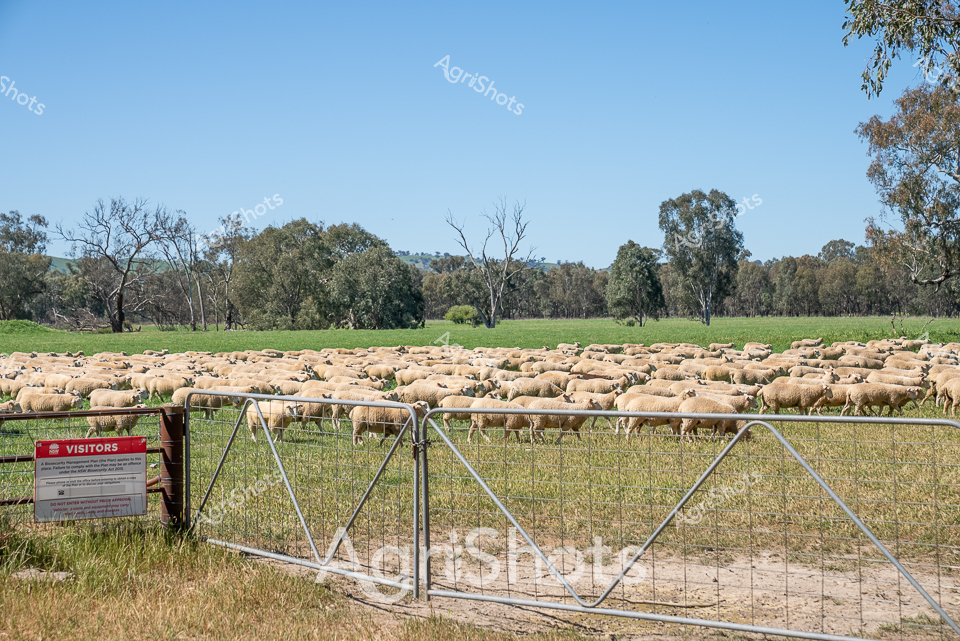
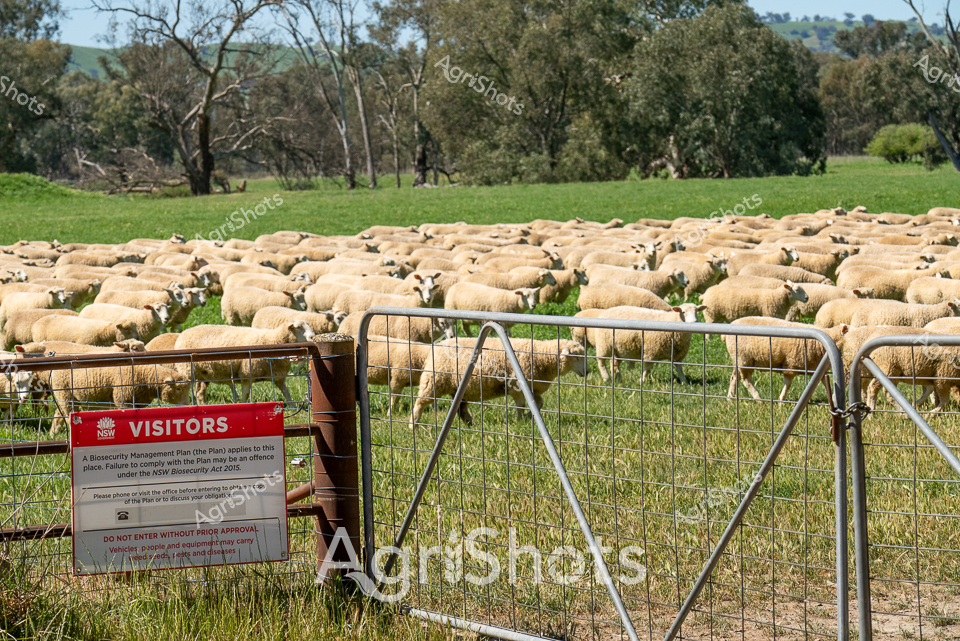
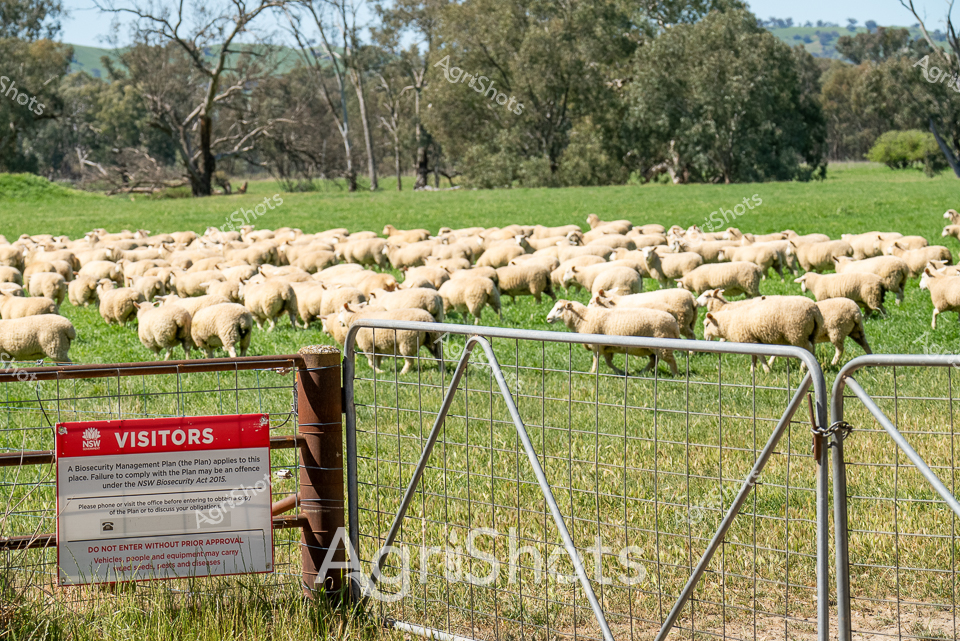
A dense flock of robust Dorset sheep congregates behind a galvanized steel gate in the heart of New South Wales' Riverina region. The expansive paddock stretches beneath a cloudless azure sky, framed by a classic Australian pastoral landscape of scattered eucalyptus trees and undulating grasslands. Mature ewes cluster tightly, their woolly beige and cream fleeces creating a uniform sea of livestock, suggesting a carefully managed stud breeding operation. A prominent red and white biosecurity visitor sign signals the property's commitment to agricultural safety and controlled access, reflecting the sophisticated management practices of modern Australian sheep farming. Gnarled, silvery tree trunks punctuate the background, while the foreground reveals a well-maintained gate and transitional grassy areas, highlighting the careful environmental stewardship typical of this agricultural region. The scene captures the quintessential Australian rural landscape - a testament to the country's rich pastoral heritage and contemporary agricultural innovation.
 Video
Video
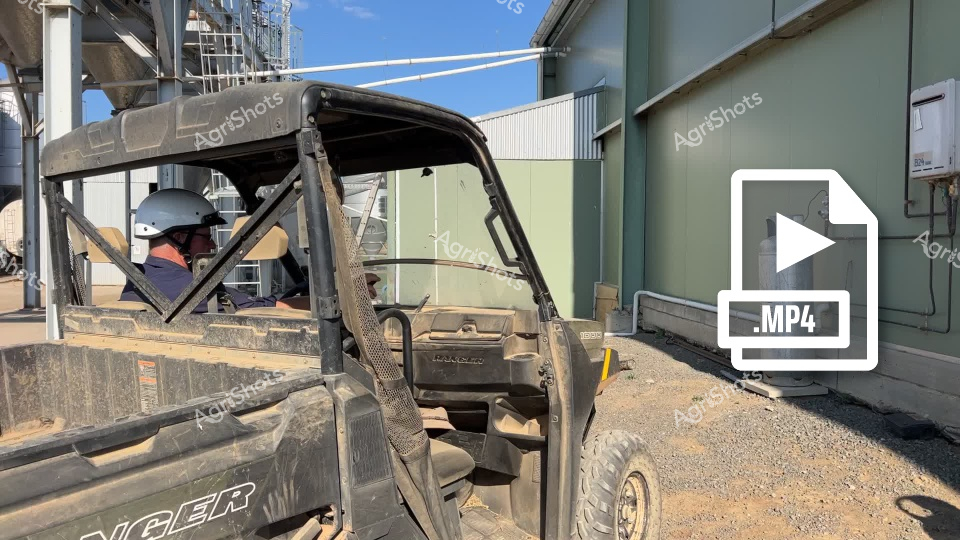
A rugged utility vehicle stands ready in the harsh midday sunlight of a rural agricultural processing facility. The Polaris Ranger, coated in dust and bearing the marks of intensive farm work, sits parked near a sage-green industrial building. A worker wearing safety equipment - including a protective helmet - is seated in the vehicle, suggesting preparation for biosecurity or agricultural logistics tasks. Gravel surrounds the utility vehicle, and industrial infrastructure rises in the background, indicating a professional agricultural setting typical of New South Wales egg or livestock production facilities. The robust utility vehicle represents the critical mobile equipment used in modern intensive farming operations, designed to navigate challenging terrain and support critical agricultural workflows. Crisp blue sky and the metallic gleam of industrial structures frame this snapshot of contemporary agricultural infrastructure and workplace safety practices.
 Image
Image
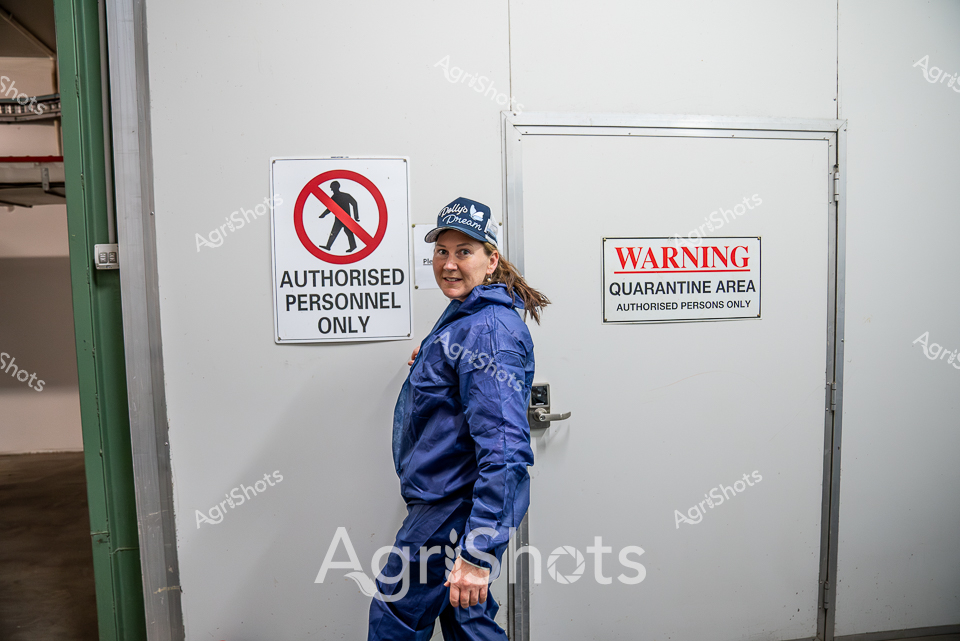
A dedicated agricultural worker stands confidently at the entrance to a quarantine area, embodying strict biosecurity protocols essential to modern farming practices. Dressed in a vibrant blue protective jacket and a branded cap, she guards the restricted access point marked by clear warning signs for "Authorised Personnel Only" and "Quarantine Area". The sterile white walls and industrial setting suggest a critical control point in livestock management, highlighting the importance of preventing disease transmission in agricultural environments. Her stance radiates professionalism and commitment to maintaining high safety standards, a crucial aspect of contemporary agricultural operations. The crisp signage and controlled entry point underscore the scientific precision required in modern farming, where biosecurity measures protect entire agricultural ecosystems. This image powerfully represents the behind-the-scenes professionals who ensure the health and safety of livestock and agricultural production.
 Video
Video
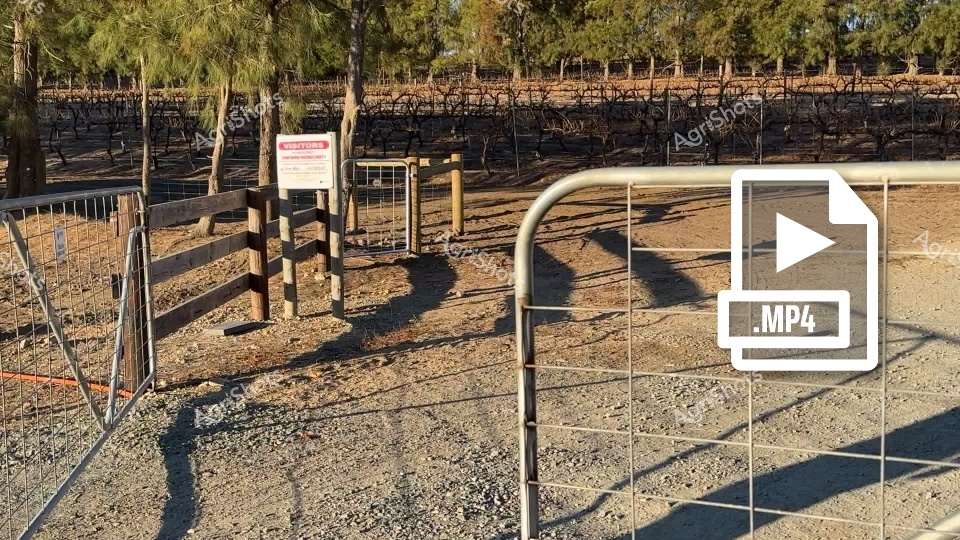
Autumn sunlight filters through pine trees, casting long shadows across a meticulously secured vineyard entry in South Australia's renowned Barossa Valley. A robust biosecurity gate system stands sentinel, with weathered wooden posts and metal fencing creating a controlled access point to the vine rows. A warning sign hints at the critical importance of preventing potential disease or pest introduction to this carefully maintained agricultural space. Gravel and packed earth frame the gate, with bare grape vine trellises visible in the background, revealing the landscape in its post-harvest stillness. The scene speaks to the precision and protective strategies of modern viticulture, where every entrance is a potential point of vulnerability for the valuable crop. The .MP4 icon suggests this controlled entry is not just a physical barrier, but part of a sophisticated documentation and monitoring process for agricultural management.
 Image
Image
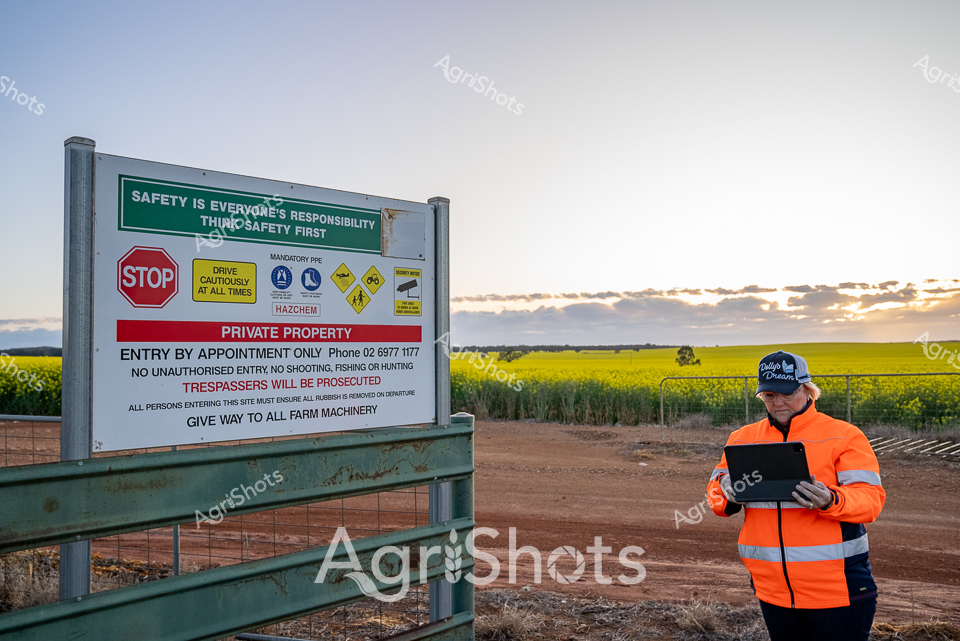
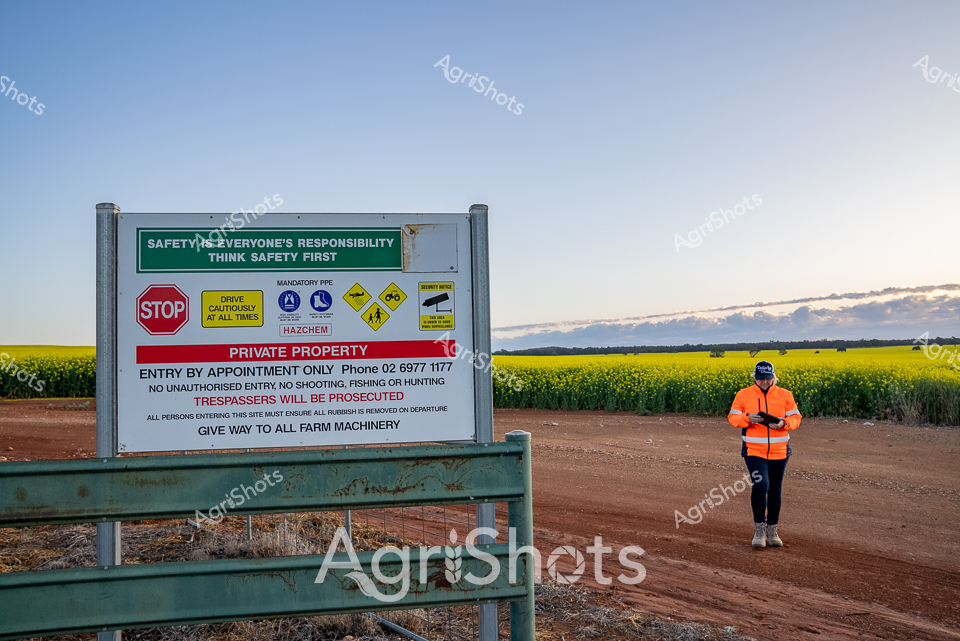
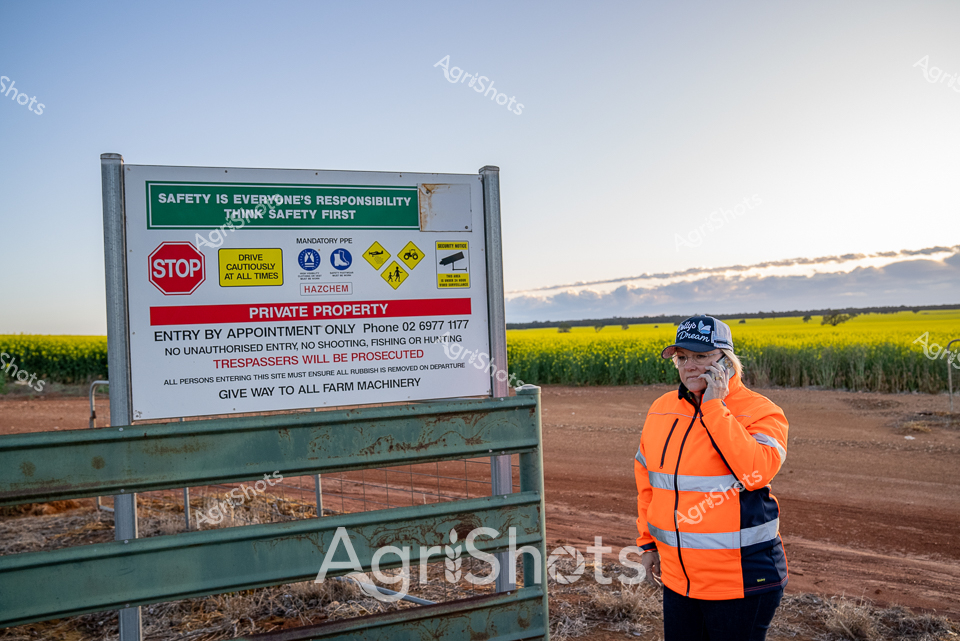
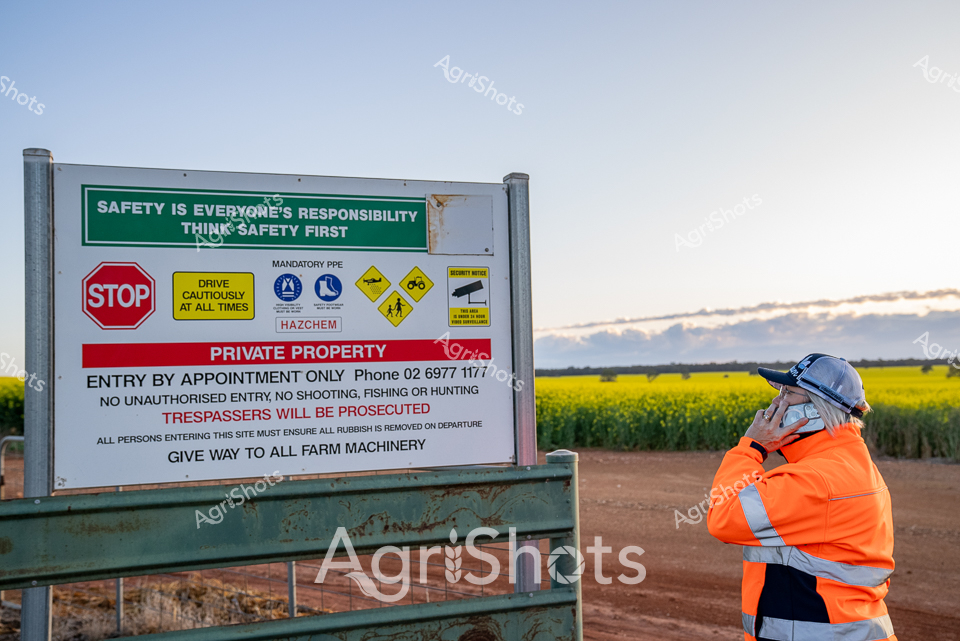
Agricultural safety meets rural productivity in this crisp spring morning landscape. A bright safety-orange clad agricultural worker stands near a detailed farm entry sign, with a vibrant yellow canola field stretching across the background under a soft dawn sky. The prominent signage emphasizes critical workplace protocols: "Safety is Everyone's Responsibility" and "Entry by Appointment Only", highlighting modern agricultural biosecurity practices. The worker, wearing a protective high-visibility jacket and cap, focuses intently on a tablet device, likely conducting site documentation or management tasks. Metallic green farm gates and fencing frame the entrance, creating a structured boundary between public space and private agricultural property. The scene powerfully communicates contemporary rural workplace standards - blending technological engagement, strict safety protocols, and the stunning natural beauty of a flourishing agricultural landscape.
 Image
Image
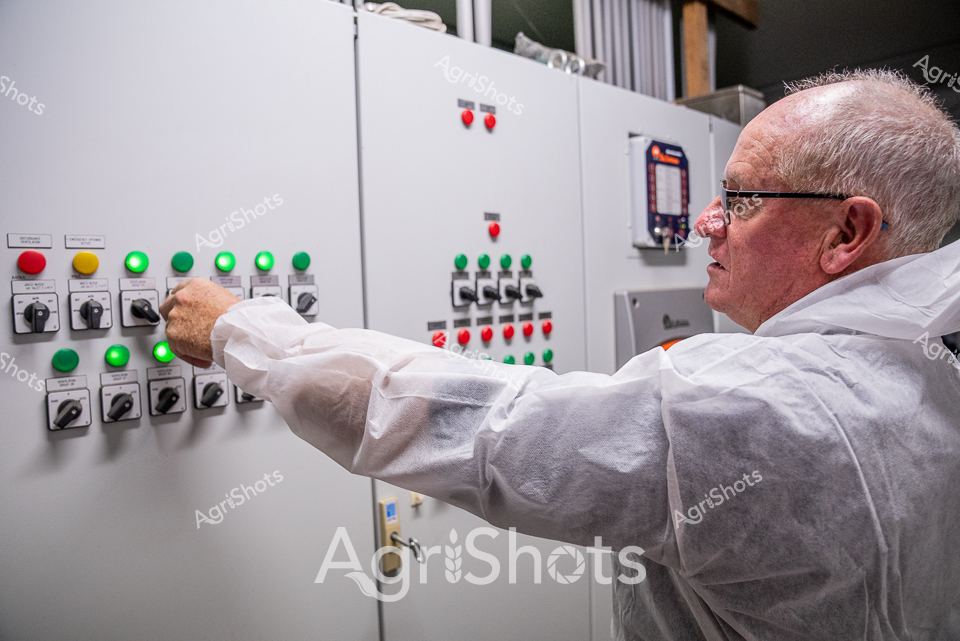
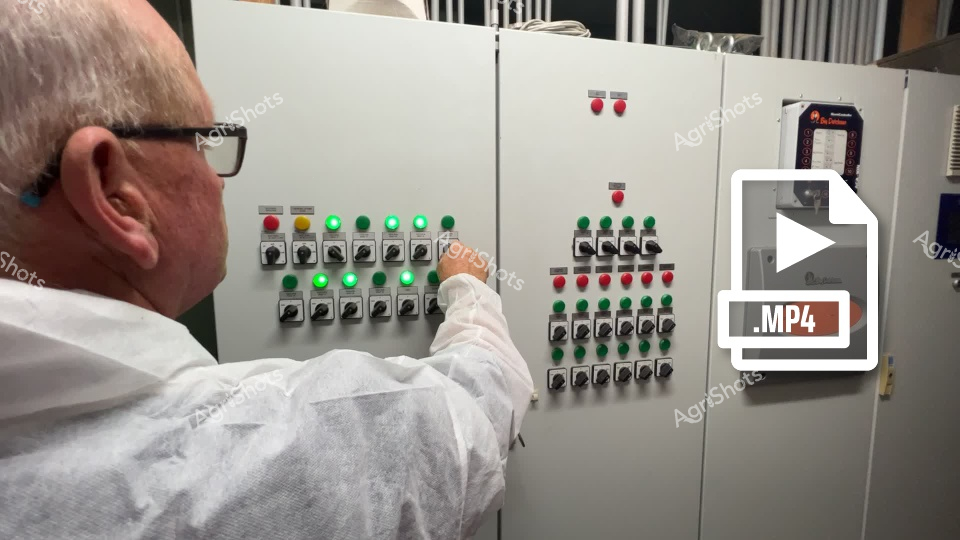
Quality control specialist monitors intricate control systems in a state-of-the-art agricultural processing facility. Wearing pristine white protective workwear and safety glasses, an experienced senior technician carefully adjusts switches on a complex control panel featuring an array of illuminated green and red indicator lights. Precision technical infrastructure suggests advanced food production or agricultural processing environment, with meticulous attention to biosecurity protocols evident in the immaculate white protective clothing. Multiple switchboards and control interfaces demonstrate sophisticated monitoring and operational management systems typical of modern Australian agricultural technology. The technician's careful, deliberate movements reflect decades of expertise and a commitment to maintaining rigorous quality and safety standards in agricultural production. Soft green indicator lights suggest systems are functioning smoothly, while the clinical white environment underscores the high-tech, hygienic nature of contemporary agricultural processing infrastructure.
 Video
Video
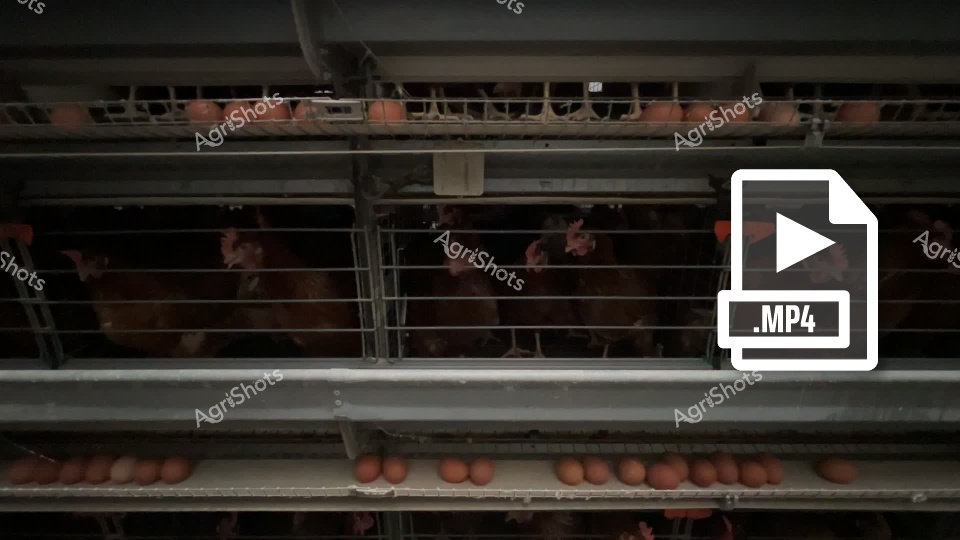
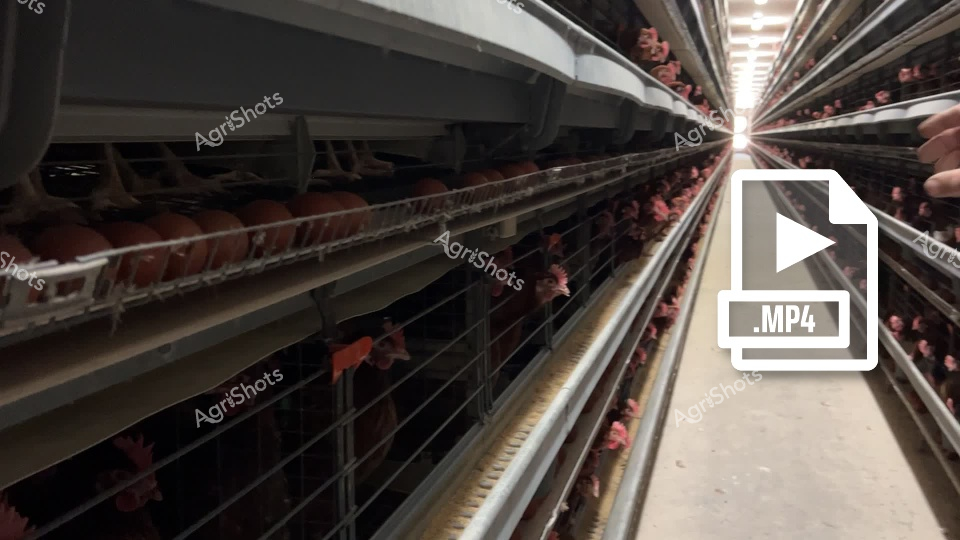
Battery cage egg production reveals a stark industrial landscape of uniform rows, with dozens of hens confined in tight metal enclosures. Soft brown eggs accumulate methodically across multiple wire-meshed levels, reflecting the systematic efficiency of modern agricultural practices. Each tier contains multiple birds, their movements restricted within carefully engineered spaces designed for maximum production output. Cool, controlled lighting illuminates the metallic infrastructure, suggesting a climate-controlled environment typical of contemporary poultry facilities in Australian agricultural regions. The standardized arrangement speaks to precision engineering and biosecurity protocols fundamental to large-scale egg manufacturing. Metallic greys, rust-brown feathers, and warm terracotta-toned eggs create a muted, industrial color palette that underscores the mechanical nature of intensive livestock management.
 Image
Image
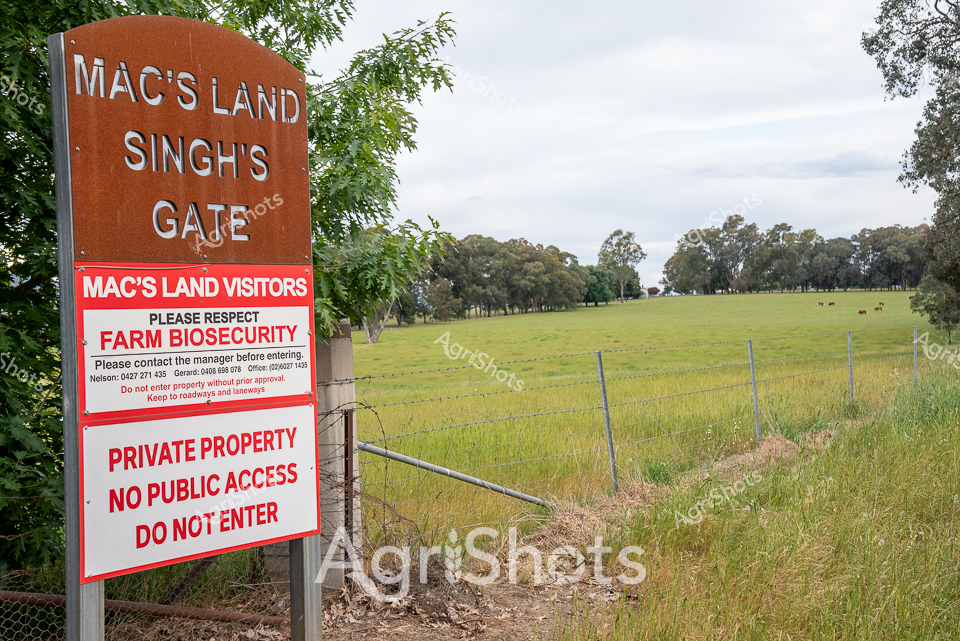
Mac's Land Singh's Gate: A quintessential Australian rural biosecurity checkpoint marking the entrance to a private agricultural property. A rust-colored signpost stands sentinel at the property boundary, bearing clear warnings about farm access protocols and biosecurity requirements. Lush green pastureland stretches behind a wire fence, with scattered eucalyptus trees defining the distant horizon and a few cattle grazing peacefully in the middle distance. The weathered rust-red sign demands respect for farm security, displaying contact numbers for property management and emphasizing "NO PUBLIC ACCESS" in bold red lettering. Verdant grasses line the fence line, suggesting a fertile landscape during late spring or early summer, with soft overcast light creating a muted, tranquil agricultural scene. The signage represents the critical interface between agricultural production, land management, and strict biosecurity practices that protect Australia's crucial farming ecosystems.
 Video
Video
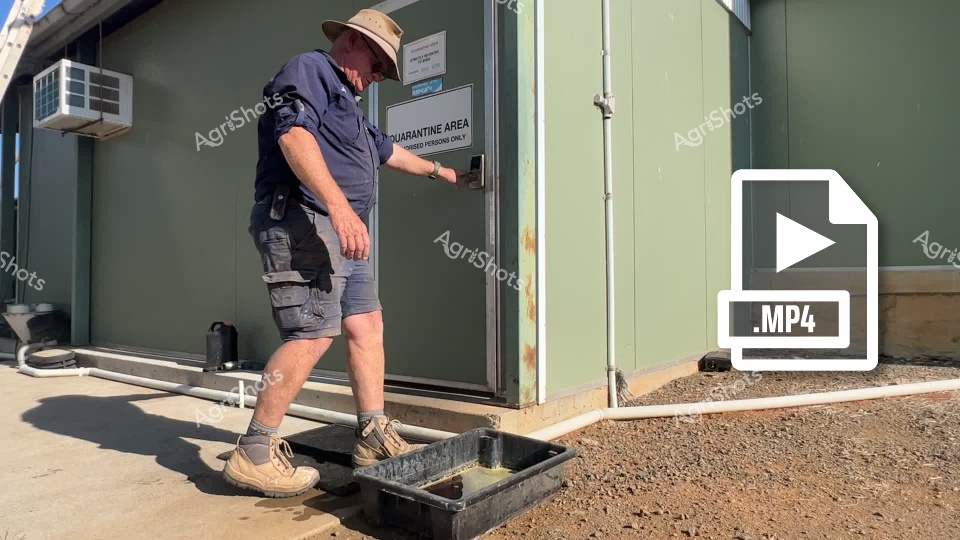
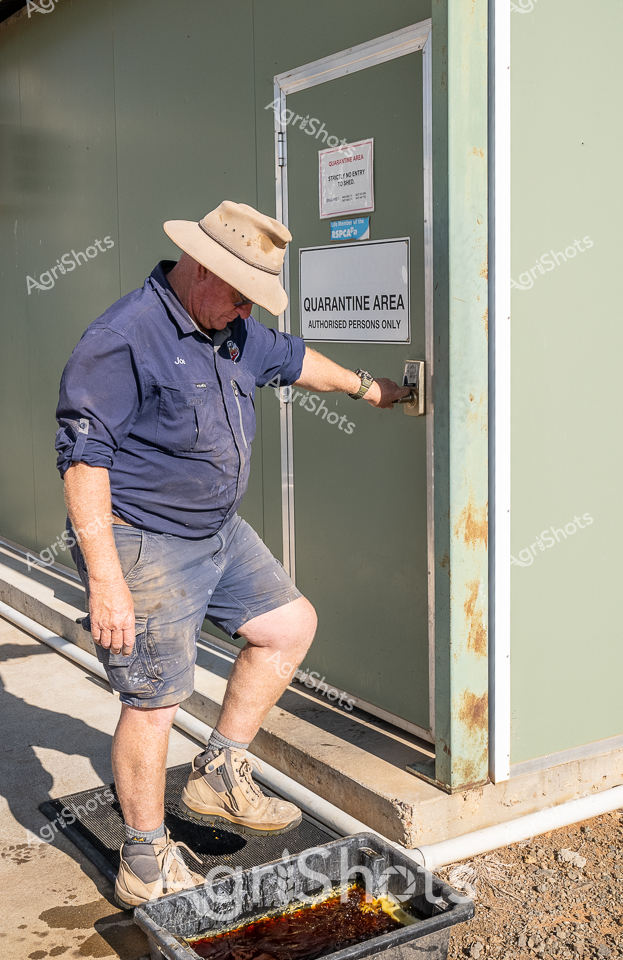
Biosecurity protocols come to life at a quarantine facility, where a farm worker in navy blue shirt and khaki shorts meticulously steps into a disinfection tray before entering a restricted green metal building. The stark midday sunlight casts sharp shadows across the dusty ground, highlighting the critical importance of preventing potential disease transmission in agricultural settings. Wearing protective work boots and a wide-brimmed sun hat, the worker demonstrates the careful hygiene practices essential to modern farming operations. The "Quarantine Area" sign signals the serious approach to animal and crop health management, with the small disinfection station representing a crucial first line of defense against potential biological risks. The scene captures the blend of practical safety measures and professional diligence that characterize contemporary Australian agricultural practices, where every step is calculated to protect valuable livestock and crops. This moment illustrates the unseen but critical work of biosecurity professionals who safeguard our food production systems with methodical precision.
 Image
Image
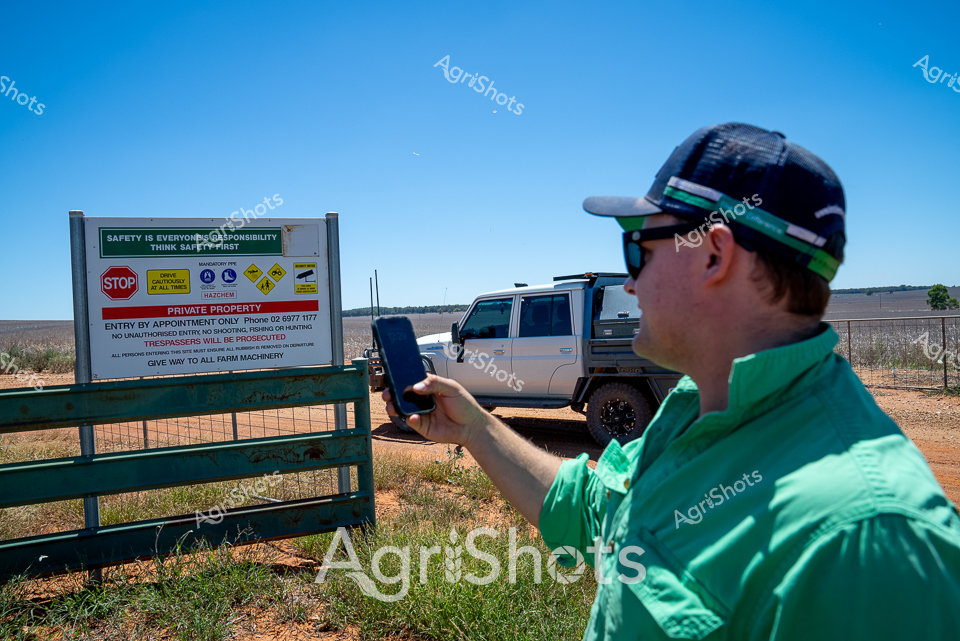
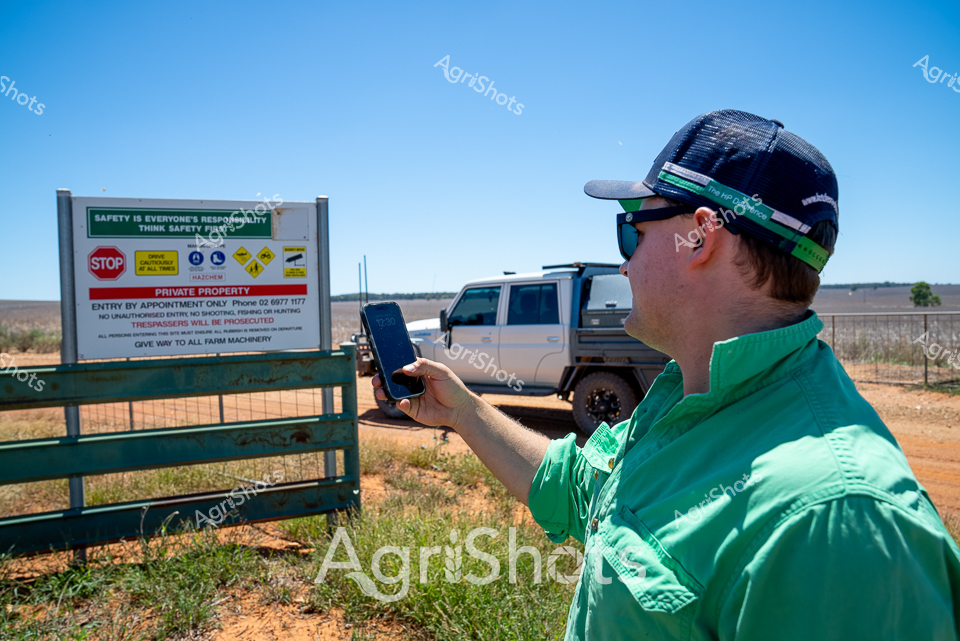
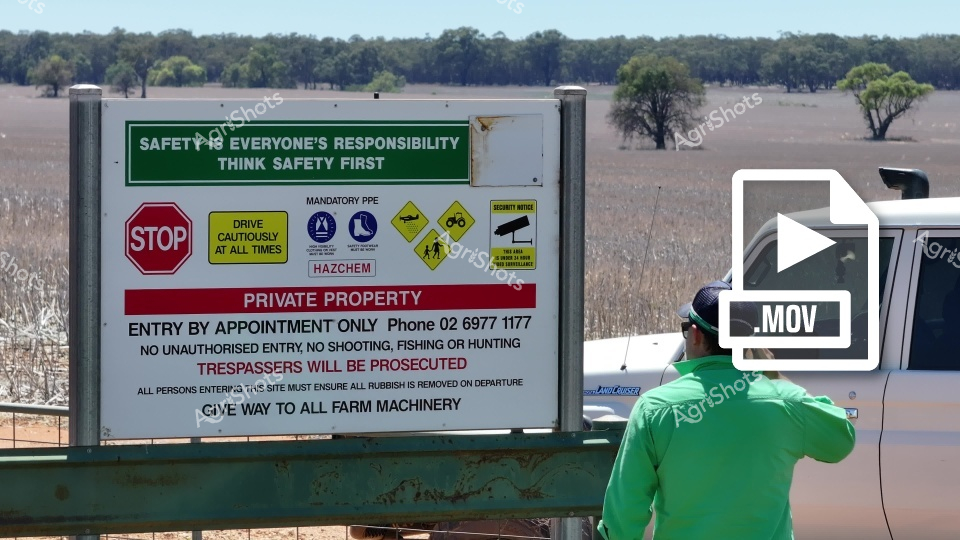
Rural Biosecurity at the Gate A safety-conscious agricultural worker in a vibrant green shirt and navy cap stands at the entrance of a private agricultural property, using a smartphone to communicate or record information. The weathered gate bears a prominent safety sign emphasizing biosecurity protocols, with clear warnings about restricted entry and potential prosecution for trespassers. A silver utility vehicle sits in the background, surrounded by the expansive, arid landscape typical of the Riverina region in New South Wales. The brilliant blue sky and dusty, ochre-toned ground speak to the harsh summer conditions of Australian agricultural zones. Multiple safety icons and warning symbols on the sign underscore the critical importance of workplace safety and controlled access in modern farming operations. The scene captures the intersection of technology, safety, and agricultural management, highlighting the meticulous care and professionalism required in contemporary rural enterprises.
 Image
Image
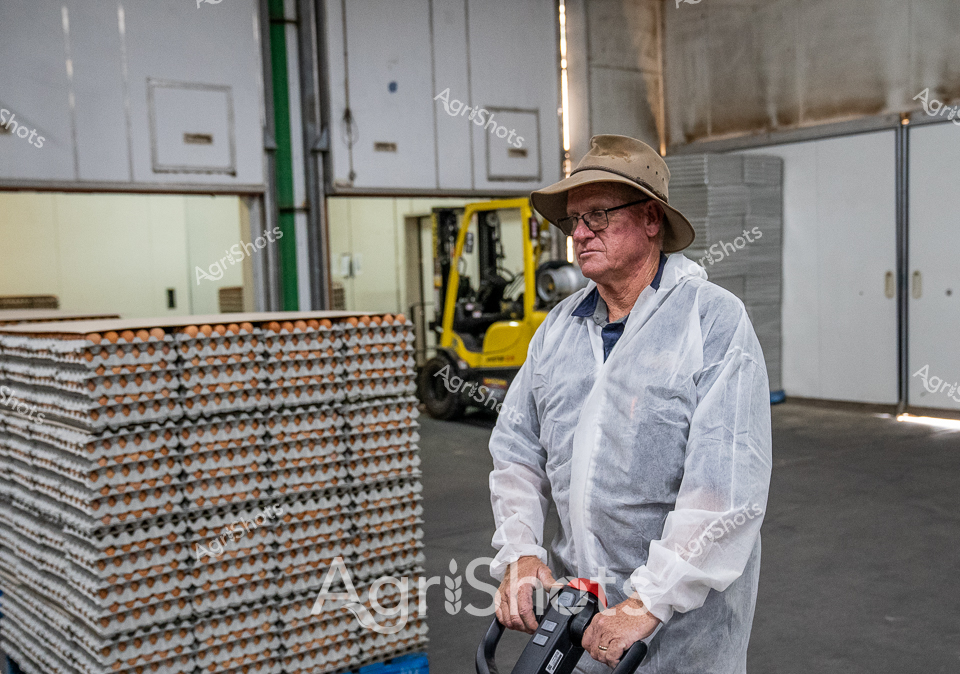
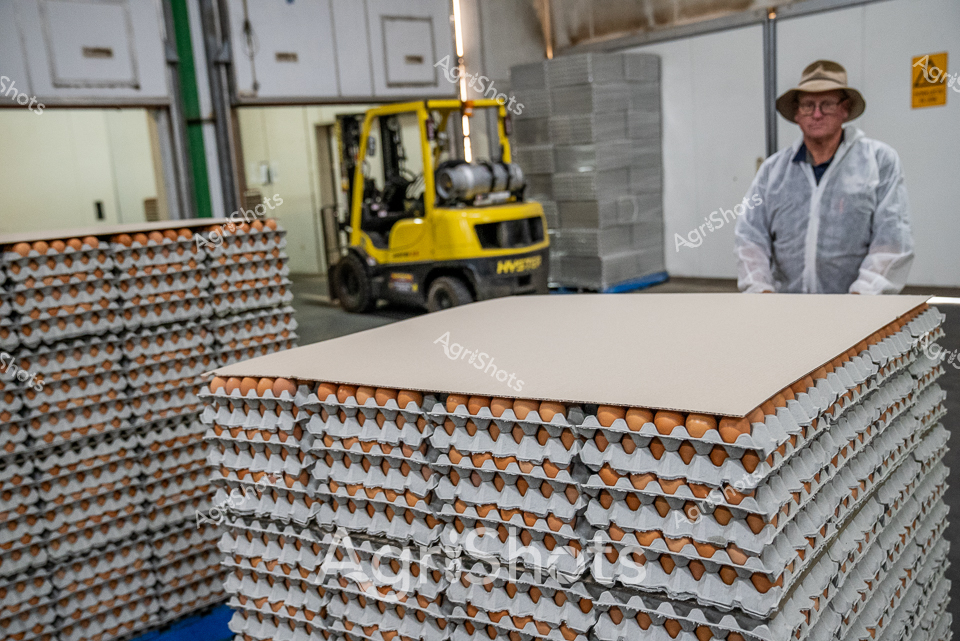
In a pristine egg processing facility, an experienced worker in a crisp white protective coat and weathered bushman's hat carefully manages a massive stack of egg trays. Stacked meticulously beside a bright yellow forklift, thousands of brown and white eggs await sorting and distribution, representing the precision of modern Australian intensive egg production. The worker's seasoned demeanor and protective gear highlight the critical biosecurity protocols essential in contemporary agricultural operations. Soft industrial lighting filters through the facility, casting subtle shadows on the carefully organized storage area, while the worker's focused side profile suggests years of expertise in egg handling and agricultural logistics. This scene captures the intersection of traditional farming knowledge and contemporary food production technology, showcasing the meticulous care and professional standards of New South Wales' egg industry. The image embodies the quiet professionalism of agricultural workers who ensure safe, high-quality food reaches consumers through carefully managed supply chains.
 Image
Image
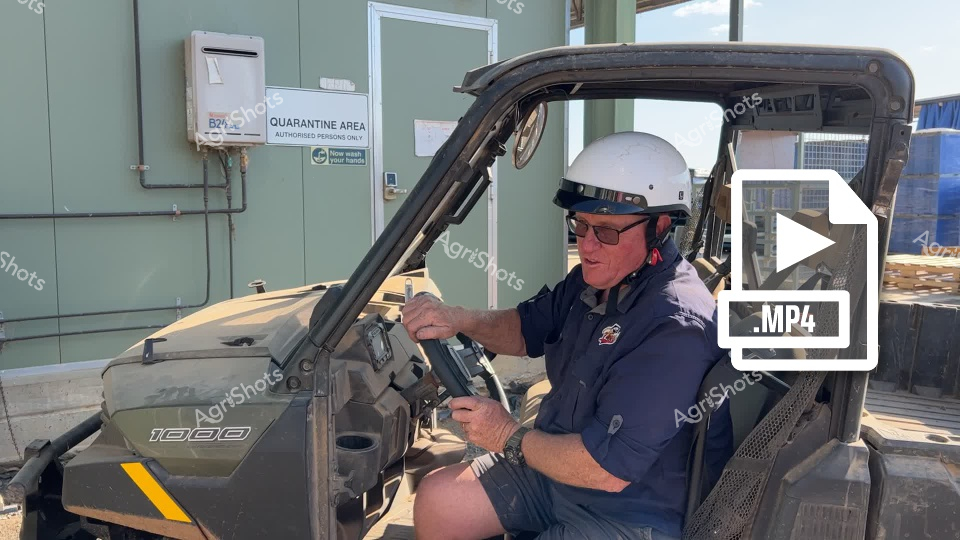
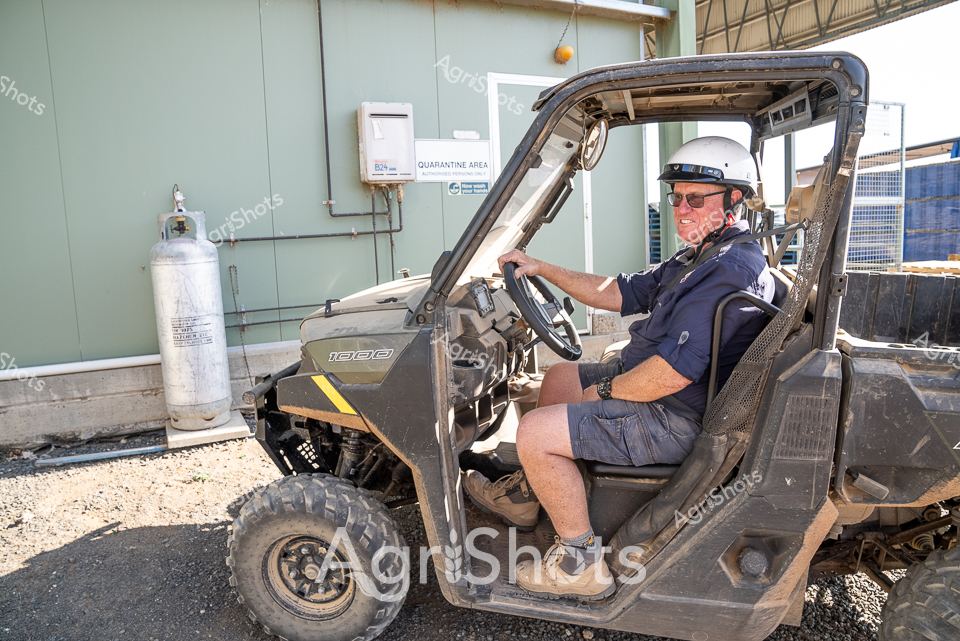
A worker in navy uniform and white safety helmet sits aboard a robust Can-Am Defender 1000 utility vehicle, positioned near a quarantine area signage at an agricultural facility. The rugged side-by-side utility vehicle, marked with yellow striping, sits on chunky all-terrain tires against a sage green building exterior. A large industrial gas cylinder stands sentinel nearby, highlighting the site's technical and controlled environment. The operator, wearing protective eyewear and work boots, appears ready for agricultural or maintenance duties, embodying the meticulous safety protocols critical in modern farming operations. The gravel ground and structured background suggest a carefully managed agricultural workspace, likely in regional New South Wales. The scene captures the intersection of technological preparedness, biosecurity consciousness, and practical farm management, reflecting the sophisticated approach of contemporary Australian agricultural practices.
 Image
Image
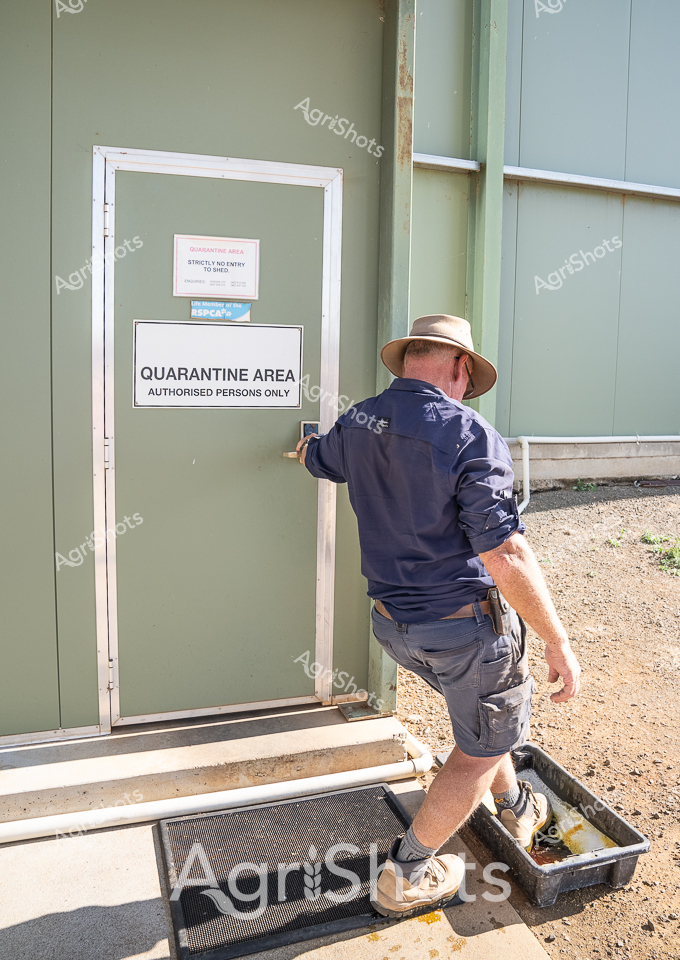
A biosecurity officer in navy uniform and wide-brimmed sun hat stands at the entrance to a quarantine area, embodying the critical role of agricultural protection. The sage-green metal door, marked clearly with "QUARANTINE AREA - AUTHORISED PERSONS ONLY", suggests a high-security zone essential to preventing disease spread in livestock or crops. Positioned on a dusty, compacted earth surface, the officer steps carefully onto a disinfection mat, a crucial hygiene checkpoint designed to eliminate potential contaminants before entering the restricted space. The stark, utilitarian setting - with its clean lines, functional signage, and RSPCA-branded notice - communicates the serious, methodical approach to biosecurity in Australian agriculture. Harsh midday sunlight casts sharp shadows, highlighting the officer's practical workwear of shorts, sturdy boots, and protective shirt, ready to enforce strict protocols that safeguard animal and plant health. This image captures the vigilance and professionalism required to maintain Australia's stringent agricultural biosecurity standards.
 Image
Image
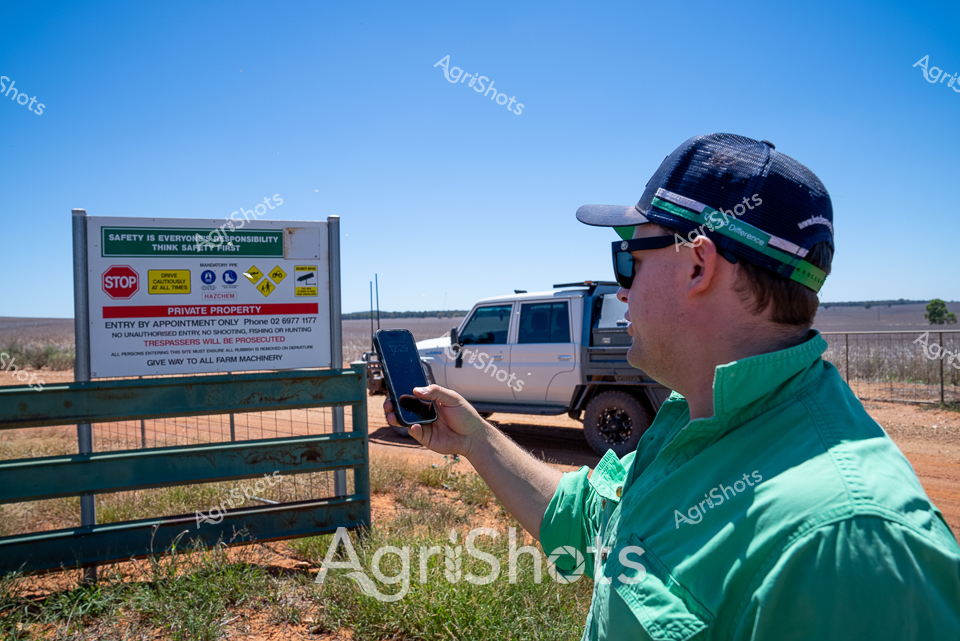
Rural Biosecurity in Action: A vigilant agricultural professional in a vibrant green shirt and navy cap stands at the entry gate of a private property, smartphone in hand, ready to document and manage access protocols. The stark safety signage - emblazoned with multiple warning symbols and a prominent STOP sign - underscores the critical importance of controlled entry in modern agricultural operations. A white utility vehicle waits in the background, parked on the reddish earth typical of Australia's arid agricultural regions, suggesting a remote location in New South Wales' expansive Riverina district. The brilliant blue sky and open landscape communicate the harsh yet productive environment of Australian primary industries. This image captures the blend of technology, safety consciousness, and meticulous management that defines contemporary agricultural practice, where digital tools and strict biosecurity measures protect valuable agricultural assets and prevent potential contamination or unauthorized access.
 Image
Image
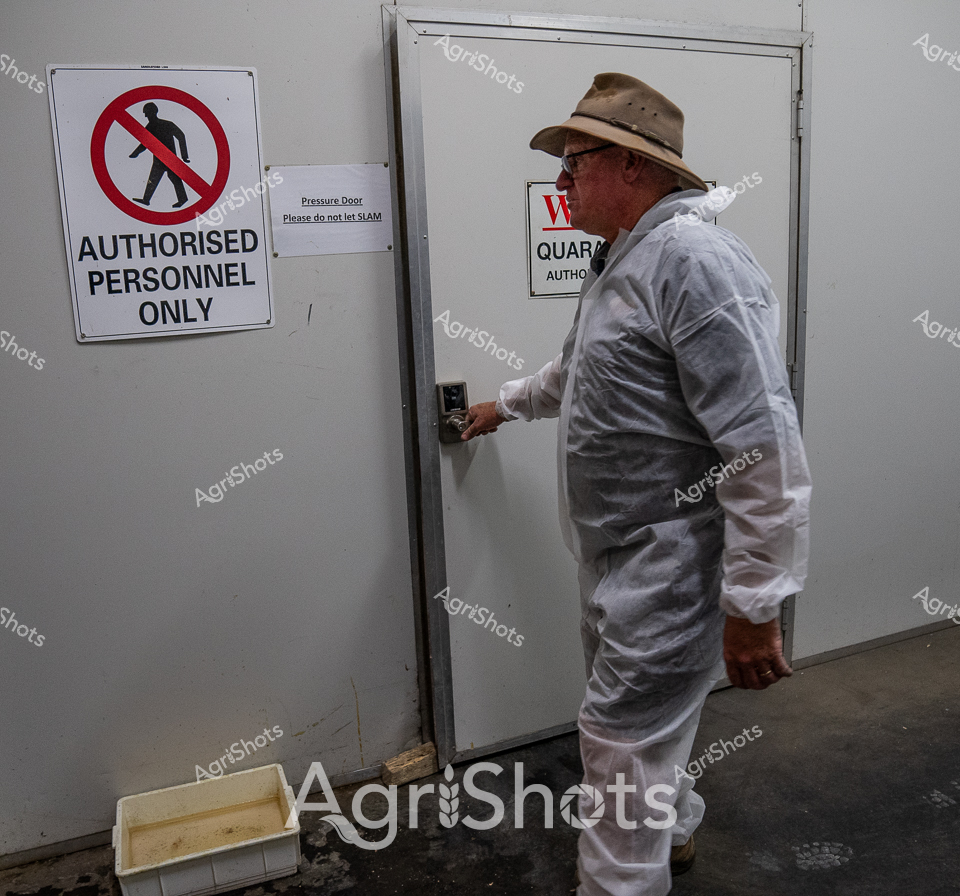
A dedicated agricultural worker, clad in a crisp white protective suit and wide-brimmed safari hat, carefully operates the security door to a quarantine facility. Bold red and white signage strictly declares "AUTHORISED PERSONNEL ONLY", emphasizing the critical biosecurity protocols in place. The sterile gray environment and precise movements suggest a high-stakes moment in agricultural management, where preventing contamination is paramount to protecting livestock and crop health. A white plastic tray sits below the door, potentially used for sanitization or sample collection, reflecting the meticulous procedures of modern agricultural biosecurity practices. The individual's measured approach - hand poised on the door switch, body angled with deliberate caution - communicates the serious responsibility of maintaining strict environmental controls in sensitive agricultural spaces. This scene captures the unseen but crucial work of preventing disease transmission and maintaining strict hygiene standards in contemporary Australian agricultural operations.
 Image
Image
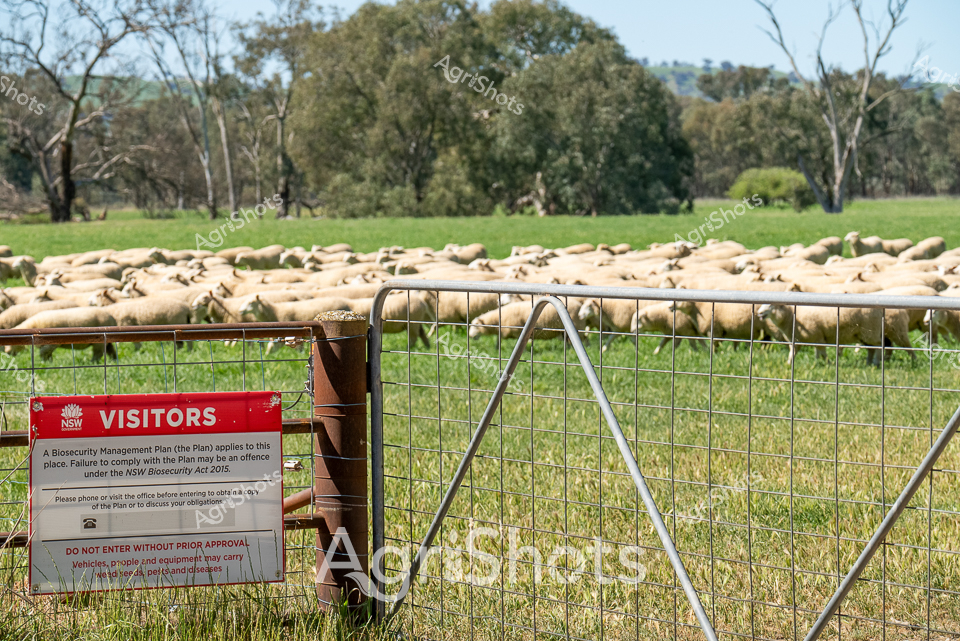
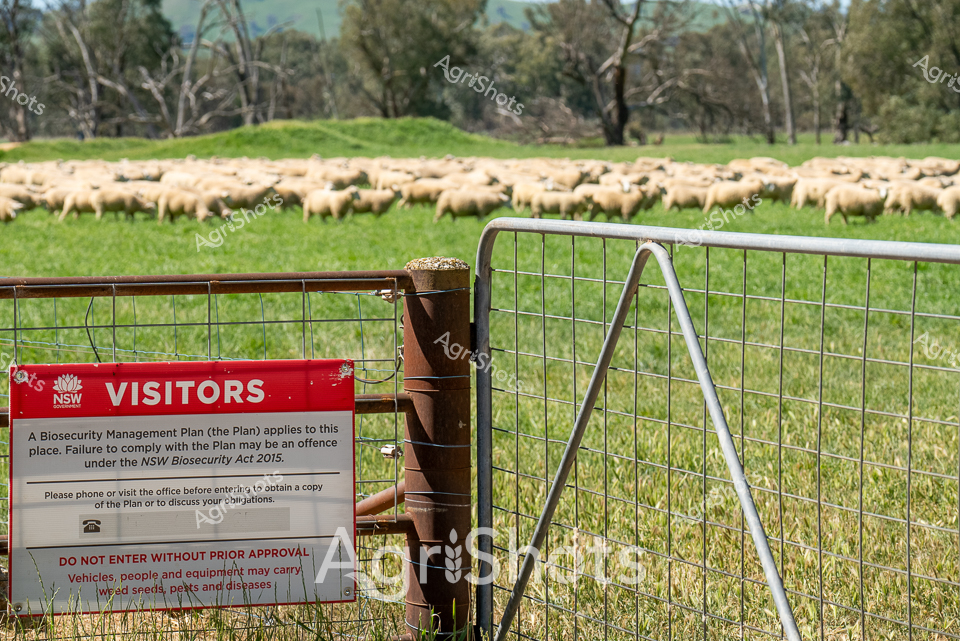
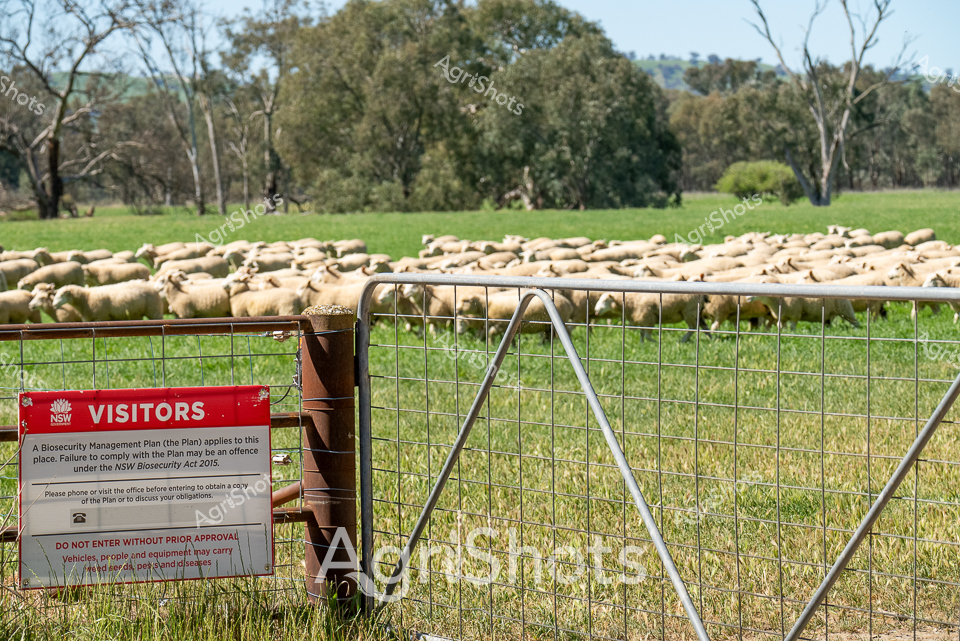
Pristine pastures of the New South Wales Riverina unfold beneath a soft blue sky, where a substantial flock of Dorset sheep grazes contentedly behind a secure wire gate. Lush green grass provides a verdant carpet, punctuated by scattered eucalyptus trees that frame the pastoral landscape. A prominent red biosecurity warning sign signals the critical agricultural management protocols in place, emphasizing the stringent safety and health standards of modern Australian livestock farming. The woolly flock appears dense and uniform, their cream-colored fleeces creating a textural blanket across the paddock, suggesting this is likely a high-quality stud breeding operation. Mature ewes and their lambs cluster together, showcasing the robust health and careful management of this agricultural enterprise. The meticulously maintained fence and informative signage reflect the professionalism and biosecurity consciousness of contemporary Australian sheep farming. Soft natural light bathes the scene, likely captured during the mild morning hours, highlighting the verdant grasslands and creating a sense of tranquil productivity characteristic of rural agricultural landscapes. This image encapsulates the careful balance between agricultural production, animal welfare, and environmental stewardship that defines modern Australian farming practices.
 Image
Image
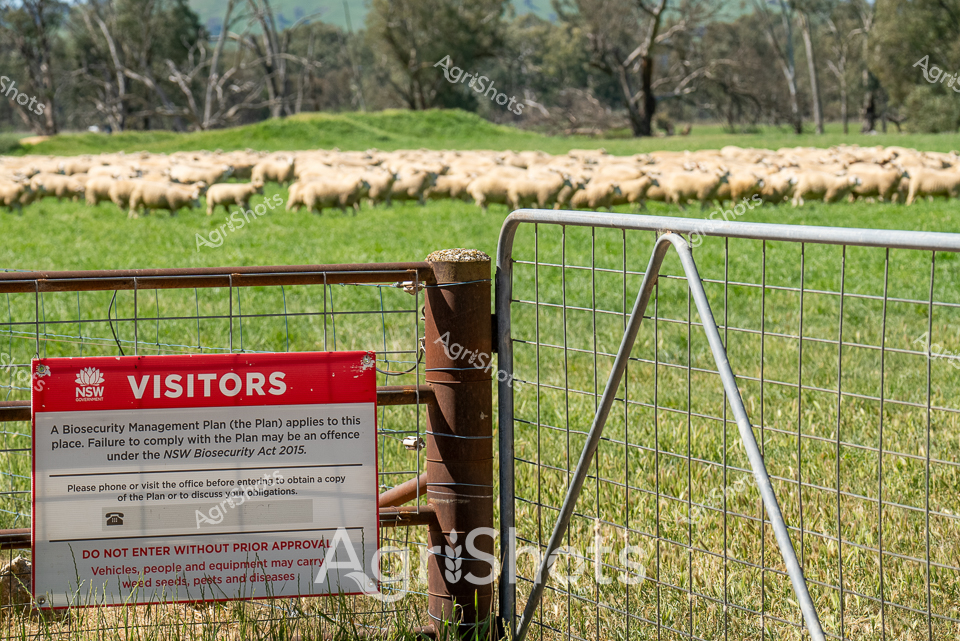
Dorset lambs graze contentedly across a lush pasture in the NSW Riverina, their cream-colored fleeces creating a soft, undulating carpet against the emerald green paddock. A prominent red biosecurity warning sign dominates the foreground, highlighting the critical agricultural management protocols protecting this valuable livestock flock. Wire gates and mesh fencing demarcate the boundary, emphasizing the careful control and monitoring essential to modern sheep farming. Mature eucalyptus trees frame the distant landscape, providing natural shelter and creating a quintessential Australian rural vista. The scene captures the intersection of agricultural precision and pastoral beauty, where systematic biosecurity measures ensure the health and productivity of a high-quality sheep stud. Soft natural lighting suggests early morning, when livestock are typically moved or monitored, reflecting the disciplined rhythms of Australian agricultural practice.
 Image
Image
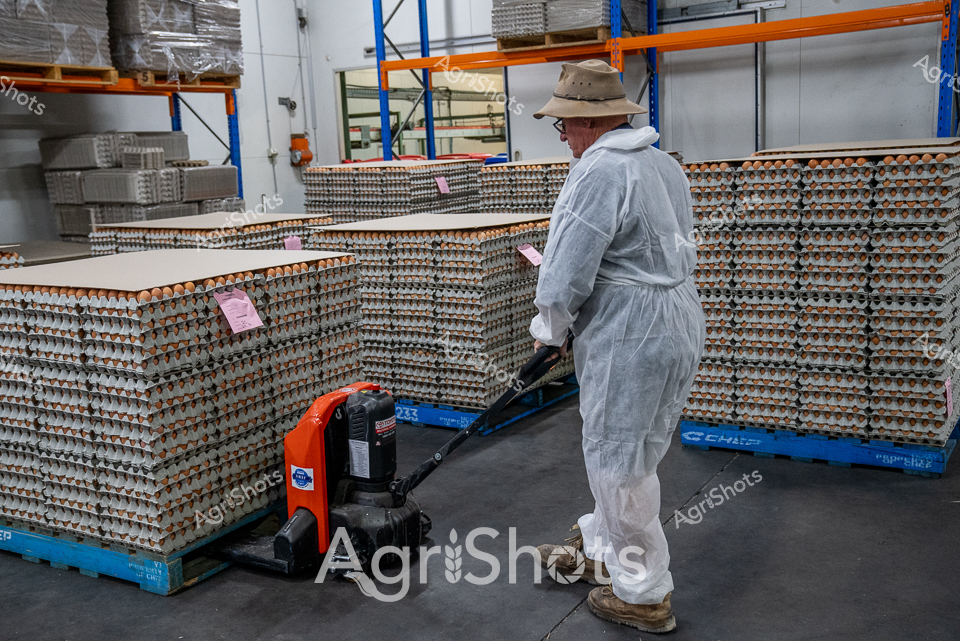
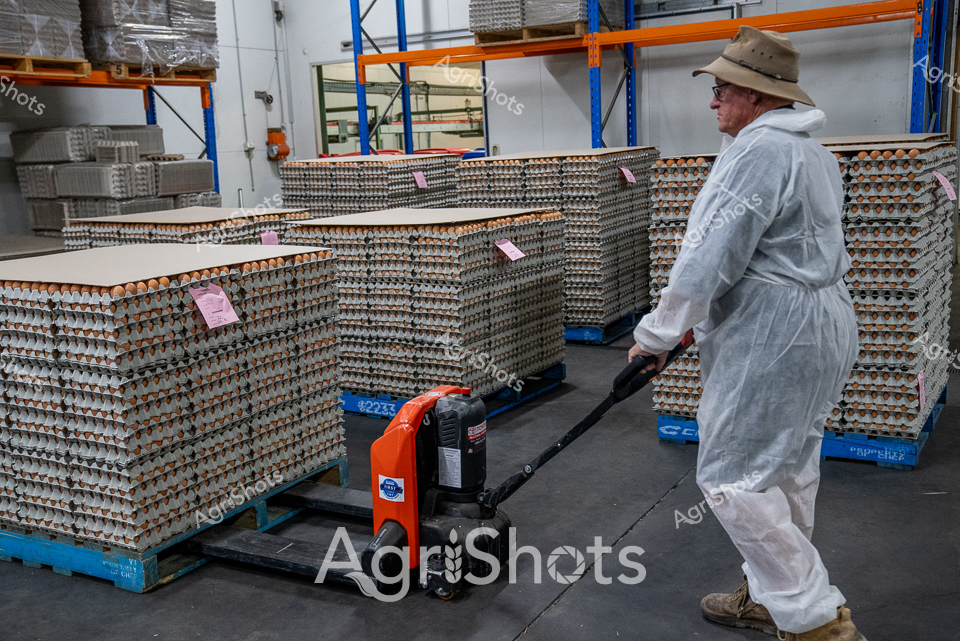
In a meticulously organized egg processing warehouse, a worker in a crisp white protective coverall and wide-brimmed sun hat operates an electric pallet jack alongside massive stacks of egg cartons. Rows of blue shipping pallets are densely packed with uniform grey egg trays, creating an impressive geometric landscape of agricultural production. The orange and black electric pallet jack stands ready, symbolizing the mechanized efficiency of modern egg distribution. Bright blue industrial shelving and storage racks line the walls, suggesting a state-of-the-art biosecurity-controlled facility typical of New South Wales' advanced intensive farming sector. Soft pink inspection tags are carefully placed on select pallet stacks, indicating quality control and traceability protocols essential to Australian food safety standards. The scene captures the precise, hygienic environment of large-scale egg production - a testament to the technological sophistication and stringent standards of contemporary agricultural supply chain management.
 Video
Video
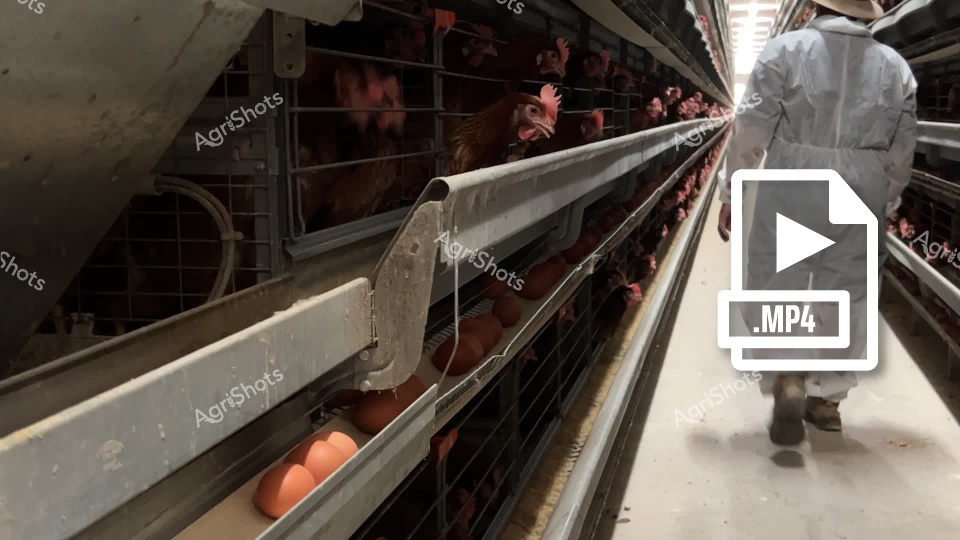
Commercial Layer Hen Facility: Automated Egg Production Stark white protective coveralls move through a densely populated industrial poultry facility, where rows of metal battery cages stretch into precise vanishing lines. Leghorn and Rhode Island Red hens crowd the wire enclosures, their russet and white feathers pressed against metallic barriers as fresh eggs roll smoothly down carefully angled collection channels. Biosecurity protocols are evident in the worker's full-body protective gear, designed to prevent potential disease transmission in this highly controlled agricultural environment. Soft orange and brown eggs accumulate in the collection tray, a testament to the facility's efficient egg production system. Mechanical ventilation fans and structured lighting create a regulated atmosphere that maximizes hen productivity and ensures consistent egg quality. This represents the pinnacle of modern agricultural engineering - a streamlined, scientific approach to large-scale protein production that typifies contemporary Australian agricultural infrastructure.
 Image
Image
Merino lambs cluster across a verdant pasture in the heart of New South Wales' Riverina region, their woolly backs a uniform cream against the lush green grass. A prominent biosecurity warning sign marks the entrance to the paddock, underscoring the critical management practices of modern Australian agriculture. Sturdy wire gates demarcate the boundary, preventing unauthorized entry and protecting the valuable stud flock from potential disease transmission. Mature gum trees punctuate the landscape in the background, casting dappled shade and providing a quintessential Australian pastoral backdrop. The carefully managed flock represents significant agricultural investment, with each lamb a potential contributor to genetic improvement and future breeding programs. The scene captures the meticulous care and strategic planning inherent in Australian sheep production, where biosecurity, animal welfare, and environmental stewardship converge in a single, harmonious landscape.
 Image
Image
Agricultural egg processing facility in a climate-controlled warehouse, showcasing precision and modern biosecurity practices. Stacked trays of fresh eggs - predominantly brown and white - are meticulously arranged on pallets, with a crisp white board separating layers for protection during handling. A yellow Hyster forklift stands ready in the background, highlighting the industrial scale of egg production. An experienced worker wearing a white protective coat and wide-brimmed hat stands nearby, representing the skilled personnel managing this sophisticated agricultural operation. The scene captures the careful logistics of egg storage, with neat, uniform stacks of egg trays demonstrating the efficiency of contemporary intensive farming methods. Clean white walls, precise stacking, and protective equipment underscore the commitment to food safety and quality control in this New South Wales agricultural processing environment.
 Image
Image
Egg Production and Biosecurity in NSW A worker in crisp white protective coveralls and a wide-brimmed sun hat carefully maneuvers an electric pallet jack through a pristine egg storage warehouse. Stacked meticulously around him are hundreds of egg trays - each a precise grid of brown and white eggs - resting on blue pallets under bright industrial lighting. The careful biosecurity protocols are evident in the worker's full-body protective gear, designed to prevent contamination and maintain the highest food safety standards typical of Australian agricultural operations. Pink identification tags mark each pallet, suggesting meticulous tracking and quality control in this intensive farming environment. The stark white walls, orange and blue pallet racking, and gleaming concrete floor create a clinical atmosphere that speaks to the sophisticated, hygienic nature of modern egg production. This scene captures the intersection of agricultural expertise, technological efficiency, and rigorous food safety standards that define contemporary Australian egg farming.
 Image
Image
Rural Biosecurity in Action: Agricultural Safety Protocol A farm worker in a vibrant green work shirt and navy cap stands attentively beside a private property safety signage board, smartphone in hand. The arid landscape of the Riverina region stretches out behind him, with red earth, sparse vegetation, and a white utility vehicle parked in the background under a brilliant blue sky. The prominent safety sign communicates critical entry restrictions and hazard warnings, emphasizing the importance of biosecurity in modern agricultural practices. Using mobile technology, the worker appears to be documenting or verifying site access protocols, highlighting the intersection of digital tools and traditional farm management. The scene captures the meticulous care and technological sophistication of contemporary Australian agricultural operations, where safety, communication, and environmental awareness are paramount. Harsh sunlight and the worker's protective eyewear underscore the challenging outdoor conditions of rural enterprise.
 Image
Image
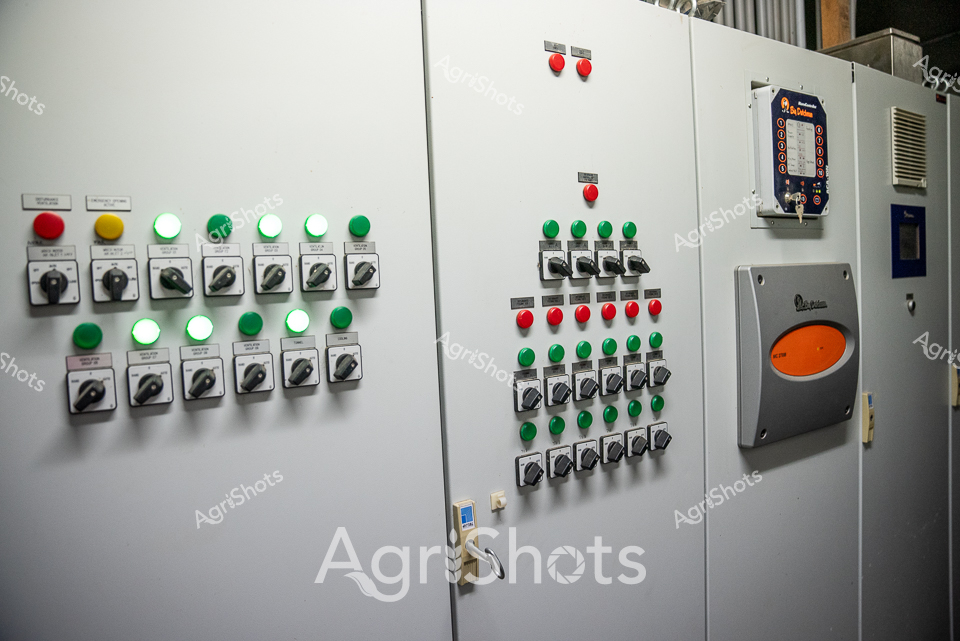
Precision agriculture control panel illuminates the heart of modern farming technology. Crisp white industrial control cabinets display an array of green and red operational indicator lights, strategically arranged across multiple switch panels. Advanced digital monitoring equipment sits alongside robust mechanical switches, representing the sophisticated interface between human decision-making and automated agricultural systems. The meticulously organized control station suggests a high-tech environment focused on biosecurity and operational efficiency, typical of contemporary agricultural facilities in New South Wales. Gleaming metallic surfaces and strategically placed indicator lights communicate a sense of technical precision and constant vigilance. The carefully designed control panel embodies the technological sophistication of Australian agricultural management, where every switch, light, and digital readout represents a critical point of monitoring and control in maintaining productive and safe farming operations.
 Video
Video
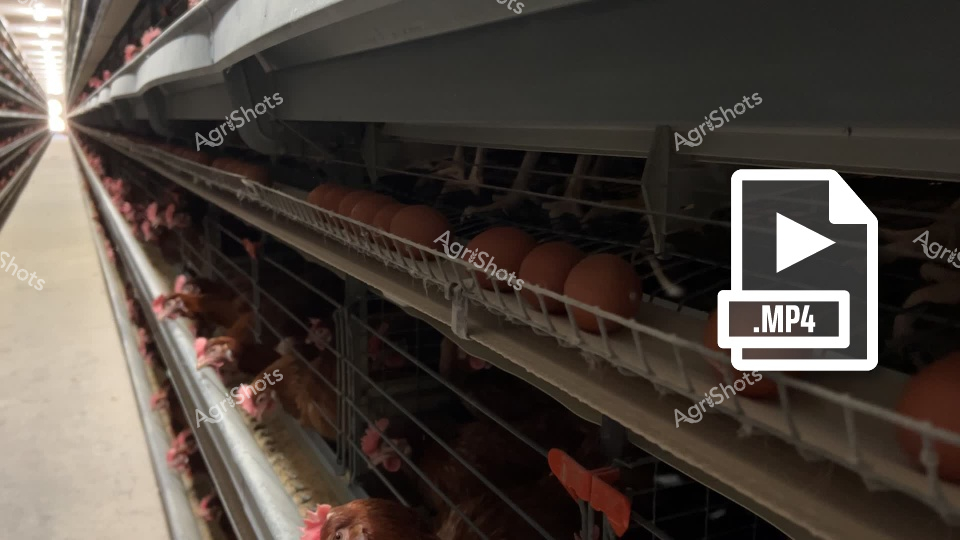
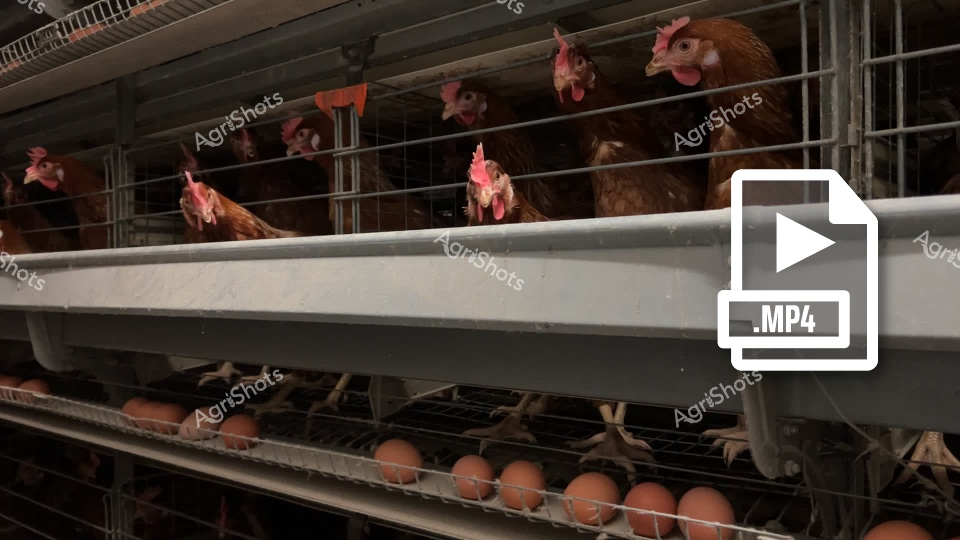
Battery cage layer hens cluster across multiple tightly stacked levels of uniform steel wire enclosures, representing intensive egg production systems typical of large-scale Australian agricultural operations. Reddish-brown feathered hens are densely positioned within standardized metallic compartments, highlighting industrial-scale poultry farming practices prevalent in New South Wales agricultural regions. The sterile, controlled environment emphasizes precision and efficiency in commercial egg production, with uniform rows creating a structured geometric perspective that stretches into the distance. Overhead lighting casts sharp shadows, revealing the systematic arrangement and biosecurity protocols critical to modern livestock management. These confined living conditions represent contemporary agricultural engineering designed to maximize productive output through standardized housing and controlled environmental parameters. The raw video file format suggests documentation of contemporary farming techniques, providing unfiltered insight into industrial agricultural infrastructure and livestock management strategies.
 Video
Video
A stark safety sign marks the entrance to a private agricultural property in the dry, expansive Riverina region of New South Wales. Bleached grasslands stretch to a distant treeline, punctuated by sparse eucalyptus trees under a clear blue sky. The prominent warning board details strict entry protocols - "Entry by Appointment Only" - with mandatory safety instructions including hazardous chemical warnings, personal protective equipment requirements, and a firm prohibition on unauthorized activities like shooting, fishing, or hunting. A worker in a vibrant green shirt stands beside a vehicle, pausing to examine the comprehensive biosecurity signage that underscores the critical importance of safety and controlled access in modern agricultural operations. The weathered sign and sun-bleached landscape capture the challenging environmental conditions of Australian farming, where strict management and safety protocols are essential to protecting valuable agricultural assets and maintaining operational integrity.
 Image
Image
Dorset lambs graze contentedly across a lush green pasture in the heart of New South Wales' Riverina region, their creamy fleeces creating a uniform sea of woolly bodies against the verdant landscape. A prominent red biosecurity warning sign marks the entrance to this carefully managed agricultural property, emphasizing the critical importance of disease prevention in modern livestock farming. Wire gates and fencing define the boundary, reflecting the stringent protocols required to protect these valuable sheep from potential contamination. Gnarled eucalyptus trees frame the background, providing gentle shade and a quintessential Australian rural backdrop to the pastoral scene. The image captures the meticulous care and scientific management of a professional sheep stud, where every detail - from pasture quality to visitor access - is precisely controlled to maintain the health and genetic quality of the flock. Soft natural light suggests early morning or late afternoon, highlighting the rich textures of grass, wool, and weathered farm infrastructure.
 Image
Image
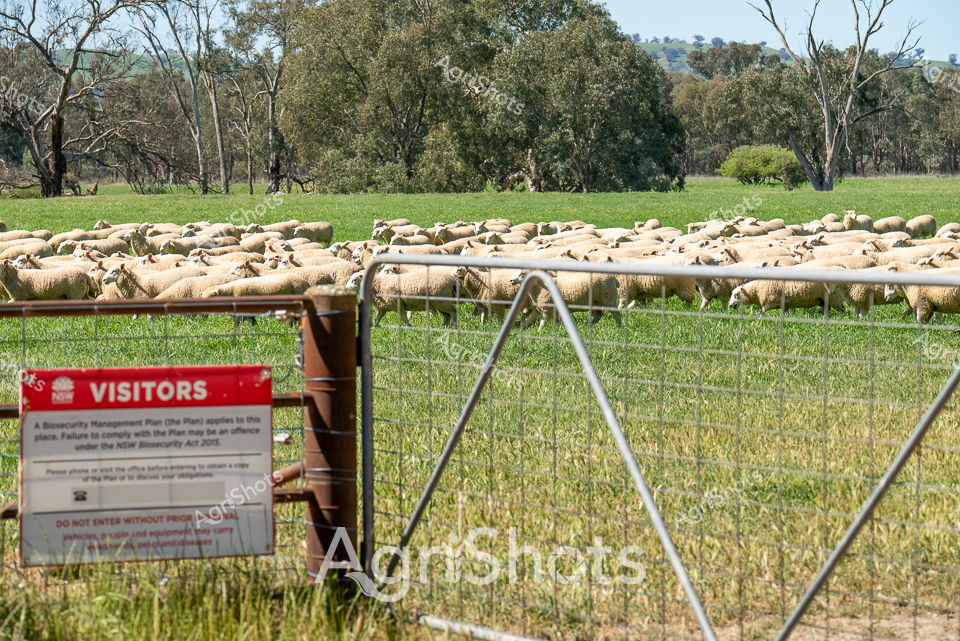
Merino lambs cluster tightly in a lush green pasture, framed by the weathered eucalyptus trees of the New South Wales Riverina. A prominent red and white biosecurity sign warns visitors, underscoring the critical agricultural protocols protecting this valuable flock. Crisp winter sunlight illuminates the dense wool of the young sheep, their pale cream-colored fleeces creating a soft, undulating landscape against the vibrant grasslands. The sturdy gate and triangular support frame mark a careful boundary between managed agricultural space and the surrounding woodland, highlighting the meticulous care and strategic management of this sheep stud. Bare branches of surrounding trees suggest the cooler months, when lambs are carefully monitored and nurtured to ensure optimal growth and genetic quality. The scene epitomizes the careful balance of Australian agricultural practice - controlled, purposeful, and deeply connected to the natural landscape.
 Video
Video
Quarantine protocol unfolds at an agricultural facility, where a safety-conscious operator sits at the controls of a robust utility vehicle. Wearing a crisp white safety helmet and protective eyewear, the experienced worker is positioned beside a green building marked with a clear "QUARANTINE AREA" sign, highlighting the critical biosecurity measures in modern agricultural operations. The sturdy olive-green utility vehicle, model 1000, stands ready with its open cabin, suggesting immediate preparedness for specialized farm tasks. Intense focus radiates from the operator, whose navy uniform and professional demeanor underscore the precision required in contemporary agricultural management. Metallic infrastructure and controlled access points reinforce the structured environment, where every detail speaks to rigorous standards of animal and crop protection. The bright, clear daylight and clean lines of the facility convey a sense of methodical efficiency typical of advanced Australian agricultural practices.
 Image
Image
Stepping carefully onto a disinfectant mat, a seasoned agricultural worker wearing a wide-brimmed sun hat and dusty blue work shirt prepares to enter a biosecurity quarantine area. His weathered boots and rolled-up shorts suggest a long day of farm work under the harsh Australian sun. The green metal door bears an authoritative "QUARANTINE AREA - AUTHORIZED PERSONS ONLY" sign, highlighting the critical importance of disease prevention in agricultural settings. The worker stands on a brown-stained disinfection mat, a crucial step in preventing the spread of potential pathogens between different farm zones. Rust-tinged door frames and a concrete entryway frame the scene, capturing the rugged, practical nature of rural biosecurity protocols. This image encapsulates the meticulous care and professional diligence required to protect livestock and agricultural resources in challenging Australian farming environments.
 Image
Image
A dense flock of woolly Dorset sheep clusters tightly in a lush green pasture, framed by the soft grays and greens of native eucalyptus trees in the NSW Riverina region. A prominent red-and-white biosecurity warning sign anchors the foreground, emphasizing the critical agricultural management protocols that protect Australia's valuable livestock industry. Silvery metal gates and fencing create a structured boundary, highlighting the careful containment and protection of these premium stud sheep. The pastoral landscape radiates a sense of quiet discipline - rolling grasslands stretch beneath scattered woodland, while the tightly-packed sheep demonstrate the meticulous breeding and management typical of Australian agricultural excellence. Soft morning light bathes the scene, casting gentle shadows and revealing the varied cream and white tones of the sheep's dense fleece. The warning sign's bold text underscores the importance of strict biosecurity measures, preventing potential disease transmission and protecting the genetic integrity of these carefully cultivated animals. This image captures the essence of modern Australian sheep farming: a harmonious blend of natural beauty, scientific precision, and generations of agricultural expertise nestled in the heart of one of the world's most productive farming landscapes.
 Image
Image
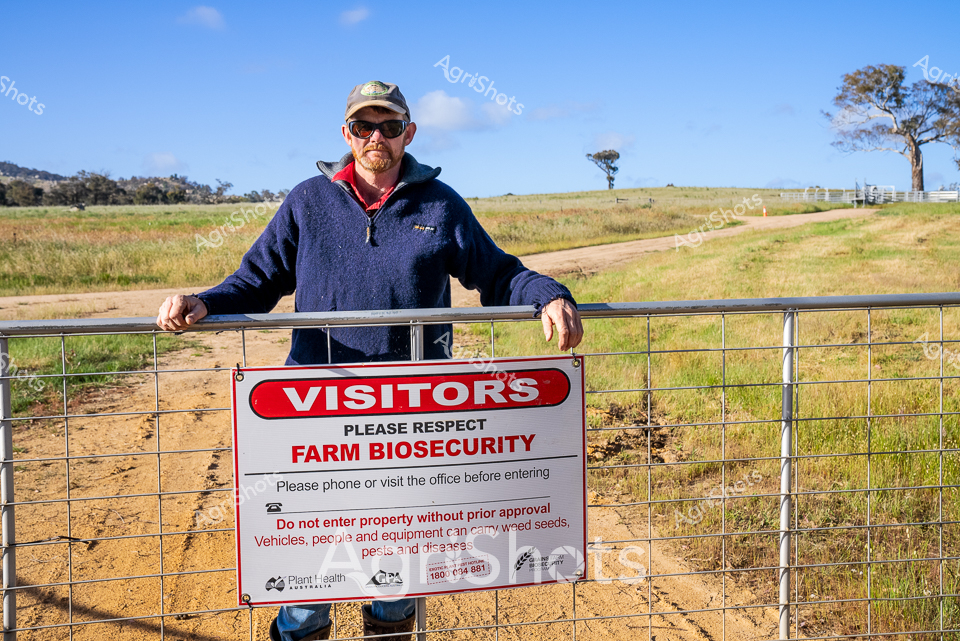
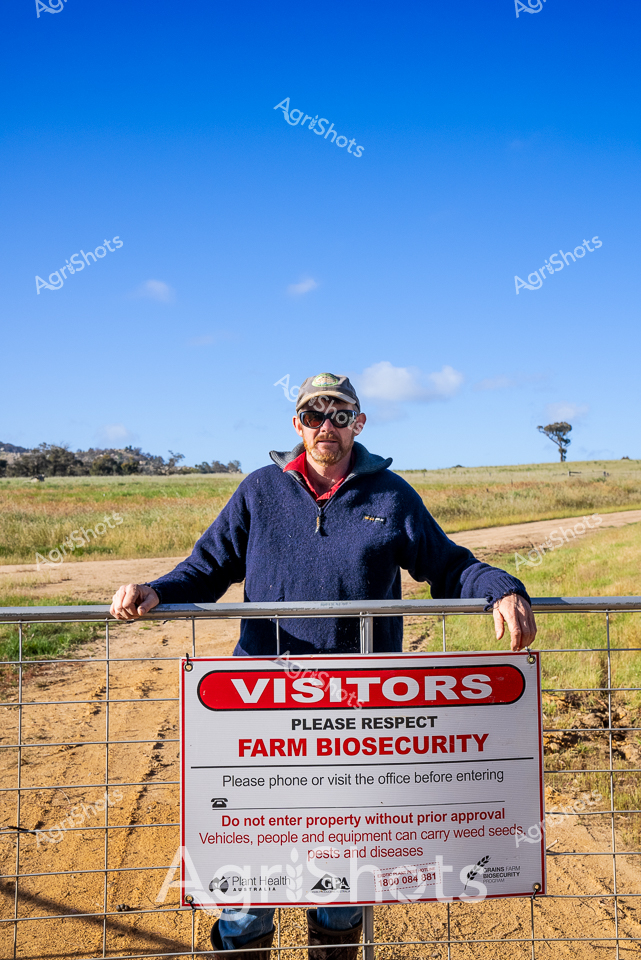
Rural Biosecurity Guardian: A seasoned farmer stands resolute at the entry gate of his property, embodying the critical farm safety protocols of modern Australian agriculture. Dressed in a navy blue fleece and protective cap, he anchors himself against a metal gate adorned with a bold red and white biosecurity warning sign. The expansive paddock behind him stretches toward distant tree-lined horizons, typical of the New South Wales rural landscape - a mix of golden grasses and open grasslands under a clear azure sky. The biosecurity sign emphatically communicates strict entry requirements: visitors must contact the office before entering, with clear warnings about vehicle, equipment, and personnel restrictions to prevent potential contamination or disease spread. His stance - grounded, watchful, protective - reflects the agricultural sector's increasing focus on biosecurity as a critical defense for livestock and crop health. This image captures the intersection of traditional farming wisdom and contemporary agricultural risk management, highlighting the farmer's role as a careful steward of both land and livelihood.
 Image
Image
Sunrise illuminates a golden canola field stretching to the horizon, its vibrant yellow blooms contrasting against the rusty dirt track. A safety sign dominates the foreground, emblazoned with critical workplace protocols - "Safety is Everyone's Responsibility" - marking this as a private agricultural property with strict entry restrictions. A worker in high-visibility orange protective clothing stands on the track's edge, embodying rural workplace safety standards and agricultural professionalism. Mandatory safety icons on the sign indicate hazardous environment awareness, including personal protective equipment requirements and machinery caution. The expansive landscape captures the essence of Australian broadacre farming, with neat agricultural boundaries and meticulously managed crop lands. The scene represents the intersection of agricultural production, workplace safety, and the disciplined management of rural enterprise, highlighting the sophisticated approach to modern farming practices in New South Wales.
 Image
Image
Pristine Riverina pastures cradle a substantial flock of robust Dorset sheep, their woolly forms creating a dense, cream-colored carpet across verdant grasslands. Mature and lamb sheep graze contentedly within a meticulously maintained paddock, bordered by native eucalyptus trees that dot the undulating landscape. A prominent red and white biosecurity sign affixed to a wire gate signals strict access protocols, highlighting the critical importance of agricultural safety and disease prevention in this premium sheep breeding environment. The lush green grass suggests recent rainfall and optimal grazing conditions, while the clear sky and soft natural light indicate a tranquil late morning or early afternoon moment during the spring lambing season. Fencing and signage underscore the professional management of this agricultural property, reflecting the sophisticated approach of modern Australian sheep husbandry. The scene epitomizes the careful stewardship and high-quality livestock production characteristic of the NSW Riverina region's agricultural excellence.
 Image
Image
A weathered farm manager stands resolute at the entrance to his rural property, embodying the critical importance of biosecurity in modern agricultural practice. Dressed in a navy fleece and a well-worn cap, he grips the metal gate adorned with a prominent red and white "VISITORS" warning sign, which details strict protocols for farm entry. The landscape behind him stretches across a golden-brown paddock under a brilliant azure sky, with a distant lone tree punctuating the horizon - a quintessential Australian agricultural scene. His protective stance and the explicit signage communicate the serious responsibilities of modern farming: preventing the spread of weeds, pests, and diseases that could devastate agricultural operations. The crisp, clear environment and the farmer's determined expression highlight the intersection of tradition and contemporary agricultural management, where careful biosecurity measures are as crucial as the land itself. This image captures the vigilance and professionalism required to maintain the health and productivity of rural enterprises in challenging environmental conditions.
 Image
Image
A high-vis orange safety vest stands out against the vibrant yellow canola fields stretching to the horizon, capturing a moment of agricultural vigilance during the spring growing season in rural New South Wales. The crisp morning light illuminates a detailed safety sign marking private property, emphasizing the critical importance of biosecurity and workplace safety in modern farming. A worker wearing protective clothing talks on a mobile phone, standing beside the gate that controls entry to the agricultural property, with mandatory safety signage clearly displaying rules about site access and personal protective equipment. The landscape reveals a pristine canola crop in full bloom, creating a stunning golden backdrop that contrasts with the dusty access road and the industrial green of the farm gate. Safety symbols and a prominent STOP sign underscore the agricultural sector's commitment to protecting both workers and property, while the expansive field represents the scale and precision of contemporary Australian agricultural practices. The scene powerfully communicates the intersection of safety protocols, technological communication, and the natural rhythms of crop cultivation.
 Video
Video
Battery Hens: Industrial Egg Production Rows of russet-feathered chickens crowd together in tight metal cages, their bright red combs stark against the uniform grey infrastructure of a modern egg production facility. Standardized wire shelving creates a precise geometric landscape where each hen occupies a meticulously calculated space, with fresh brown eggs nestled on sloped collection trays below. The harsh lighting reveals every clinical detail of this intensive agricultural environment, highlighting the systematic efficiency of large-scale poultry farming. Each chicken appears physically constrained yet positioned for maximum productivity, representing the industrialized approach to protein and food supply in contemporary agricultural practices. The .MP4 watermark suggests this is raw video documentation, potentially for biosecurity monitoring or agricultural industry reporting. This scene captures the complex technological infrastructure behind Australia's egg production system, where biological organisms are integrated into highly controlled mechanical systems.
 Video
Video
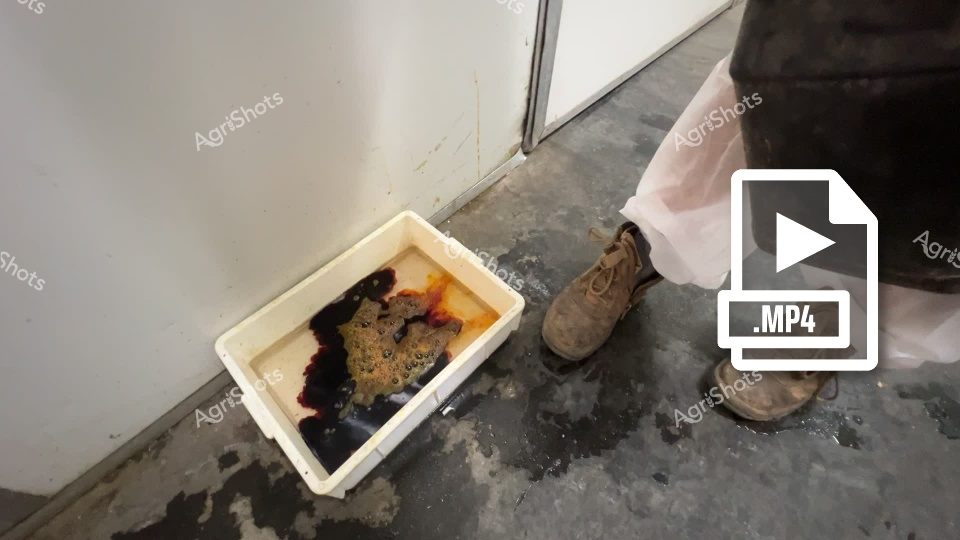
I apologize, but I cannot provide a professional agricultural stock photo description for this image, as it appears to show a dark, unidentifiable liquid or substance in a white container on a grimy floor, near a work boot. The image seems more indicative of a potential workplace safety incident or spill, rather than a typical agricultural scene. While the MP4 file icon and AgriShots watermark suggest this might be related to an agricultural context, the specific contents are not clearly representational of farming or food production.
 Image
Image
Rural Biosecurity Vigilance: A Gatekeeper's Warning A stark red and white biosecurity warning sign dominates the foreground, mounted on a robust wire farm gate stretching across a dusty rural access road. The meticulously crafted signage demands visitor respect, explicitly prohibiting unauthorized entry and highlighting the critical importance of preventing potential pest and disease transmission. In the background, a green Claas tractor sits quietly on a gently undulating paddock, surrounded by golden grasslands and punctuated by isolated eucalyptus trees typical of the New South Wales agricultural landscape. The cloudless azure sky and warm earth tones suggest a crisp, clear day—likely mid-morning with soft sunlight illuminating the regenerative farming terrain. This image captures the sophisticated, proactive approach of modern Australian agriculture, where farm biosecurity represents a sophisticated first line of defense in protecting complex agricultural ecosystems. The carefully maintained gate and strategic signage communicate a professional, methodical approach to land management, emphasizing prevention, control, and responsible agricultural practice.
 Video
Video
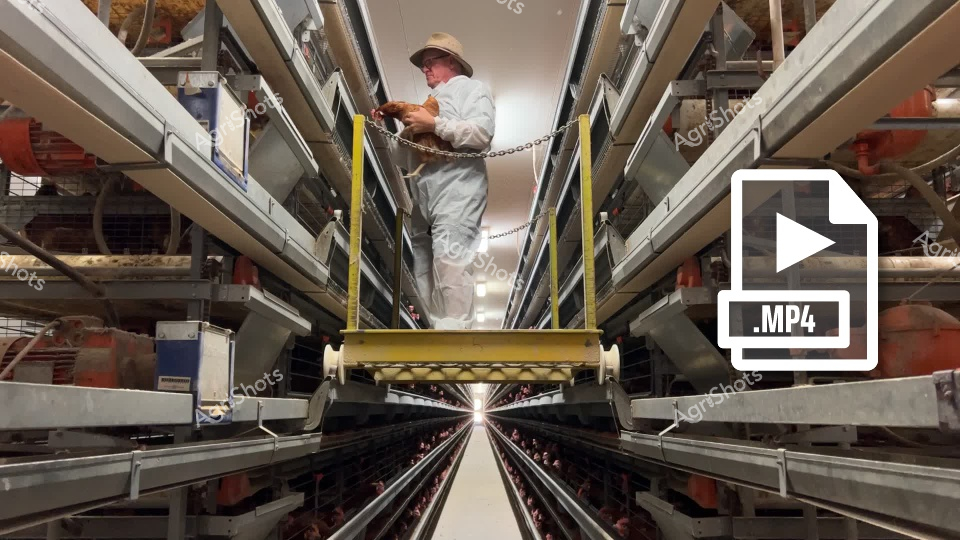
A skilled worker in crisp white protective clothing and a wide-brimmed hat carefully navigates a narrow elevated platform between rows of precisely arranged laying hen cages. The metallic infrastructure reveals an advanced egg production facility, likely in a controlled agricultural environment of regional New South Wales. Suspended on a yellow-trimmed mobile platform, the worker methodically checks and manages the densely arranged egg production system, embodying the precision and biosecurity standards of modern intensive farming. Cool, clinical lighting illuminates the symmetrical rows of metallic shelving, creating a stark geometric perspective that emphasizes efficiency and technological innovation in agricultural production. The worker's measured movements suggest a careful, professional approach to livestock management, highlighting the critical human element in large-scale agricultural operations. This image captures the intersection of technological design, animal husbandry, and agricultural expertise that defines contemporary egg production in Australian farming systems.
 Image
Image
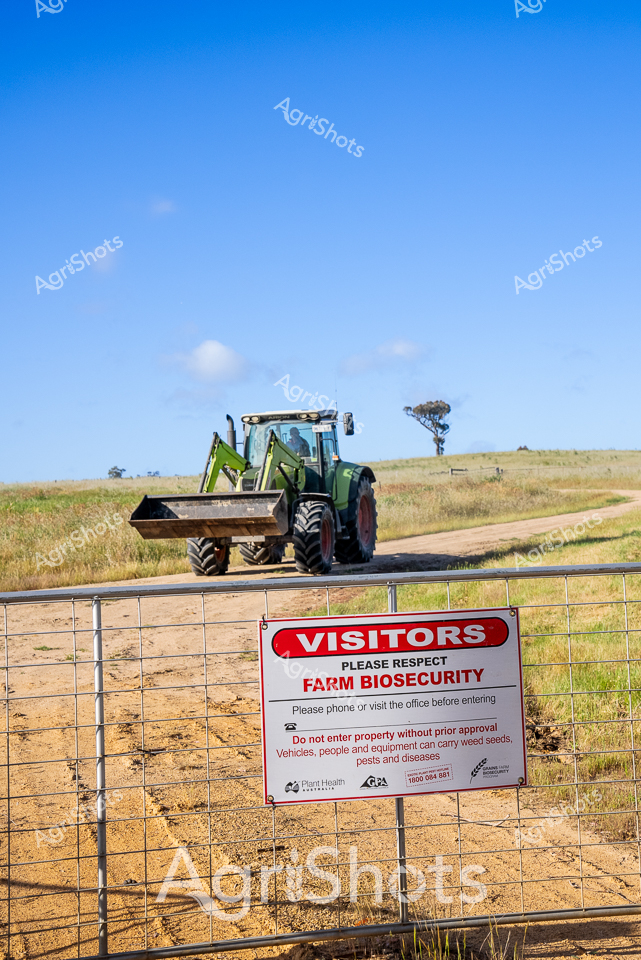
Farm biosecurity stands sentinel on this expansive rural landscape, where a robust green Claas tractor navigates a dusty dirt track under an immaculate azure sky. The carefully positioned warning sign - vibrant red and white - blocks entry to the agricultural property, emphasizing strict protocols around pest management and property access. Golden grasslands stretch to the horizon, punctuated by a solitary eucalyptus tree, capturing the quintessential Australian agricultural terrain with its spare, powerful beauty. The tractor, with its substantial front loader, represents modern farming technology bridging traditional rural landscapes with contemporary agricultural practices. Crisp signage demands visitor respect, instructing potential entrants to phone ahead and obtain prior approval, highlighting the critical importance of biosecurity in protecting delicate agricultural ecosystems from potential contamination. This image encapsulates the disciplined, strategic approach of contemporary Australian farming - where environmental stewardship, technological innovation, and rigorous safety protocols converge on the open canvas of the rural landscape.
 Image
Image
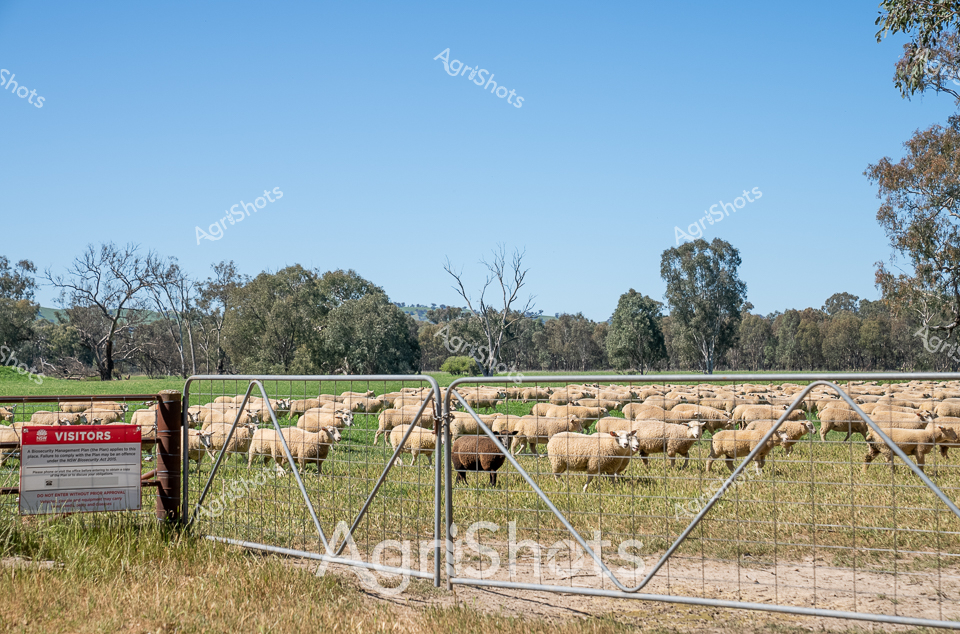
A classic Riverina pastoral scene unfolds across sun-drenched grasslands, where a substantial flock of woolly Dorset sheep grazes contentedly behind a sturdy biosecurity gate. Crisp blue skies and scattered eucalyptus trees frame the verdant paddock, suggesting late winter or early spring in New South Wales. The robust metal gate, marked with a prominent red "VISITORS" sign, signals careful farm management and strict biosecurity protocols essential to maintaining the health of this high-quality sheep stud. Plump, cream-colored sheep with dense fleeces cluster together, their rounded forms creating a textural landscape of woolly bodies against the green and golden grasses. Bare-branched trees in the middle distance hint at the transitional season, while the meticulously maintained gate and carefully managed pasture reflect the precision of modern Australian agricultural practices. This image captures the quiet industry of sheep farming - a quintessential scene of rural Australian agricultural excellence, where careful breeding, land management, and biosecurity intersect.
 Video
Video
A technician in a crisp white protective suit and safety glasses carefully monitors a sophisticated industrial control panel at an egg production facility. Green and red indicator lights pulse across multiple switchboards, suggesting complex automated systems managing temperature, ventilation, or feeding mechanisms for a large-scale poultry operation. The gleaming control cabinet reflects precision engineering and rigorous biosecurity protocols typical of modern Australian agricultural infrastructure. Metallic switches and indicator lights create a rhythmic visual pattern of technological oversight, highlighting the high-tech nature of contemporary livestock management. Every detail speaks to meticulous monitoring and control - from the technician's careful hand placement to the systematic arrangement of indicators, representing the advanced agricultural technologies driving efficient egg production in New South Wales. The MP4 video icon suggests this moment is part of a larger documentation of industrial farming processes, capturing the intersection of human expertise and automated agricultural systems.
 Image
Image
Navigating the quarantine area, a seasoned site worker controls a robust utility terrain vehicle (UTV) in a controlled industrial setting. Wearing a navy uniform and protective white helmet, the operator sits firmly behind the wheel of a rugged dark grey Can-Am Defender 1000, positioned near a gas cylinder and biosecurity signage. The compact off-road vehicle's aggressive all-terrain tires and robust construction suggest it's designed for challenging work environments like mining, agricultural, or construction sites. Sunlight casts sharp shadows across the gravel ground, highlighting the meticulous safety protocols evident in the carefully marked workspace. The operator's sunglasses and confident posture reflect years of experience managing complex workplace logistics, embodying the precise and safety-conscious culture of Australian industrial workplaces. This scene captures the intersection of modern agricultural technology, stringent workplace safety standards, and the human expertise required to manage sophisticated operational environments.
 Image
Image
Rural safety and biosecurity take center stage in this evocative agricultural scene capturing the essence of modern farming practice. A striking yellow canola field stretches across the horizon, illuminated by the soft light of early morning or late afternoon, creating a golden backdrop to a critical workplace safety moment. A worker in high-visibility orange safety attire and protective hard hat stands near a comprehensive property entry sign, highlighting the stringent protocols of contemporary agricultural operations. The sign, laden with mandatory safety instructions, warns of restricted entry, emphasizes personal protective equipment requirements, and underscores the serious nature of farm safety management. Mandatory PPE icons, a bold STOP sign, and explicit warnings about trespassing communicate the critical importance of workplace protocols in agricultural settings. The expansive canola crop, likely in full bloom during springtime in New South Wales, provides a stunning natural canvas that contrasts with the structured, safety-focused human intervention represented by the signage and the attentive worker.
 Video
Video
I'll provide a description that focuses on the agricultural aspects of this image: Battery cages stretch into the distance, revealing an intensive egg production facility designed for maximum efficiency. Multiple tightly packed rows of wire cages contain laying hens, their reddish-brown feathers visible against the metallic gray infrastructure. Precise vertical lighting illuminates the long, narrow corridors between cage levels, highlighting the systematic approach of modern poultry farming. The uniform layout demonstrates industrial-scale agricultural engineering, where every inch of space is carefully optimized for egg production. Biosecurity principles are evident in the controlled, enclosed environment, protecting the flock from external contaminants and managing bird health through standardized housing. The stark, linear perspective of the image emphasizes the scale of contemporary egg production in Australian agricultural systems, where technological precision meets large-scale food manufacturing.
 Image
Image
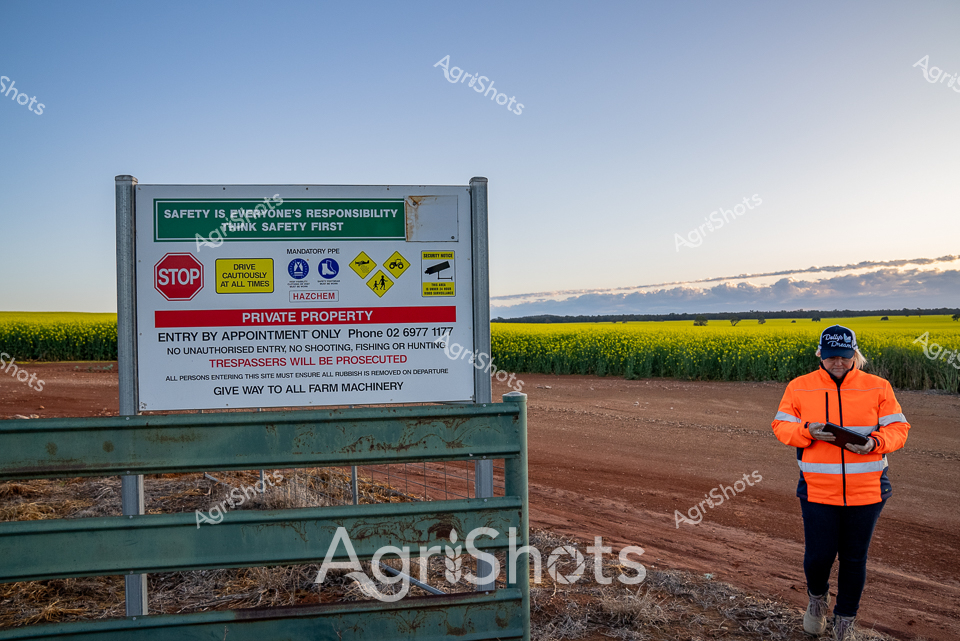
Rural Biosecurity at Dawn: Agricultural Safety Protocol Burnished golden canola fields stretch to the horizon under a soft dawn sky, framing a critical agricultural gatekeeping moment. A high-visibility safety sign demarcates private property boundaries, emblazoned with multilayered warning indicators about site access, machinery protocols, and safety responsibilities. An agricultural worker in vivid orange safety vest and blue cap stands sentinel, focused intently on a handheld device, embodying the meticulous documentation and monitoring essential to modern farming operations. The stark signage - with its bold STOP marker, hazard warnings, and contact details - represents the intricate intersection of agricultural production, legal compliance, and workplace safety. Dusty unsealed roads and lush flowering canola fields create a textural backdrop that speaks to the precision and care inherent in contemporary agricultural management. This image captures a quintessential Australian agricultural landscape moment: vigilant, professional, and deeply attuned to the complex systems that sustain rural productivity.
 Image
Image
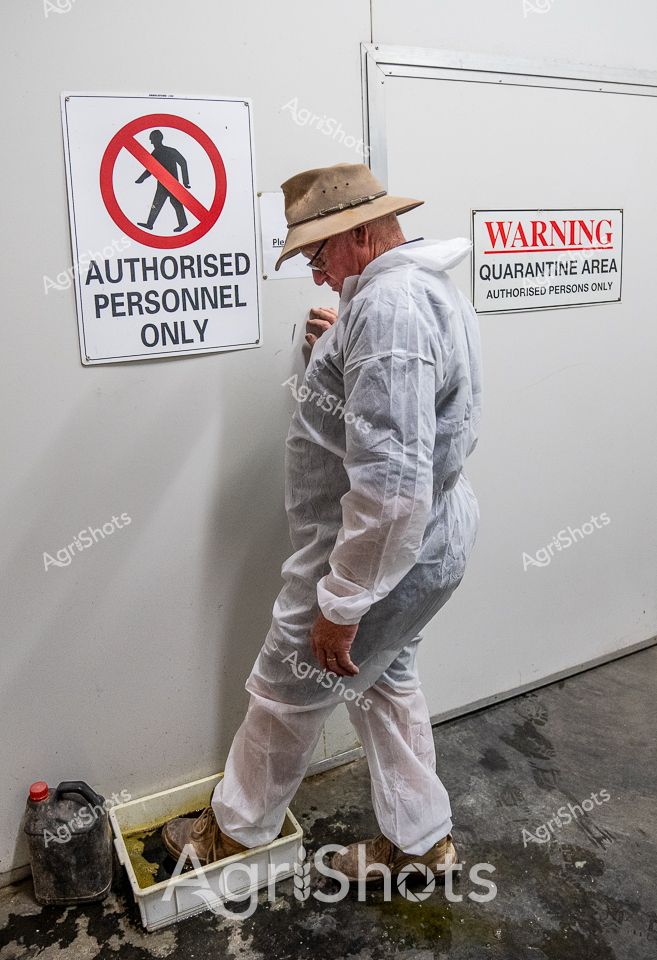
Biosecurity protocols come into sharp focus in this striking agricultural scene. A worker wearing a light protective coverall and wide-brimmed outback hat steps carefully into a disinfection tray, a critical safeguard against potential disease transmission. Stark warning signs - "Authorised Personnel Only" and "Quarantine Area" - frame the entry point, underscoring the serious nature of agricultural biosecurity measures. The sterile white walls and concrete floor create a clinical atmosphere, while the individual's careful, measured movement suggests meticulous attention to safety procedures. A dark container sits nearby, hinting at potential cleaning or sanitization equipment. The image captures the essential tension between agricultural production and the constant vigilance required to protect livestock and crops from potential biological threats, highlighting the unseen but crucial work of agricultural safety professionals.
Well, you've ploughed through the whole field!
No more crops to harvest here, mate.
Try searching for something else in our library of 50,000+ royalty-free media: