 Image
Image
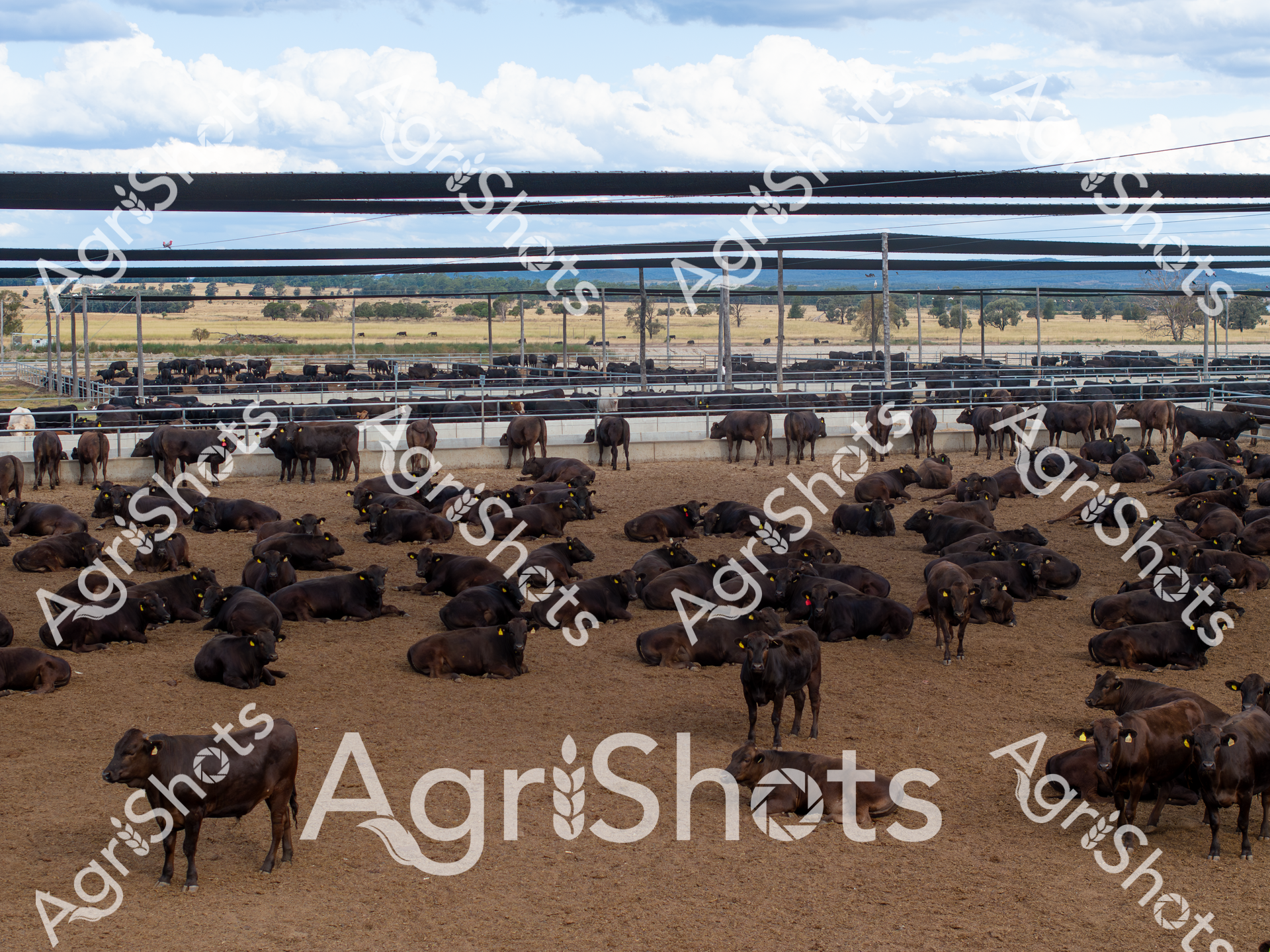
Black Angus cattle crowd a meticulously managed feedlot near Goondiwindi, Queensland, capturing the essence of modern Australian livestock production. Stretched across the dusty paddock, robust shade sails provide critical protection from the intense summer heat, allowing the herd to rest and regulate their body temperature. Yellow ear tags punctuate the sea of dark cattle, marking each animal for tracking and management, while the surrounding landscape reveals a classic southern Queensland rural vista of scattered eucalyptus trees and golden grasslands under a dramatic cloudscape. Some cattle stand alert while most are recumbent, demonstrating the calm efficiency of controlled agricultural environments. The steel feeding and holding pens create a geometric framework, highlighting the systematic approach of contemporary cattle farming. This image embodies the technological precision and animal welfare considerations of Australian beef production, where strategic infrastructure and careful herd management converge to optimize livestock health and agricultural productivity.
 Image
Image
Merino lambs crowd the tiered pens of a modern livestock sale yard, their pale woolly bodies creating a dense, undulating landscape of livestock. Structured steel fencing and dark shade sails divide the expansive concrete yards into precise rectangular sections, offering shelter and organization to the morning's auction proceedings. Crisp white and red trucks line the perimeter, ready to transport stock after the sale, while neat trees cast long shadows across the meticulously managed agricultural infrastructure. The aerial perspective reveals the precision of contemporary Australian sheep trading - a complex choreography of animal husbandry, commercial logistics, and rural economic exchange. Soft earth tones of tan, grey, and brown dominate the scene, punctuated by the vibrant shadows and the green hints of carefully placed vegetation. This is the heartbeat of regional agricultural commerce - a systematized yet living ecosystem where livestock, infrastructure, and human enterprise converge with practiced efficiency.
 Image
Image
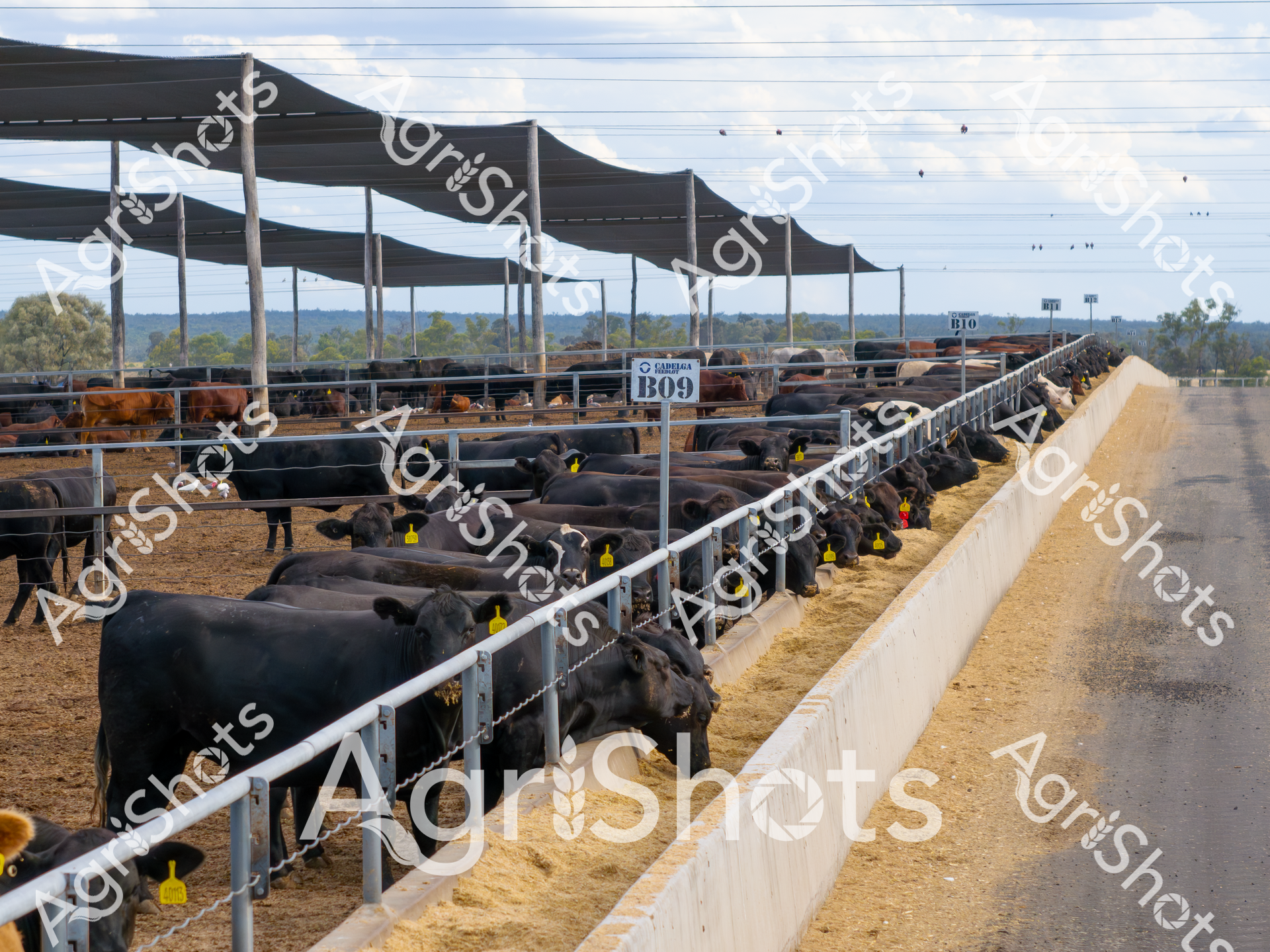
Black Angus cattle stand in neat rows within a meticulously organized feedlot, their dark coats contrasting against golden hay and dusty ground. Overhead, a series of expansive shade sails provide critical sun protection, casting geometric shadows across the enclosure. Yellow identification tags punctuate each animal's ear, marking them as part of a carefully managed herd numbered in the B09 paddock. The surrounding landscape reveals the classic Queensland rural terrain - distant eucalyptus trees and a wide, pale sky suggesting the intense summer heat of the Goondiwindi region. Concrete feed troughs run the length of the pens, filled with fresh hay, while the cattle methodically feed, their muscular frames indicating prime beef stock being prepared for market. The infrastructure demonstrates modern Australian agricultural precision: clean lines, strategic animal management, and climate-adaptive design that protects valuable livestock in challenging environmental conditions.
 Image
Image
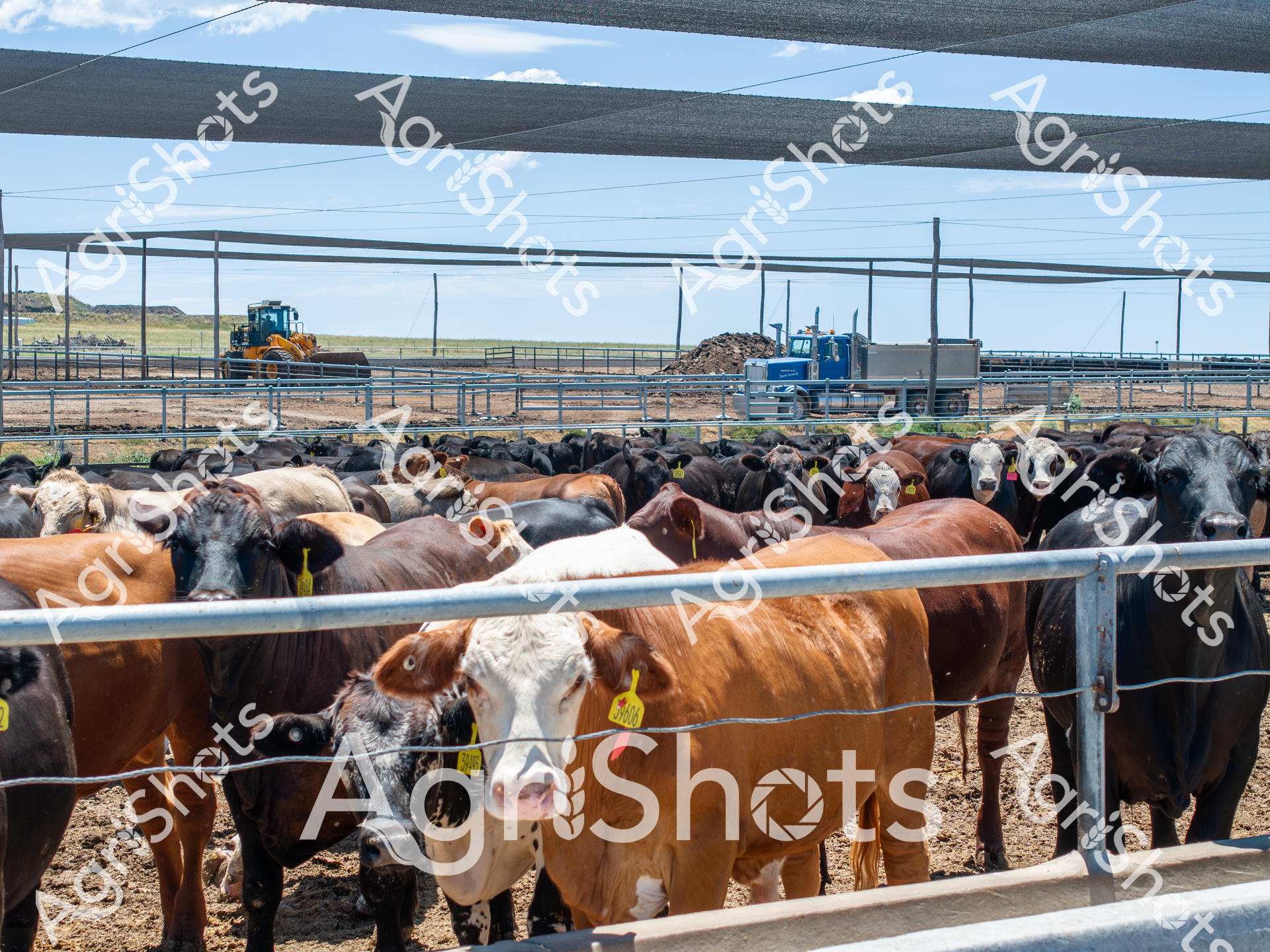
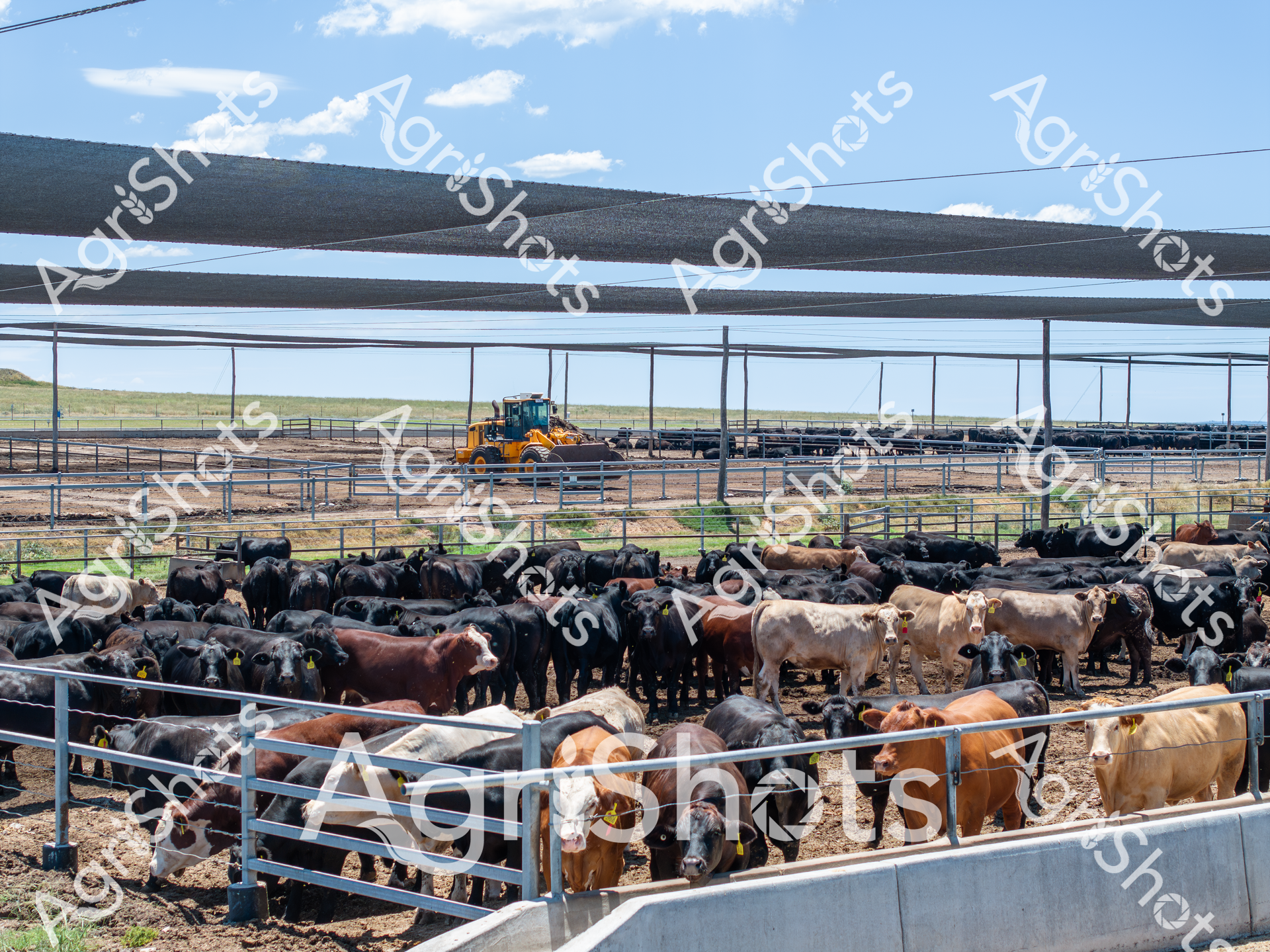
Cattle crowd together in a spacious feedlot near Goondiwindi, Queensland, seeking respite under expansive shade sails during the intense summer heat. A vibrant herd of mixed breeds - predominantly black and rich chestnut-colored cattle - stand closely packed within meticulously maintained metal livestock pens. Yellow ear tags punctuate their diverse coats, marking each animal with a unique identifier. In the background, a robust blue truck and a yellow front-end loader indicate ongoing farm maintenance, with a pile of manure suggesting recent pen cleaning operations. The landscape stretches out in muted earth tones, with a clear blue sky overhead creating a stark contrast to the dusty feedlot environment. This scene captures the precision and systematic approach of modern Australian cattle management, where animal welfare, efficient infrastructure, and strategic environmental design converge to support large-scale livestock production.
 Image
Image
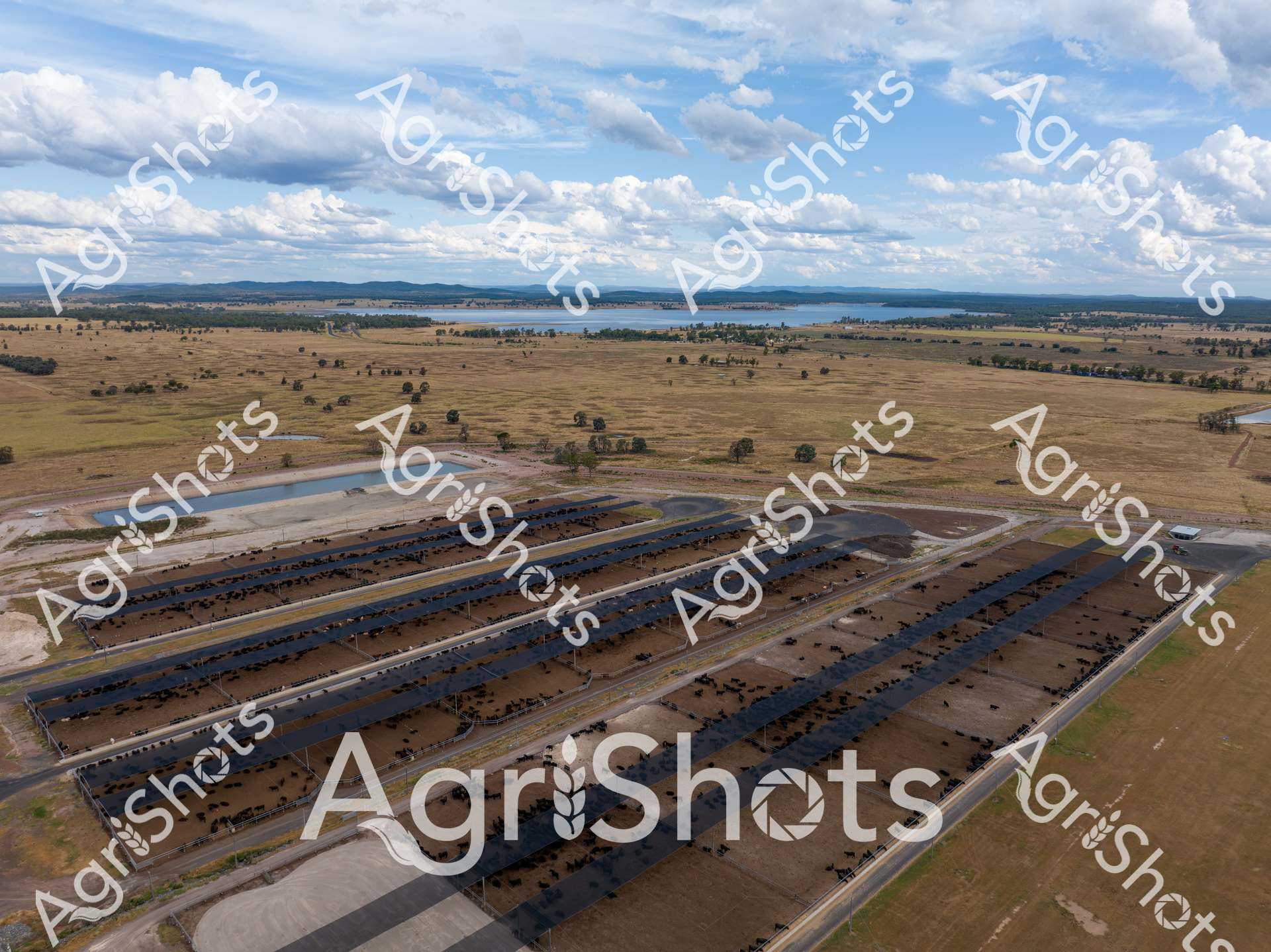
Beneath billowing cumulus clouds and a vast Queensland sky, a meticulously engineered cattle feedlot sprawls across the golden pastoral landscape near Goondiwindi. Precise parallel lanes with strategically installed shade sails protect hundreds of black beef cattle, creating a striking geometric pattern against the arid earth. The sophisticated infrastructure demonstrates modern Australian agricultural precision - each lane carefully designed to optimize cattle comfort and feed efficiency during the intense summer heat. Dark cattle are densely clustered along the lanes, their black coats contrasting sharply with the pale concrete feeding areas and surrounding straw-colored grasslands. In the distant background, a serene lake and low mountain ranges complete the quintessential Australian agricultural vista, highlighting the sophisticated environmental management of contemporary cattle production. This aerial perspective reveals the complex engineering and careful animal husbandry that underpins Australia's world-class beef production systems, where technological innovation meets traditional pastoral landscapes.
 Image
Image
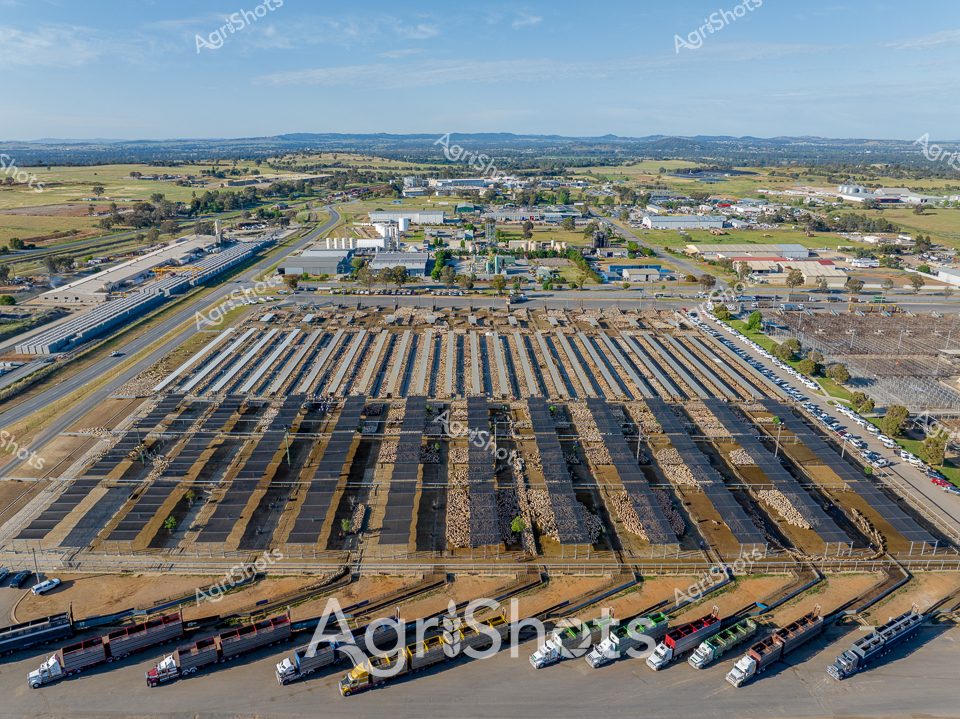
Merino lambs crowd the expansive sale yards under crisp blue winter skies in the heart of New South Wales' Riverina district. Meticulously organized concrete and dirt pens stretch across the landscape, each section carefully demarcated with sturdy fencing and protective shade sails. A fleet of white and colored livestock transport trucks lines the periphery, awaiting the day's auction and the careful loading of prime agricultural stock. The aerial perspective reveals the sophisticated infrastructure of modern Australian livestock trading - a complex choreography of agricultural commerce where generations of farming expertise converge. Soft golden morning light illuminates the neat rows of pens, highlighting the sandy earth and the woolly backs of young sheep awaiting their market fate. This scene captures the precision and scale of Australia's sheep industry, where each animal represents not just livestock, but a critical link in the nation's agricultural supply chain.
 Image
Image
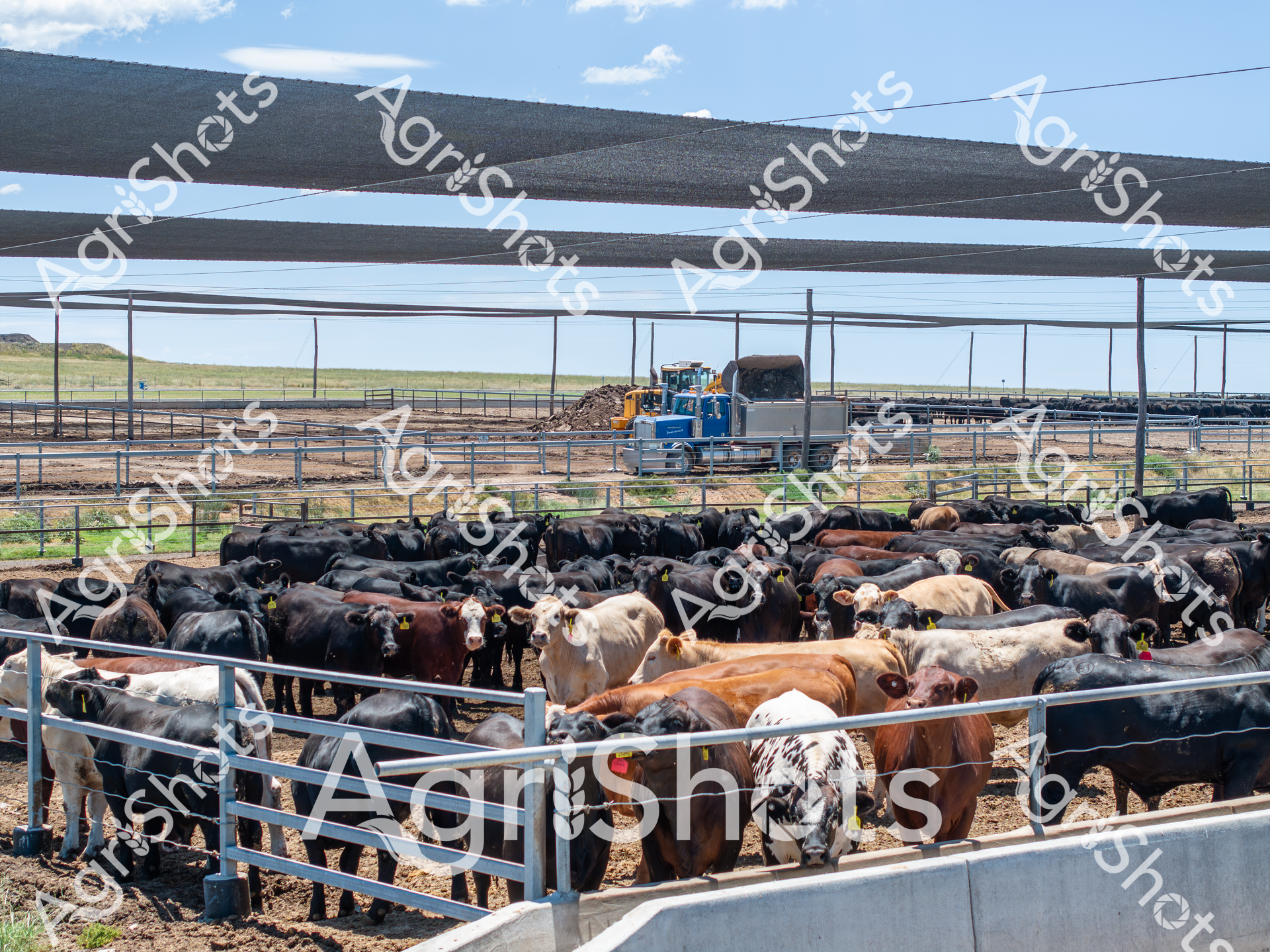
A bustling feedlot near Goondiwindi, Queensland reveals the precision of modern cattle management during the intense summer heat. A sea of black, brown, and white cattle clusters within meticulously maintained metal pens, protected by expansive shade sails that filter the harsh sunlight. A robust blue truck and yellow front-end loader stand ready for pen maintenance, with a fresh pile of manure indicating ongoing waste management operations. The cattle - a mix of breeds including predominantly black Angus and lighter-colored variants - wear distinctive yellow ear tags, each animal carefully tracked and monitored. Overhead shade cloths create a strategic microclimate, protecting the livestock from the scorching Queensland summer temperatures, while the surrounding landscape hints at the dry, expansive grasslands typical of the region. The scene captures the industrial yet carefully orchestrated nature of contemporary cattle production, where animal welfare, efficient management, and agricultural technology converge in a single, dynamic environment.
 Image
Image
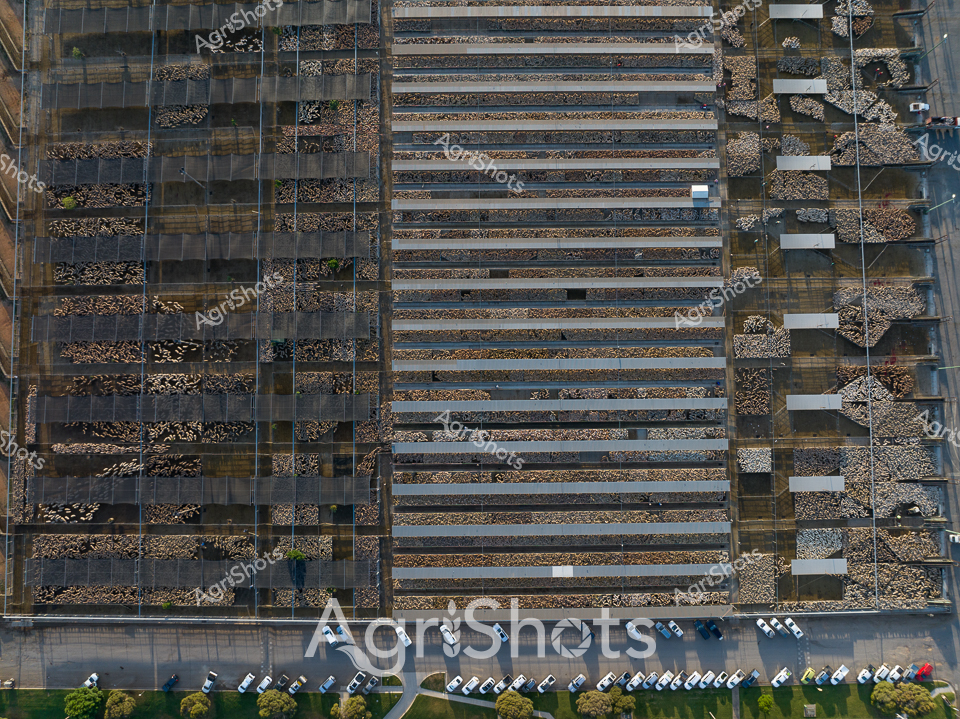
Aerial drone perspective of a bustling sheep livestock sale yard in the Riverina region of New South Wales, capturing the geometric precision of agricultural infrastructure. Meticulously organized holding pens create a striking grid pattern, with hundreds of sheep clustered across multiple sections, their woolly bodies creating textural mottled sections of cream and grey against dark pen surfaces. Sleek shade sails and steel framing provide essential shelter and structure, while a row of vehicles parked along the bottom of the frame suggests active market day proceedings. The systematic layout reveals the professional efficiency of Australian agricultural marketing, where livestock are carefully sorted, assessed, and prepared for sale with methodical Australian rural expertise. Soft morning light casts subtle shadows across the yard, highlighting the scale and organization of this critical agricultural exchange point where farmers, buyers, and livestock converge in a choreographed economic dance central to rural economic life.
 Image
Image
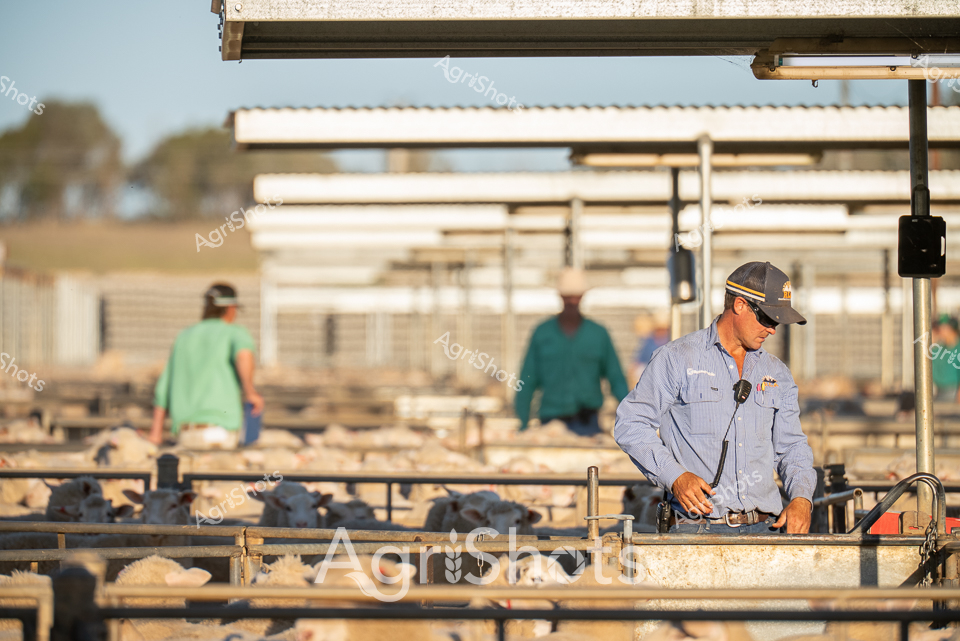
Sunlight bathes the bustling sheep sale yards of the Riverina, casting long shadows across metal pens filled with woolly merinos. An experienced livestock agent in a light blue workshirt and cap carefully assesses the morning's auction, standing beside rows of carefully penned sheep. Other agents move purposefully through the yard, dressed in green and casual work attire, their movements deliberate and practiced against the backdrop of corrugated steel shelters and open paddock landscape. The precision of agricultural commerce plays out in this quintessential Australian rural scene, where generations of farming knowledge converge in the quiet choreography of livestock trading. Overhead shade sails provide relief from the building heat, while the metallic infrastructure of the sale yards speaks to the structured, professional nature of rural stock markets. Every gesture and glance carries the quiet intensity of a critical economic transaction that will determine the fate of these woolly producers.
 Video
Video
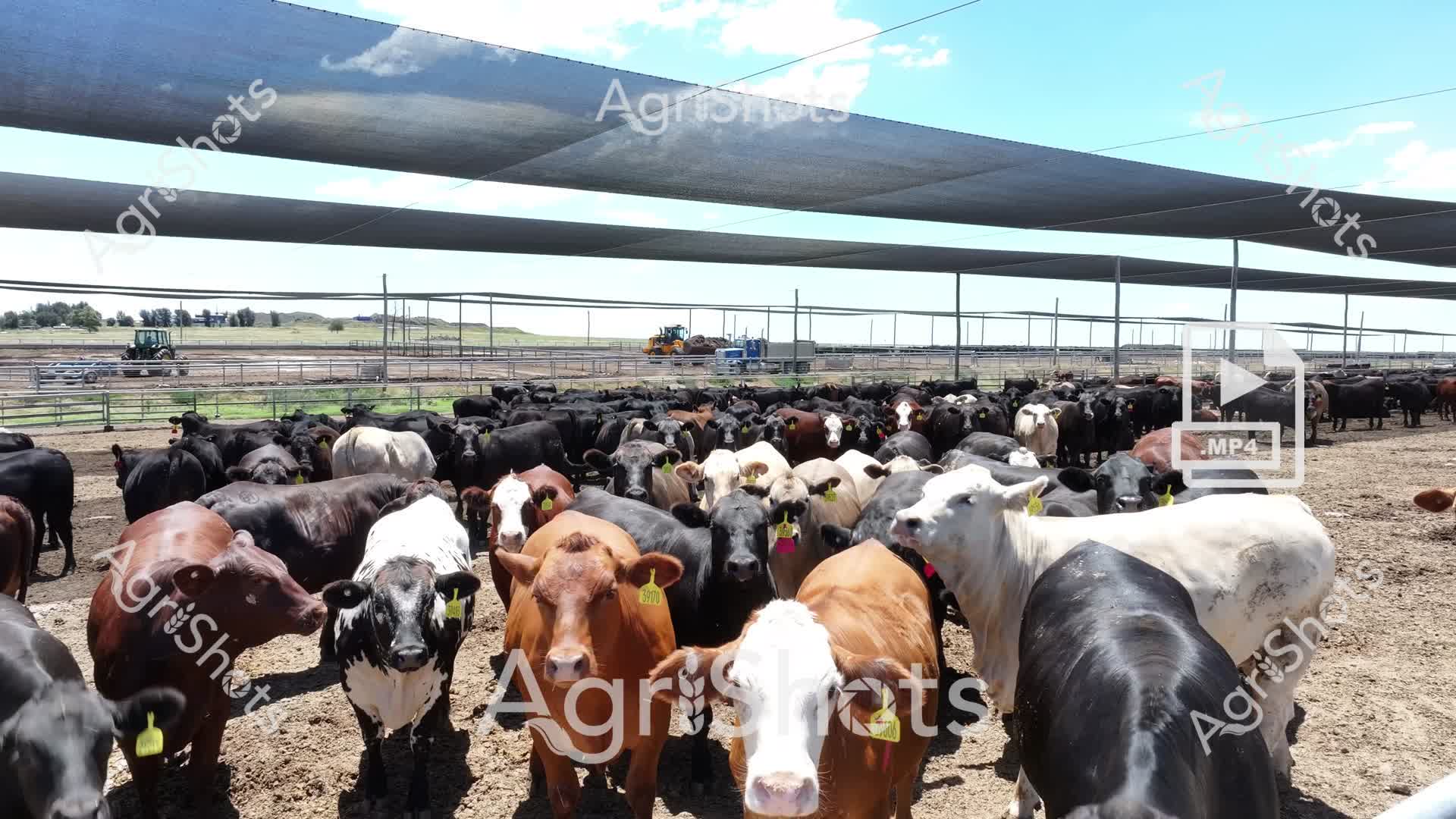
A bustling feedlot in the heart of Queensland showcases a diverse herd of cattle densely packed beneath expansive shade sails. Angus, Hereford, and Brahman-cross cattle stand shoulder to shoulder, their coats ranging from deep obsidian black to rich chestnut and pristine white, each marked with a vibrant yellow ear tag. The dry, packed earth of the cattle yard stretches beneath their hooves, with industrial-grade metal fencing and structural supports creating a geometric backdrop against the wide, cloud-dappled sky. Powerful machinery - a yellow excavator and additional farm vehicles - sit quietly in the background, suggesting the sophisticated infrastructure of modern agricultural operations. The cattle appear calm and well-managed, their varied colors and markings creating a living tapestry that speaks to careful breeding and strategic livestock management. Overhead, the strategically positioned shade sails provide critical protection from the intense Queensland sun, highlighting the nuanced care and technological innovation of contemporary cattle farming.
 Image
Image
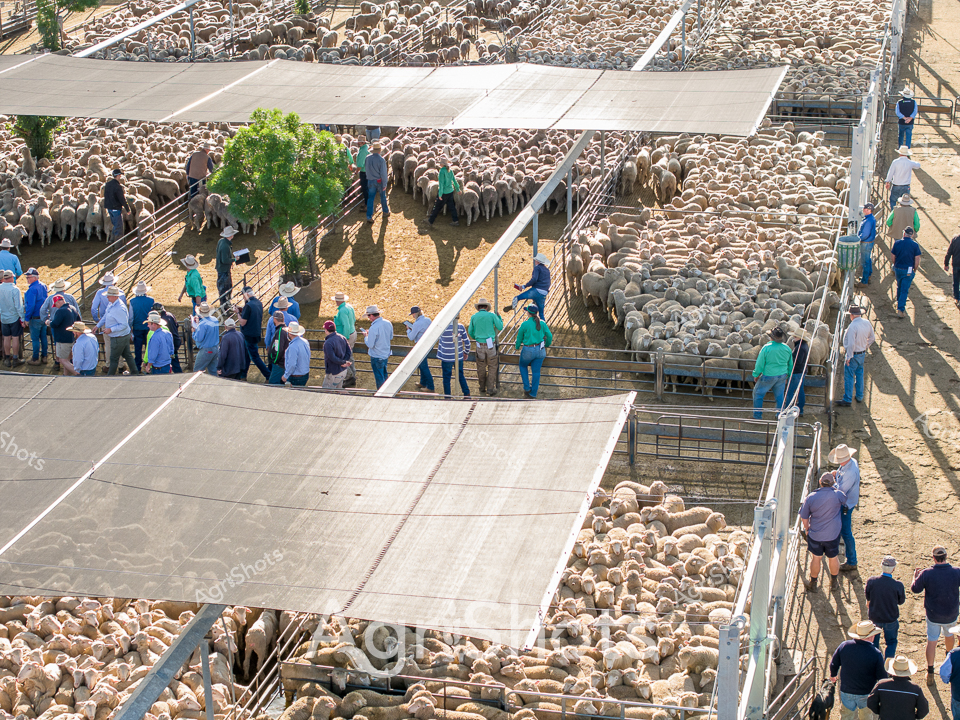
Sun-drenched sale yards in the Riverina region pulse with agricultural energy as a dense flock of merino sheep fills multiple holding pens. Farmers and agents cluster in varied shades of blue and green, their broad-brimmed hats casting shadows across the dusty concrete yard. Strategically placed shade sails provide relief from the intense Australian midday heat, creating geometric patterns of light and shadow across the bustling livestock marketplace. Experienced stockmen move carefully between pens, guiding and assessing the woolly mob, their practiced movements reflecting generations of agricultural expertise. The meticulously arranged sheep—compact, uniform, and showcasing the region's premier wool-producing bloodlines—stand testament to the precision and care of Australian pastoral farming. This quintessential rural scene captures the rhythmic choreography of livestock trading, where economic transaction meets generations-old agricultural tradition.
 Image
Image
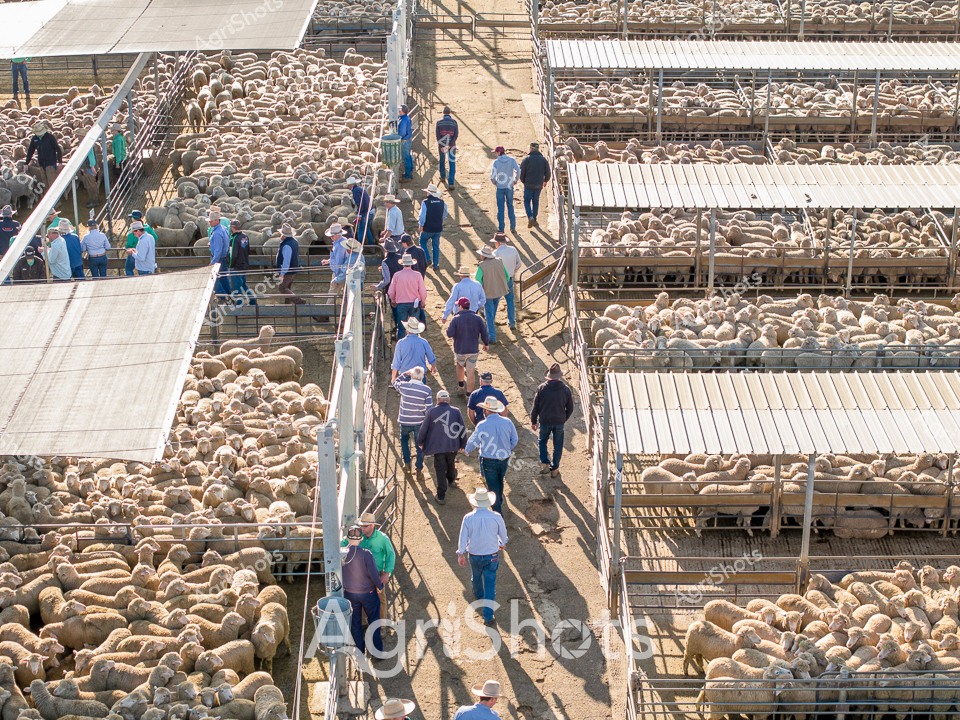
Merino sheep crowd the expansive sale yards of the Riverina region, filling multiple pens under crisp shade sails. Livestock agents in wide-brimmed hats and varied work attire move purposefully along elevated walkways, inspecting and assessing the large woolly flock. The dusty earthen paths between pens create a geometric pattern of movement, with workers navigating the dense sea of sheep during what appears to be a typical morning auction. Soft beige and tan tones of the sheep contrast with the blue and white of the workers' clothing, creating a quintessential Australian agricultural scene. The precise gridwork of metal fencing, the orderly pens, and the methodical movement of agents suggest a well-organized livestock market deeply rooted in rural agricultural tradition. This snapshot captures the economic and cultural heartbeat of sheep farming in New South Wales, where generations of expertise converge in the careful selection and trading of prime Merino stock.
 Image
Image
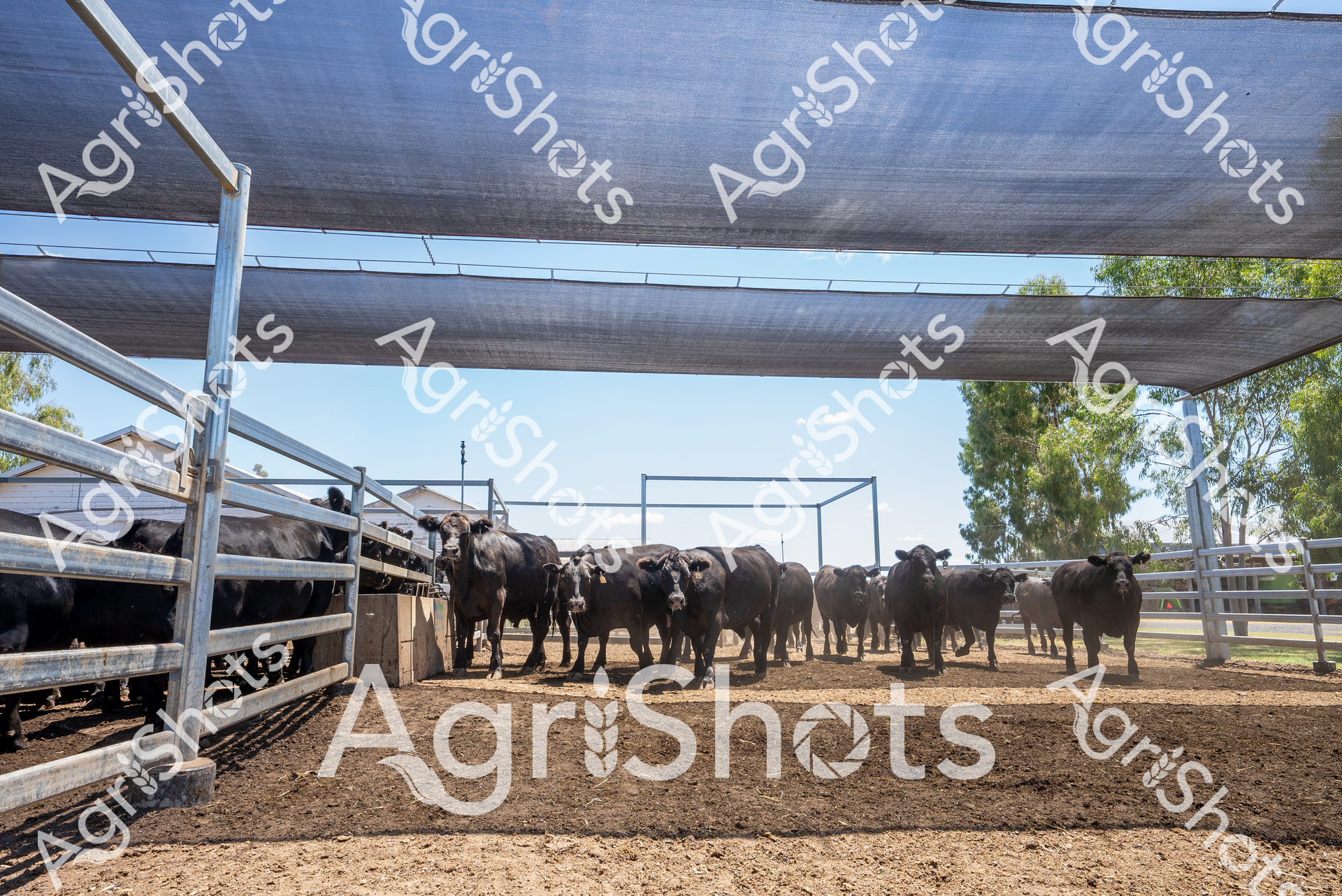
Black Angus cattle stand poised in a meticulously prepared feedlot pen, sheltered by expansive shade sails that protect them from the intense Queensland summer heat. The steel-gray metallic cattle yards create a structured environment, with clean lines of galvanized fencing contrasting against the dusty earth and verdant tree line in the background. These robust beef cattle, with their sleek black coats and muscular frames, are positioned deliberately, suggesting preparation for transport or market assessment. Overhead, the shade cloth filters the harsh sunlight, casting a cool blue-gray tone across the enclosure and providing critical temperature management for the livestock. The precise agricultural infrastructure - from the carefully engineered shade structures to the robust stock yards - demonstrates the sophisticated approach to cattle management in rural Australian agricultural systems. Every element speaks to professional livestock handling: strategic design, animal welfare, and preparedness for the demanding conditions of regional Queensland.
 Image
Image
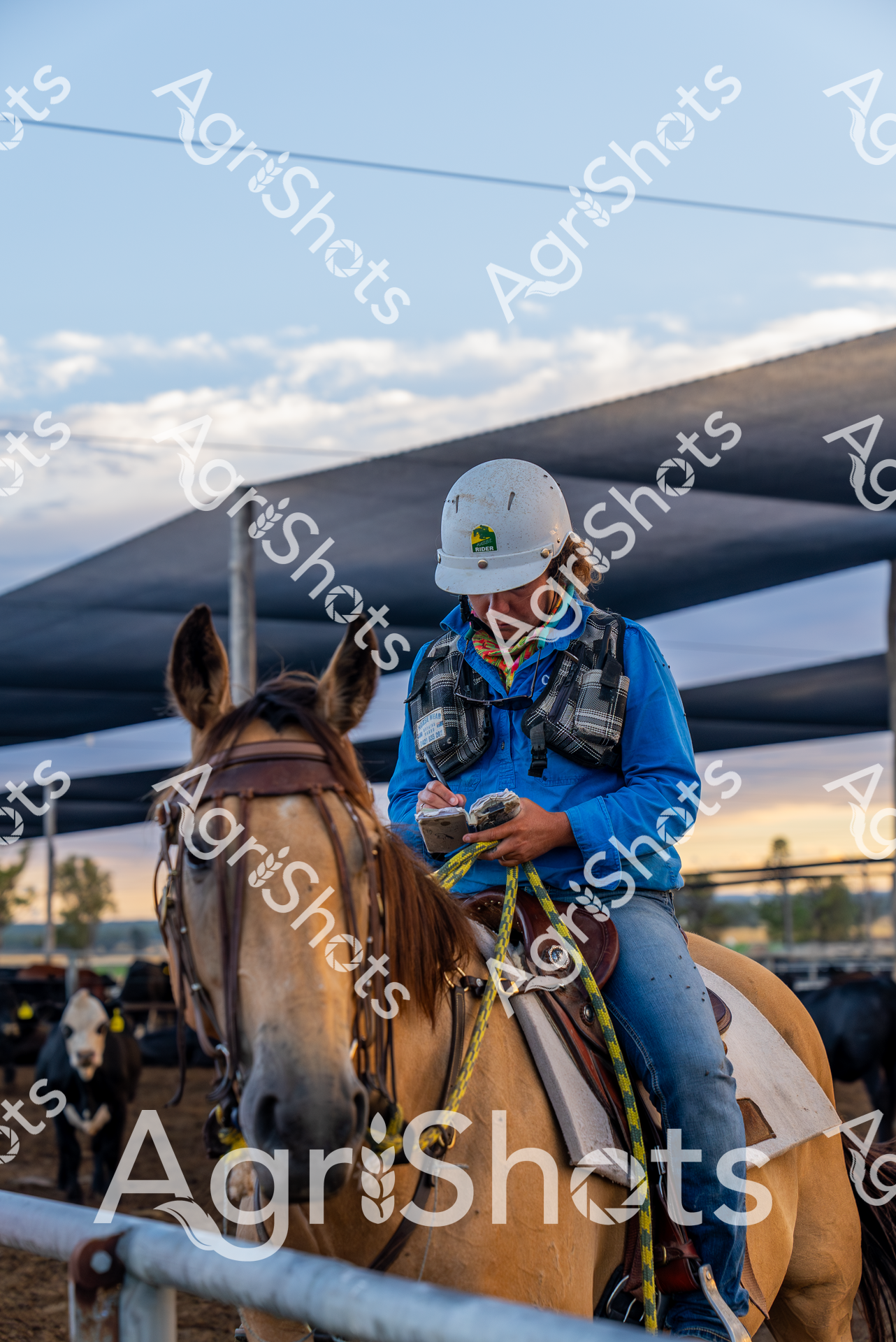
Dawn breaks over the Queensland feedlot, casting golden light across the expansive cattle pens. A skilled stockwoman sits astride her trusty horse, dressed in a vibrant blue jacket and white safety helmet, carefully documenting livestock details on her digital device. Yellow safety tape dangles from her equipment, contrasting with the muted tones of the horse's tan coat and the surrounding infrastructure. Overhead, shade sails stretch across the paddock, providing essential protection from the intense Australian summer sun. The rider's focused posture and professional gear highlight the critical role of modern agricultural workers in managing and monitoring cattle health and welfare. In the background, rows of cattle create a rhythmic landscape of black and white, signaling the scale and precision of contemporary livestock management in the Goondiwindi region.
 Image
Image
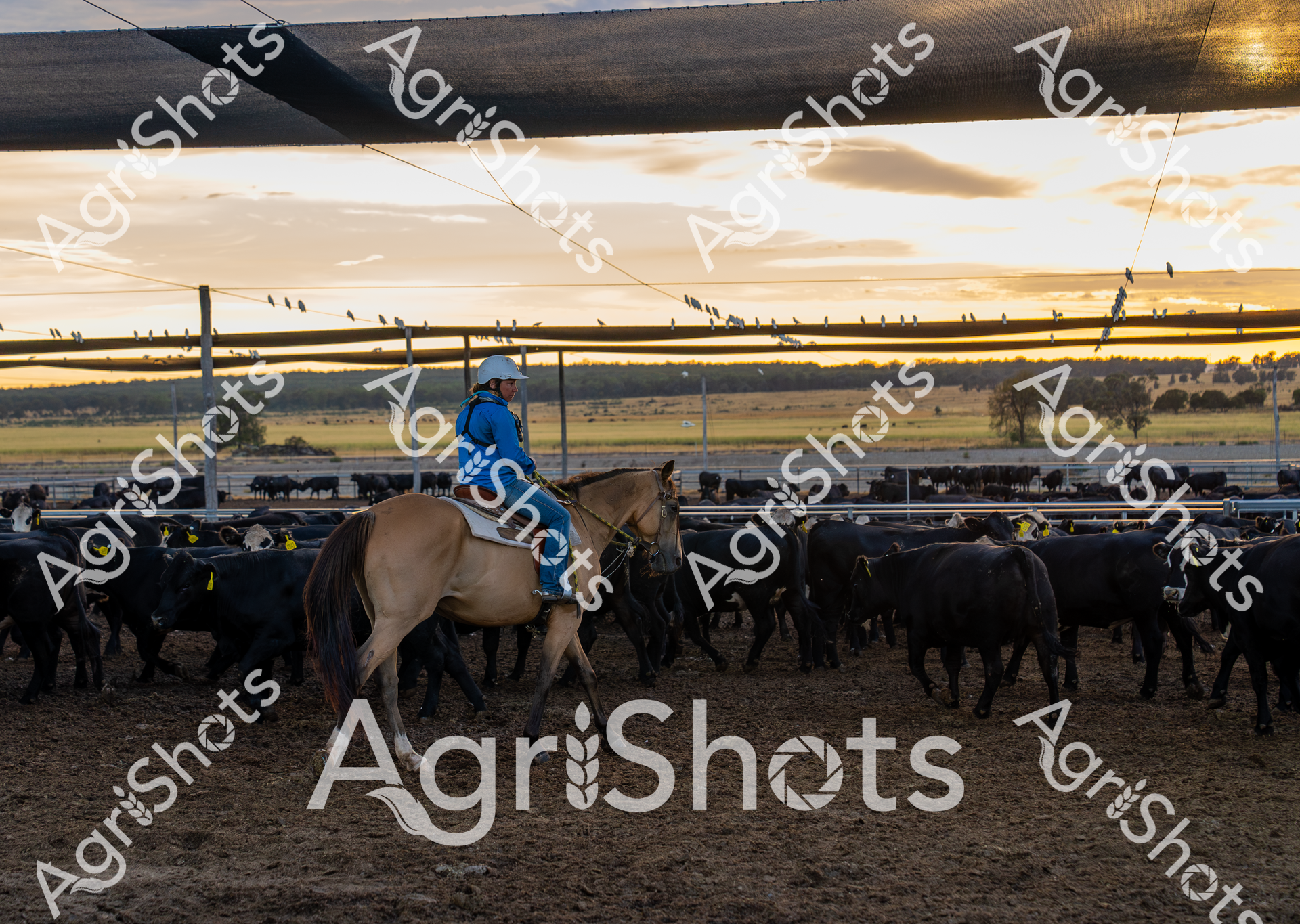
In the golden light of dawn, a skilled horsewoman navigates a dusty cattle feedlot near Goondiwindi, Queensland. Dressed in vibrant blue and wearing a protective riding helmet, she sits atop a buckskin horse, expertly moving through a dense herd of black Angus cattle. The early morning sunrise casts long shadows across the packed earthen pen, creating a dramatic backdrop of warm golden hues and silhouetted power lines where birds perch. Shade sails stretch overhead, a critical infrastructure for managing livestock comfort during the intense Queensland summer. The scene captures the precision and dedication of modern agricultural work - a solo rider surrounded by dozens of cattle, demonstrating the intricate dance of stock management that defines Australian rural life. Birds line the overhead wires, adding a subtle texture to the landscape and highlighting the interconnectedness of the agricultural environment.
 Image
Image
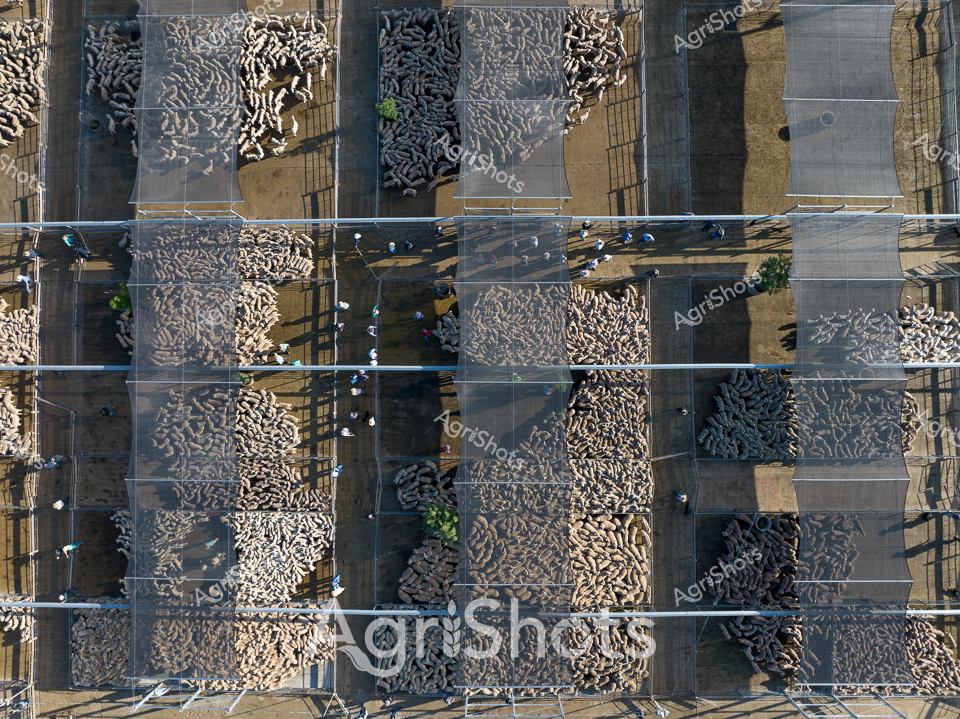
Aerial perspective of a bustling livestock sale yard in the Riverina region of New South Wales, revealing a meticulously organized grid of paddocks filled with dense clusters of sheep. The geometric precision of the steel-framed enclosures contrasts with the organic, undulating masses of woolly bodies, creating a striking visual mosaic of beige and charcoal-colored livestock. Scattered throughout the sale yards, agents and auctioneers move purposefully between the pens, their vibrant work attire adding splashes of color to the structured landscape. Shade sails stretch overhead, providing critical protection from the harsh Australian sun and highlighting the agricultural industry's careful management of livestock welfare. The early morning light casts long shadows across the hard-packed earth, emphasizing the depth and texture of the scene and capturing the rhythmic energy of a traditional rural stock auction. This image encapsulates the dynamic heart of Australian agricultural commerce, where generations of farming expertise converge in a carefully choreographed exchange of livestock.
 Image
Image
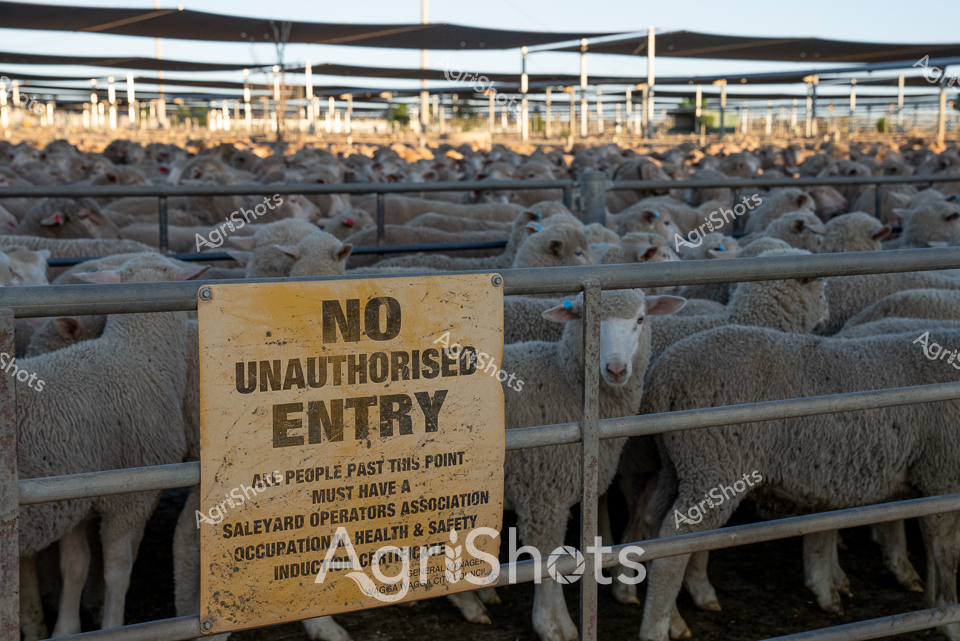
Merino ewes crowd a bustling livestock sale yard under expansive shade sails, their dense woolly fleeces reflecting the golden late afternoon light. A weathered yellow warning sign declares "NO UNAUTHORIZED ENTRY", signaling the strict operational protocols of this professional agricultural exchange. Packed tightly behind steel livestock barriers, the sheep display the classic characteristics of high-quality Australian Merino stock - uniform white fleeces, alert ears, and sturdy frames indicating superior breeding. The sale yard represents a critical node in the agricultural supply chain, where farmers, buyers, and industry professionals converge to trade livestock with meticulous attention to health, safety, and commercial standards. Overhead shade structures provide essential protection from intense Australian sun, demonstrating sophisticated agricultural infrastructure that supports animal welfare and efficient commercial transactions. The dense arrangement of sheep, the industrial-grade fencing, and the authoritative signage collectively capture the structured, professional environment of contemporary Australian livestock commerce.
 Image
Image
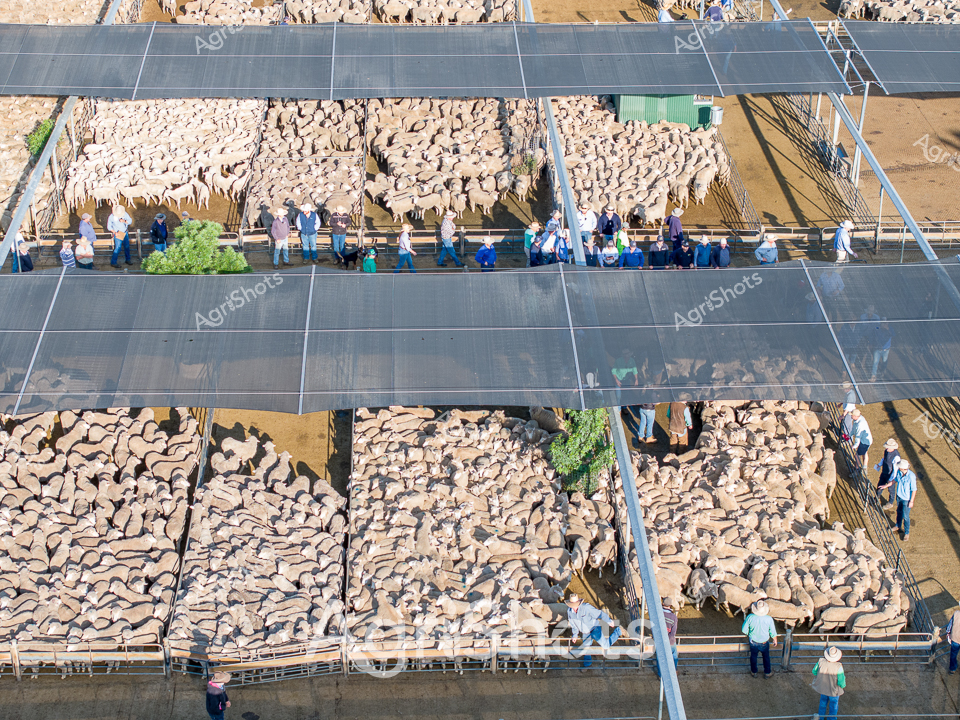
Merino sheep crowd the expansive sale yards in a quintessential Riverina Region livestock auction scene. Dozens of farmers and agricultural workers move purposefully along elevated walkways between densely packed pens, their blue and white work shirts creating a rhythmic visual pattern against the pale sandy ground. Overhead, industrial-grade shade sails provide critical protection from the harsh Australian midday sun, casting geometric shadows across the meticulously organized livestock holding areas. The sea of woolly bodies - predominantly white Merino rams and ewes - represents significant agricultural capital, each animal carefully assessed for potential purchase by the clustered professionals moving strategically around the periphery. This aerial perspective captures the systematic efficiency of rural livestock trading, where generations of agricultural expertise converge in a choreographed economic dance. The structured metal infrastructure, sandy terrain, and tightly grouped sheep create a compelling visual narrative of Australia's robust pastoral economy, highlighting the critical role of livestock markets in supporting rural communities and agricultural production.
 Image
Image
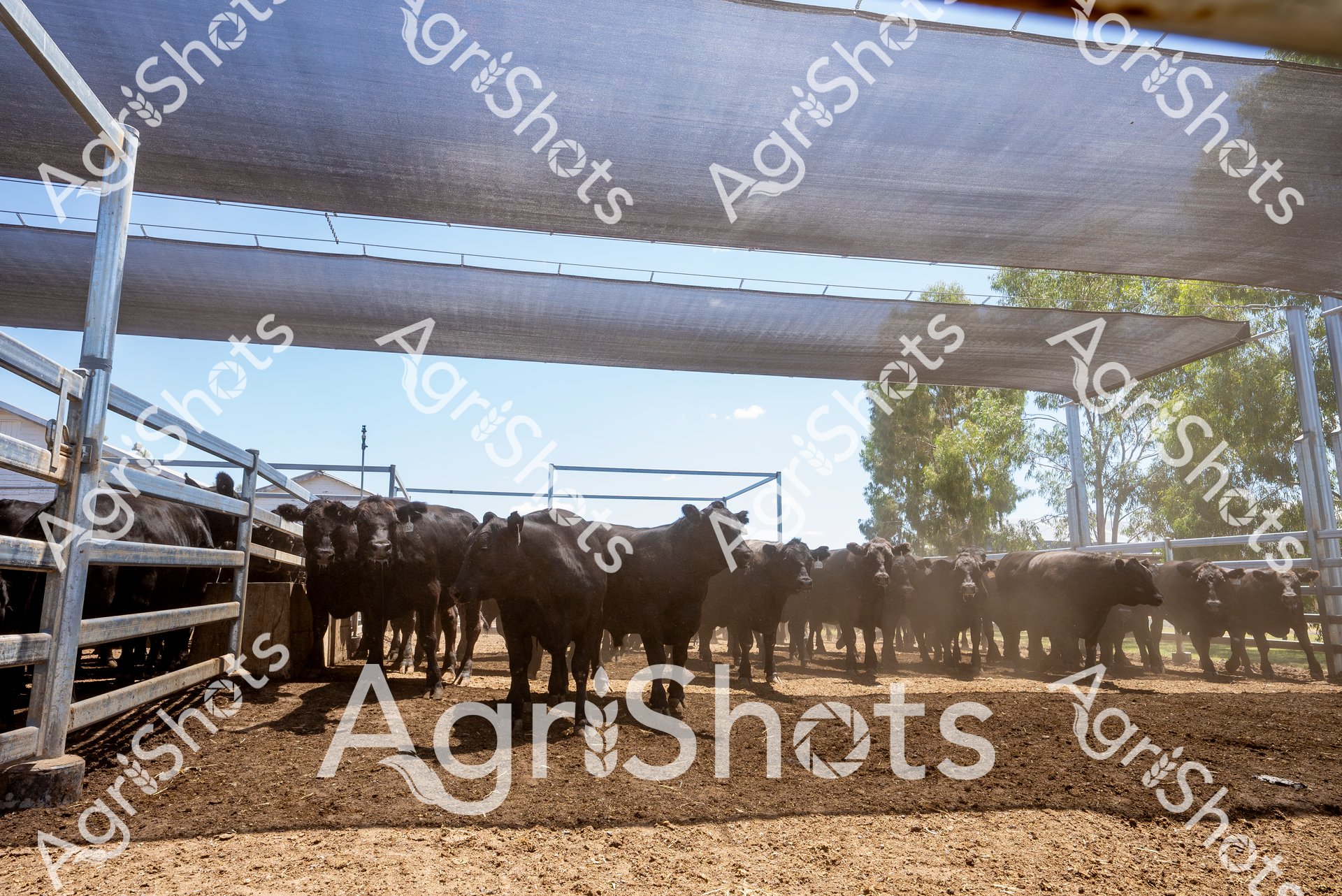
Black Angus cattle cluster tightly in a meticulously prepared livestock holding yard, their sleek midnight-black coats contrasting against the dusty ochre ground beneath a series of protective shade sails. The steel-framed infrastructure provides critical shelter from the intense Queensland sun, with galvanized metal yard panels creating a systematic containment area typical of modern agricultural management. Sturdy trees punctuate the background, offering additional natural shade and framing the rural landscape characteristic of the Goondiwindi region's cattle country. These muscular beef cattle stand closely packed, suggesting preparation for transport or pre-sale assessment, their powerful physiques demonstrating the high-quality genetic stock of Australian beef production. The overhead shade structures - engineered with precision - reflect sophisticated animal welfare practices, protecting valuable livestock from harsh environmental conditions. Every element of the scene speaks to the professional, calculated approach of contemporary Australian cattle farming: efficient, purpose-built, and designed to maximize animal health and operational productivity.
 Image
Image
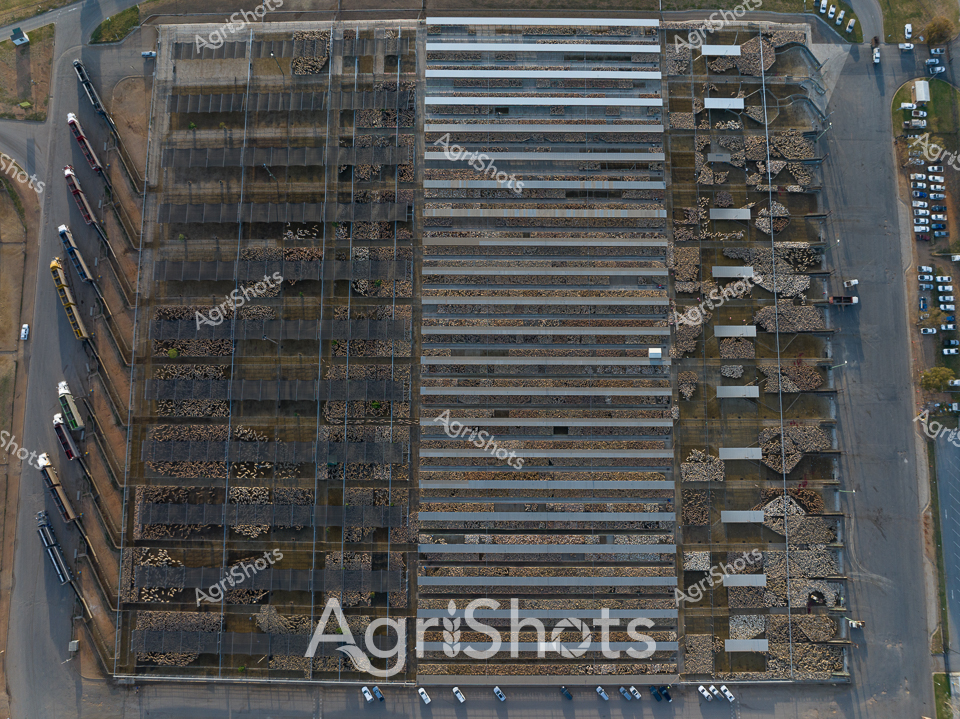
An aerial survey of a meticulously organized livestock sale yard reveals the intricate infrastructure of Australian sheep trading in the Riverina region of New South Wales. Geometric rows of shade sails create a structured grid over large holding paddocks, each populated with dense clusters of merino and crossbred sheep awaiting auction. Multiple livestock transport trucks line the left edge of the facility, ready to move animals between properties, showcasing the sophisticated agricultural logistics of rural Australia. The pale concrete surfaces contrast sharply with the earthy tones of the sheep pens, creating a geometric landscape that speaks to the precision of modern agricultural practice. Carefully arranged holding areas demonstrate the scale and efficiency of this critical agricultural marketplace, where hundreds of sheep can be systematically sorted, assessed, and traded. The overhead perspective captures the architectural elegance of rural infrastructure, transforming a functional livestock sale yard into a remarkable tableau of agricultural enterprise.
 Image
Image
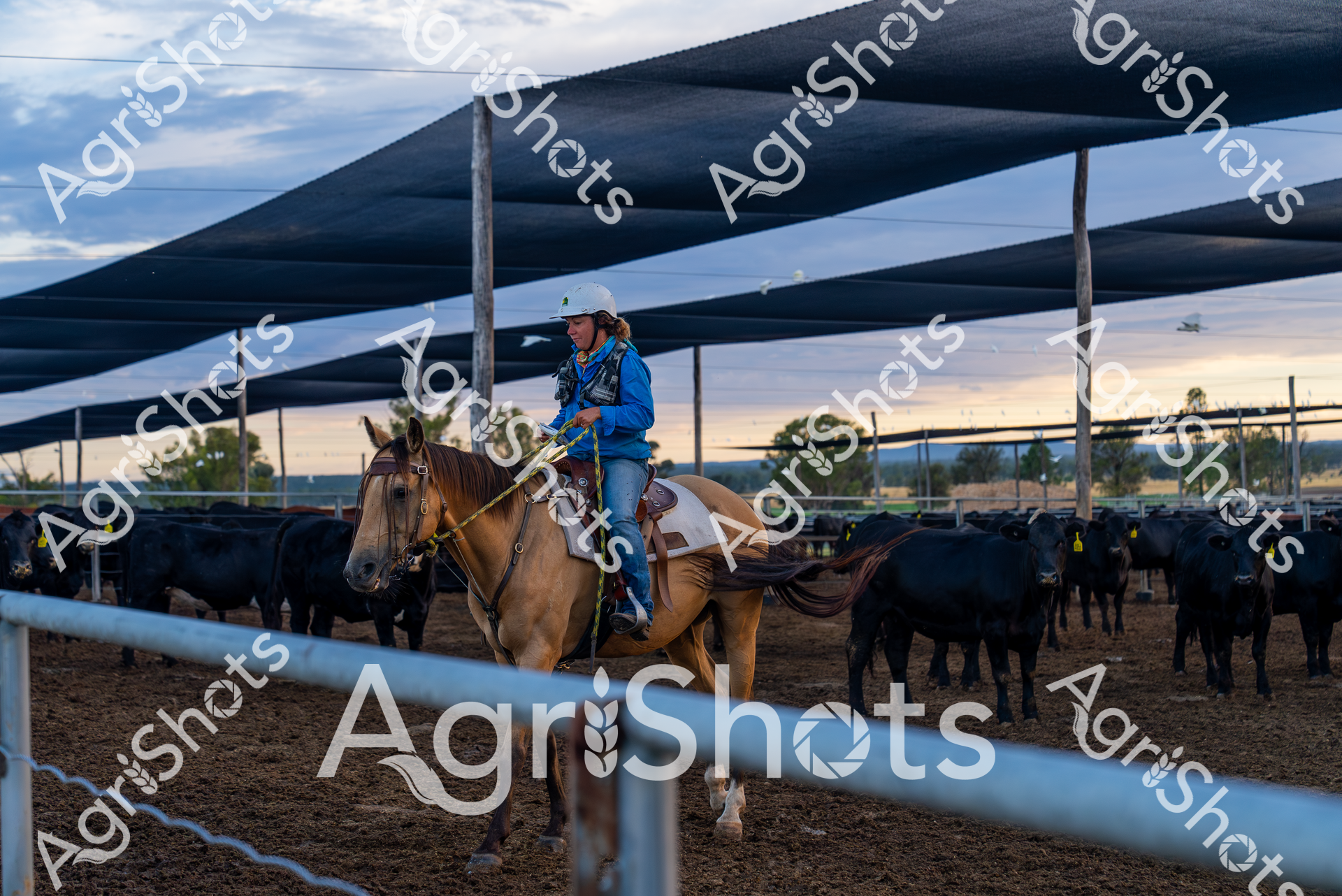
Under the expansive shade sails of a Queensland feedlot, a skilled stockwoman sits astride her chestnut horse at sunrise, surveying a pen of black Angus cattle. Her blue jacket and white safety helmet stand in sharp contrast to the warm golden light breaking across the dusty landscape, capturing the early morning routine of livestock management. The rider appears alert and purposeful, equipped with communication gear, ready to monitor and move the herd during the intense summer heat. Black cattle cluster together, their sleek coats reflecting the low angled sunlight, while the shade structures provide critical protection from the approaching day's heat. This scene epitomizes the sophisticated, technology-aided approach to modern cattle management in the Goondiwindi region, where precision, animal welfare, and environmental adaptation are paramount. The image speaks to the resilience and expertise of women in agricultural industries, showcasing the delicate balance between human skill and animal husbandry.
 Image
Image
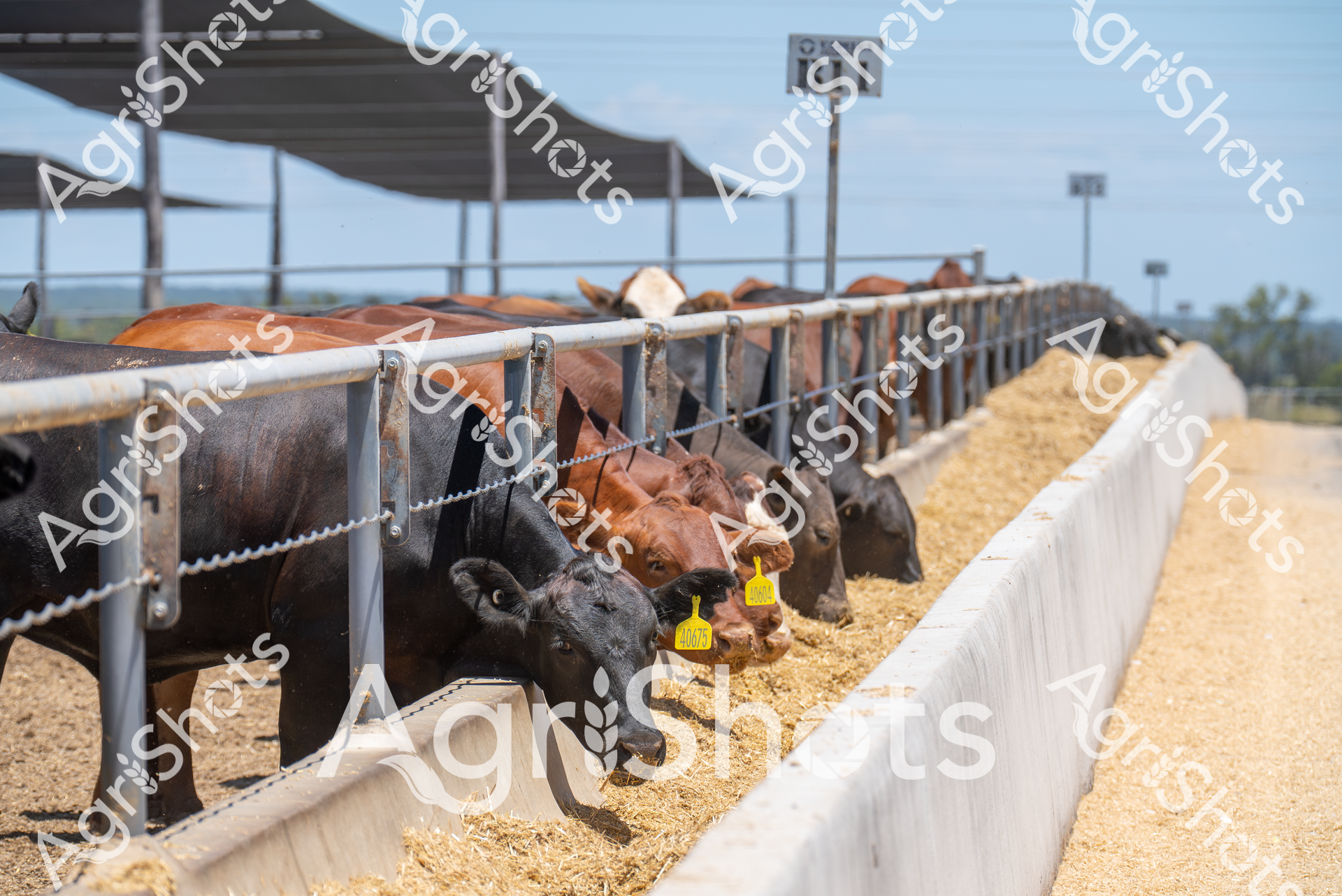
Beef cattle of varying rich brown and black coats line a pristine white concrete feed bunker, their yellow identification tags gleaming in the harsh Queensland summer light. Overhead, expansive shade sails provide critical protection from the intense heat, casting geometric shadows across the feedlot near Goondiwindi. The carefully designed feeding infrastructure allows each animal controlled access to a uniform layer of golden straw and feed, showcasing modern agricultural precision in livestock management. Sleek metal railings separate the cattle, who stand shoulder-to-shoulder with remarkable calm, their muscular frames a testament to careful breeding and nutrition strategies. The backdrop reveals an open, arid landscape typical of southern Queensland's agricultural regions, with clear blue skies extending beyond the structured feeding area. This scene captures the sophisticated balance of animal welfare, technological innovation, and large-scale beef production that defines contemporary Australian agricultural practices.
 Image
Image
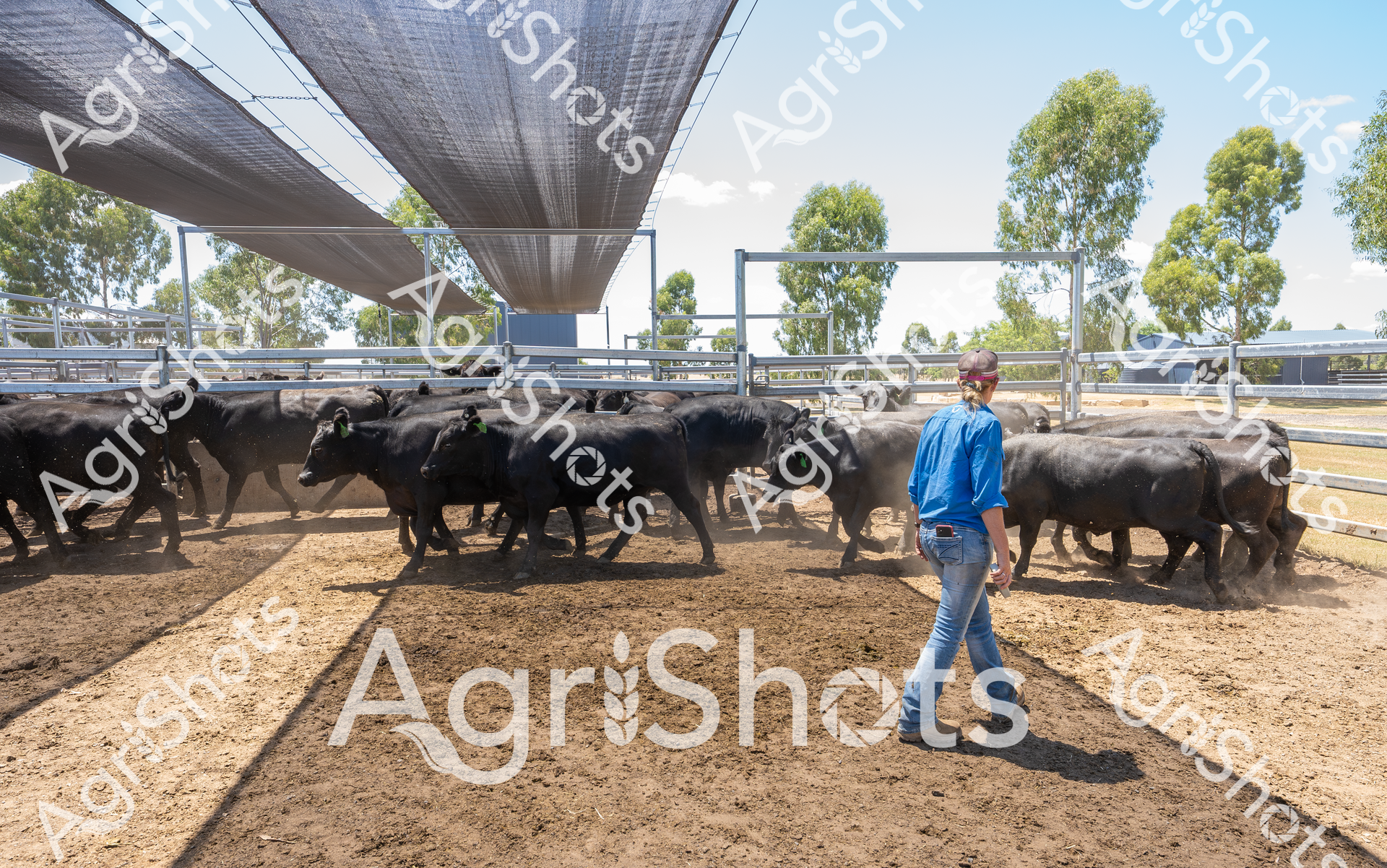
In the heart of Queensland's cattle country near Goondiwindi, a seasoned agricultural worker stands amid a herd of sleek black cattle, their muscular forms moving deliberately within a carefully designed livestock yard. Overhead, expansive shade sails provide crucial protection from the intense summer sun, casting a protective grey-white canopy over the sandy earth beneath. The worker, dressed in a vibrant blue shirt and wearing a cap, moves with quiet confidence among the cattle, her posture reflecting years of experience in livestock management. Robust steel fencing frames the paddock, with eucalyptus trees standing sentinel in the background, their green foliage a stark contrast to the dusty ground and dark cattle. The scene captures the precision and care of modern Australian agricultural practice - a testament to the skill and resilience of those who manage livestock in challenging environmental conditions. Every element speaks to the strategic design of contemporary cattle management: controlled movement, animal welfare, and efficient use of shade and space.
 Image
Image
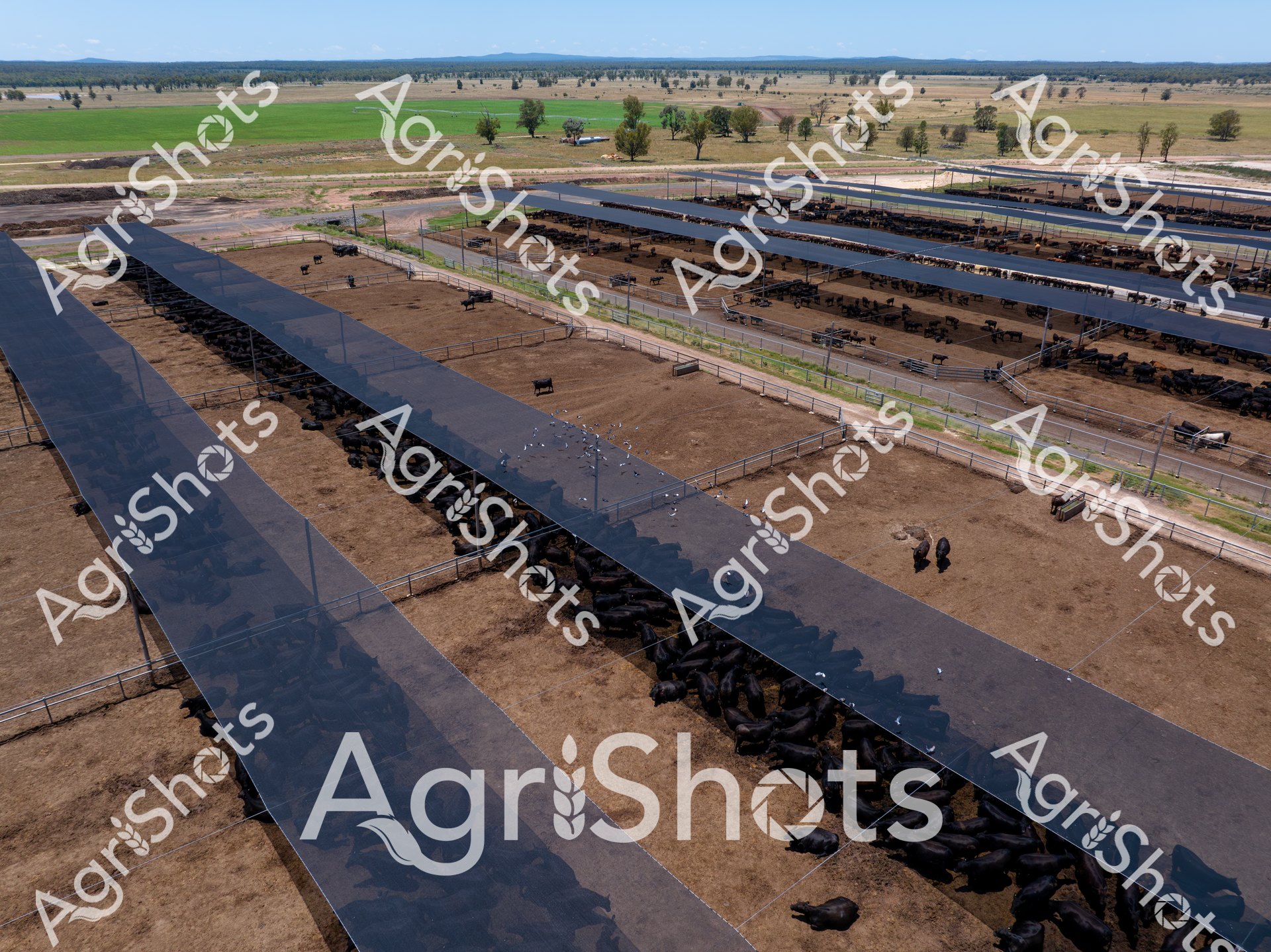
Expansive feedlot stretches across the golden plains of Queensland's Goondiwindi region, a testament to modern agricultural precision. Carefully designed shade sails cast long shadows over meticulously arranged cattle pens, protecting valuable Wagyu cattle from the intense summer heat. Dense clusters of black cattle populate the carefully demarcated paddocks, their dark forms creating a striking contrast against the dusty earth and vibrant green fields in the distant background. The geometric layout of the feedlot reveals sophisticated livestock management, with multiple parallel feeding lanes and strategically positioned infrastructure designed for optimal animal welfare and operational efficiency. Sparse trees punctuate the surrounding landscape, providing a sense of scale to this impressive agricultural installation. The aerial perspective captures the harmony between technological intervention and natural landscape, showcasing Queensland's advanced cattle farming practices under the brilliant blue summer sky.
 Image
Image
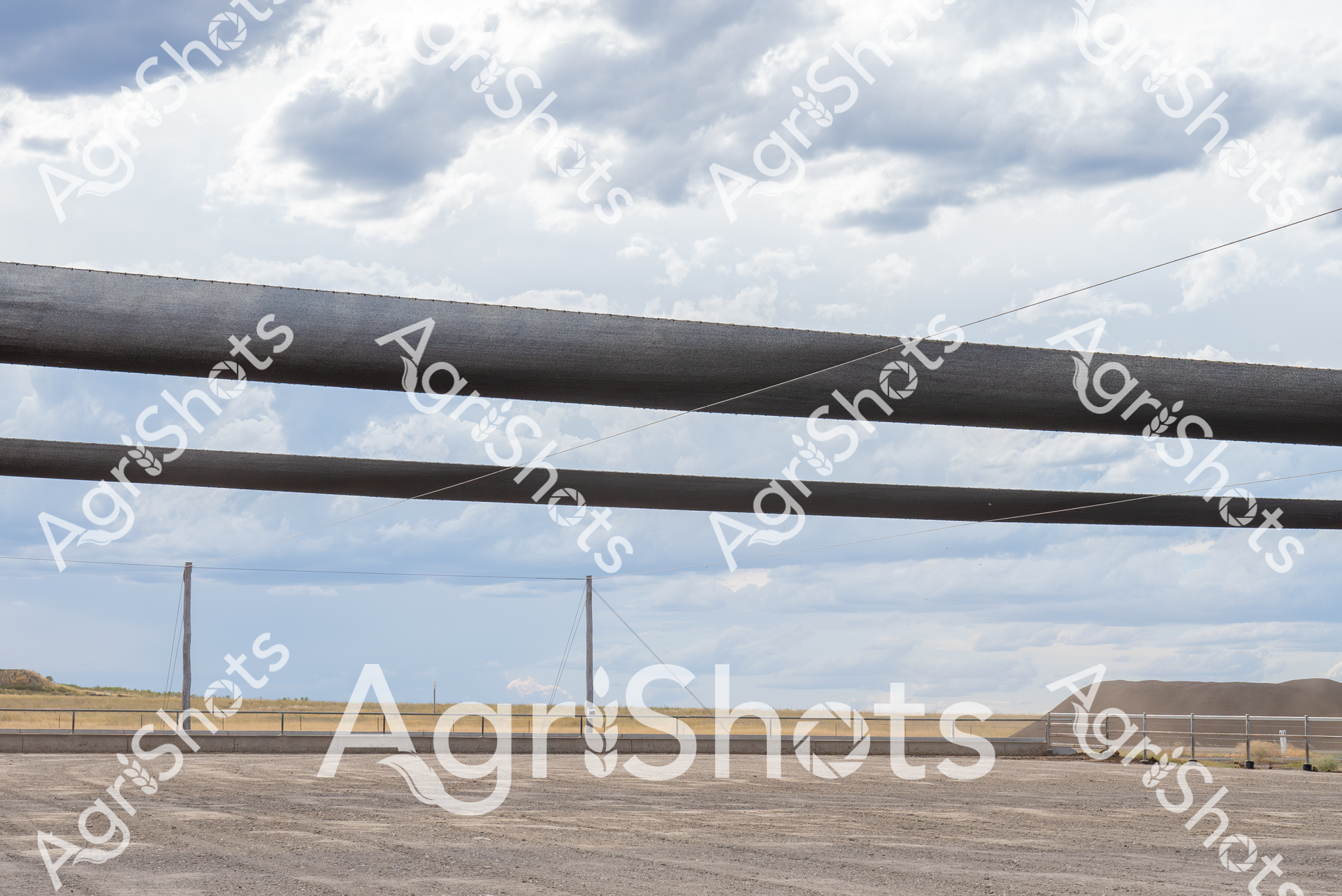
Expansive cattle feedlot infrastructure stretches across the stark Queensland landscape under a dramatic clouded sky, revealing the precision of modern agricultural engineering. Three substantial horizontal steel pipelines - likely water or feed distribution lines - span the foreground, running parallel against the dusty earth and distant mountainous terrain. Carefully positioned utility poles punctuate the horizontal lines, supporting overhead connections and highlighting the strategic design of this agricultural facility. The ground appears meticulously prepared, a compacted earth surface ready for livestock management, with subtle gradients engineered for drainage and waste management. Shade sails and structural elements suggest sophisticated animal welfare considerations, protecting livestock from intense summer heat with calculated architectural interventions. The muted color palette of greys, tans, and soft blues creates a sense of industrial purposefulness, reflecting the sophisticated technological approach of contemporary Australian cattle production systems.
 Image
Image
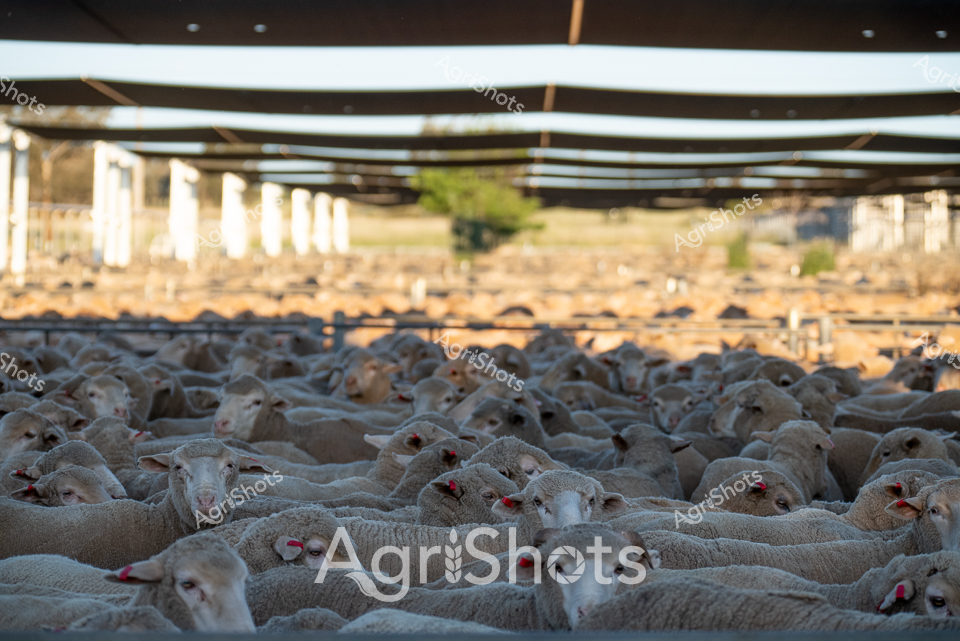
A dense flock of merino ewes huddles tightly beneath expansive shade sails in a classic Riverina sale yard, their woolly grey-white bodies creating a textural landscape of soft curves and alert faces. The late afternoon light casts golden highlights across the yard's rocky ground, creating dramatic contrast with the tightly packed sheep. Each animal bears a distinctive red identification tag, marking them for auction and highlighting the systematic precision of Australian livestock trading. The overhead shade structure - a quintessential feature of rural agricultural infrastructure - provides critical protection from the intense regional heat, allowing the animals to remain calm and comfortable during the sale process. Packed closely together, the sheep demonstrate the remarkable breeding consistency of merino flocks, their uniform fleece and muscular frames testament to generations of careful agricultural selection. This image captures the nuanced choreography of rural commerce - where animal husbandry, economic transaction, and environmental adaptation intersect in a single, compelling moment.
 Image
Image
Sleek black Angus cattle cluster in a sunlit livestock yard near Goondiwindi, Queensland, their muscular bodies casting shadows on the dusty ground. A stockworker moves confidently among the herd, guiding and sorting the cattle beneath expansive shade sails that provide critical protection from the intense summer heat. The metal cattle yards gleam with precision engineering, their galvanized steel railings creating a structured environment for livestock management. Gum trees frame the background, offering a quintessential Australian rural landscape of crisp blue skies and golden earth tones. The scene pulses with quiet efficiency - a moment of careful preparation before cattle transport, showcasing the meticulous care and professional skill of modern agricultural practice. Overhead shade cloth filters the harsh sunlight, creating a controlled microclimate that reflects the sophisticated approach to animal welfare in contemporary cattle farming.
 Image
Image
In the expansive cattle yards near Goondiwindi, a bustling feedlot pulses with agricultural activity under the brilliant Queensland summer sky. A yellow front-end loader methodically moves across the carefully designed livestock pens, preparing and maintaining the ground for a diverse herd of black, brown, and tan cattle. Overhead, strategically positioned shade sails provide critical relief from the intense sunlight, creating a structured canopy that protects the animals from heat stress. The cattle, sporting distinctive yellow ear tags, are densely clustered within meticulously organized metal pen enclosures, their varied coat colors creating a rich tapestry of bovine diversity. Precision is evident in every aspect of this operation - from the geometric layout of the pens to the careful waste management practices being implemented by the loader. The scene captures the sophisticated, modern approach to cattle farming: a harmonious blend of animal welfare, operational efficiency, and environmental consciousness under the wide, cloud-dappled Australian sky.
 Image
Image
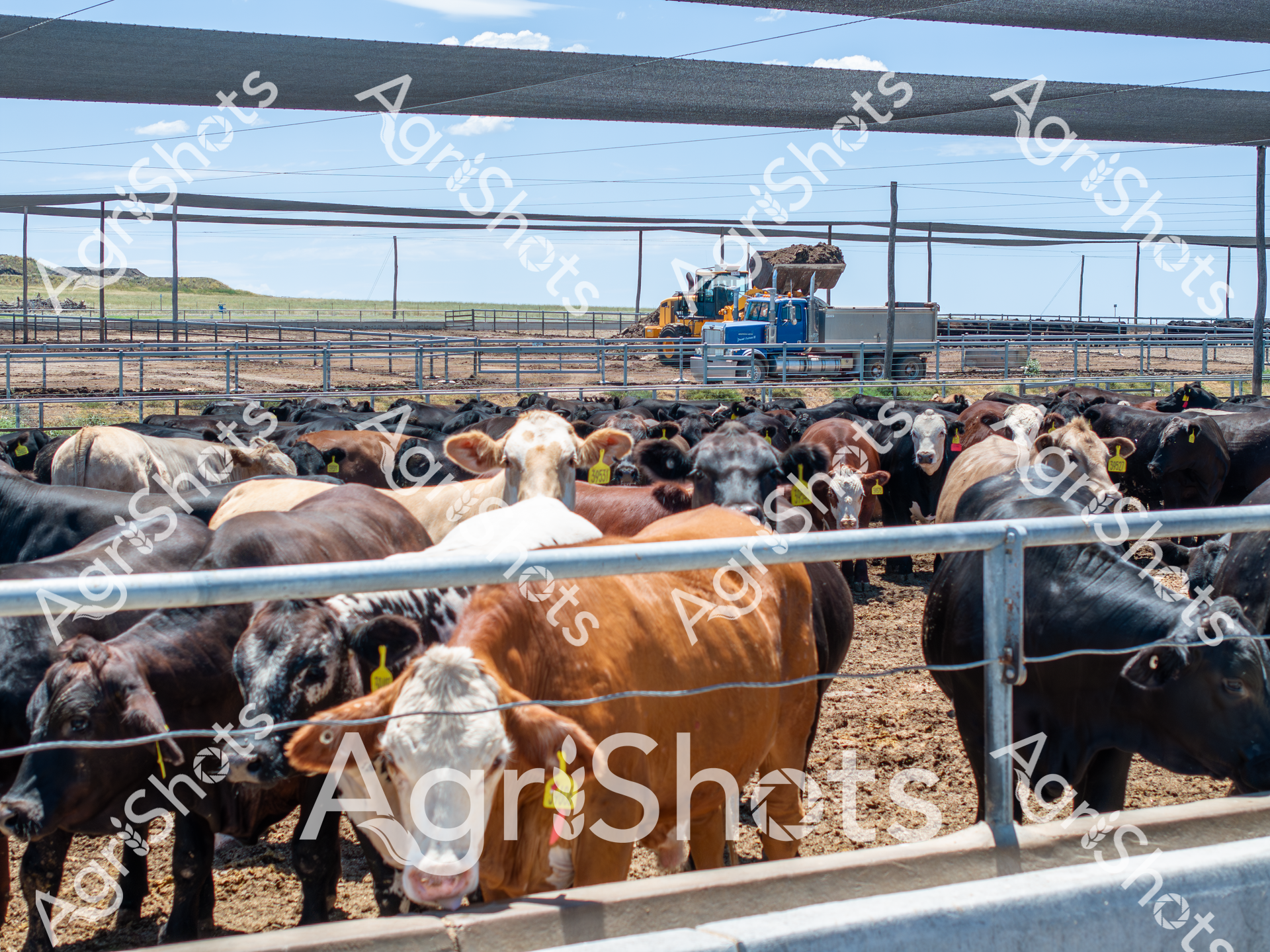
Brahman and composite beef cattle cluster together in a sun-drenched Queensland feedlot, their varied coat colors ranging from rich chocolate brown to creamy white and dappled grey. Overhead, expansive shade sails provide critical protection from the intense summer heat of the Goondiwindi region, casting geometric patterns across the dusty pen. A blue heavy-duty truck and front-end loader work methodically in the background, managing manure and maintaining the feedlot's infrastructure with precision. Yellow ear tags identify each animal, creating a uniform visual rhythm among the densely packed herd. The metallic blue and grey of the machinery contrasts sharply with the organic browns and blacks of the cattle, while the surrounding landscape reveals the sparse, arid terrain typical of inland Queensland. This image captures the meticulous management and industrial scale of modern beef production, where animal welfare, efficiency, and environmental control converge in a carefully orchestrated agricultural system.
 Image
Image
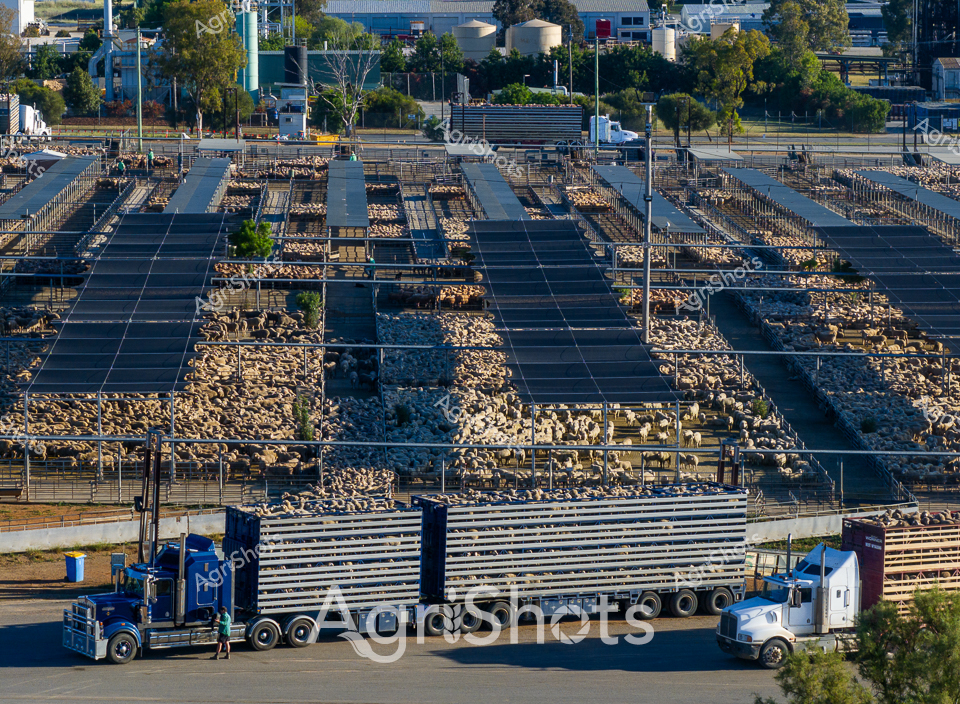
Sun-drenched saleyards pulse with agricultural commerce in this compelling portrait of livestock trading in rural New South Wales. Hundreds of sheep cluster across tiered, meticulously organized holding pens, their golden-brown bodies creating a living mosaic against dark concrete platforms. Two robust blue and white prime mover trucks stand ready for transport, their gleaming trailers lined up with professional precision beneath industrial shade structures. The expansive facility reveals a sophisticated agricultural infrastructure - carefully designed with multiple parallel lanes, robust fencing, and strategic spacing to facilitate efficient livestock movement and sale. Mature gum trees frame the periphery, providing a verdant backdrop to this industrialized agricultural landscape where generations of farming commerce converge. The crisp morning light casts sharp shadows, highlighting the geometric precision of the saleyards and underscoring the methodical nature of Australia's livestock trading ecosystem.
 Image
Image
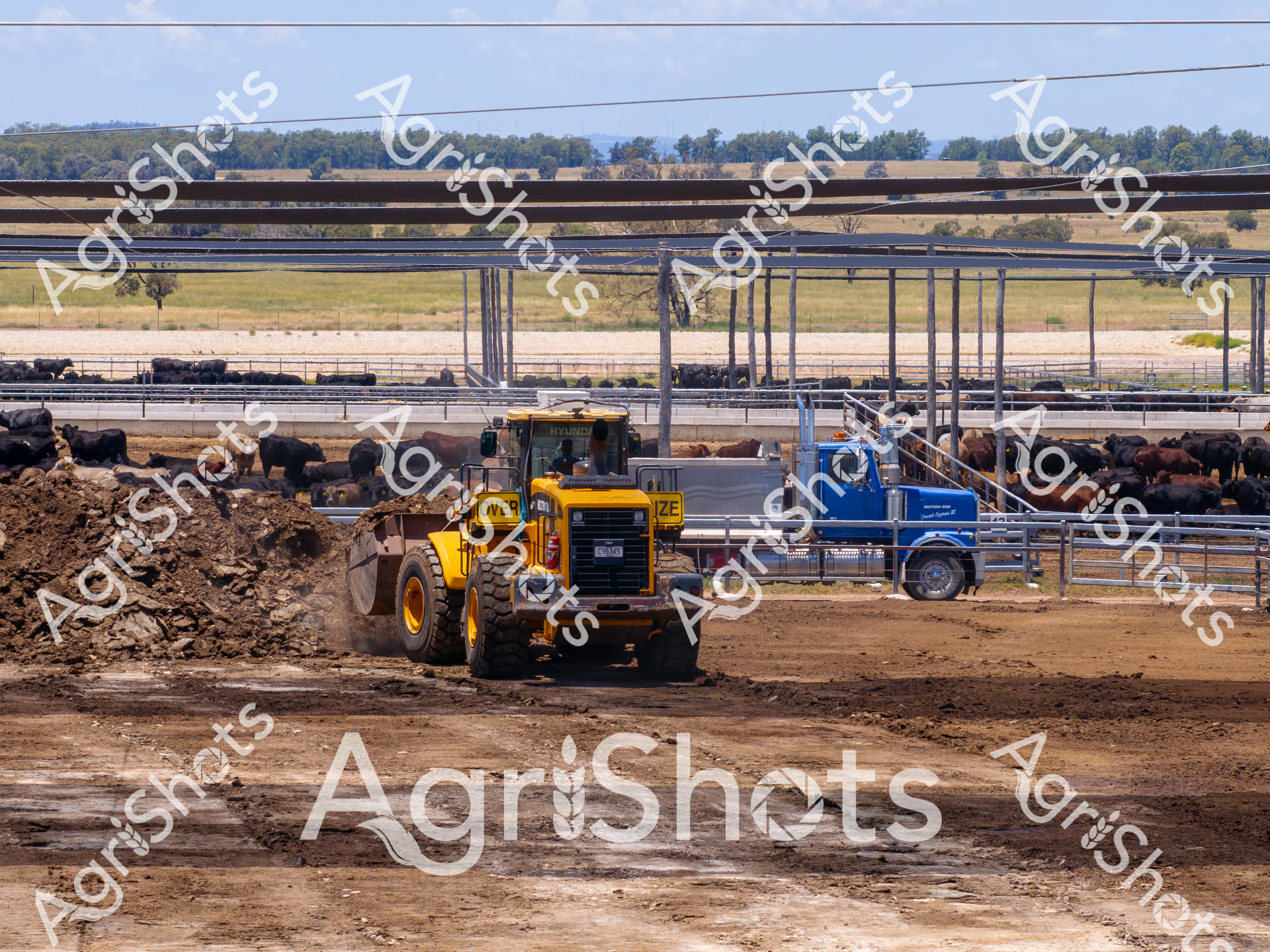
In the harsh summer heat of Queensland's Goondiwindi region, a yellow wheel loader methodically clears accumulated manure from a carefully designed cattle feedlot. Expansive shade sails stretch overhead, providing critical relief for dense herds of black and brown cattle clustered in meticulously organized holding pens. The industrial-scale agricultural landscape reveals a blue truck and sophisticated infrastructure, highlighting the precision of modern beef production. Rich brown earth and scattered dirt piles contrast with the yellow machinery, creating a textural scene of agricultural efficiency. Rows of metal fencing and structural supports frame the operation, while distant tree lines and open grasslands complete the quintessential Australian rural backdrop. This image captures the complex choreography of large-scale livestock management, where environmental control, waste management, and animal welfare converge in a systematic approach to agricultural production.
 Image
Image
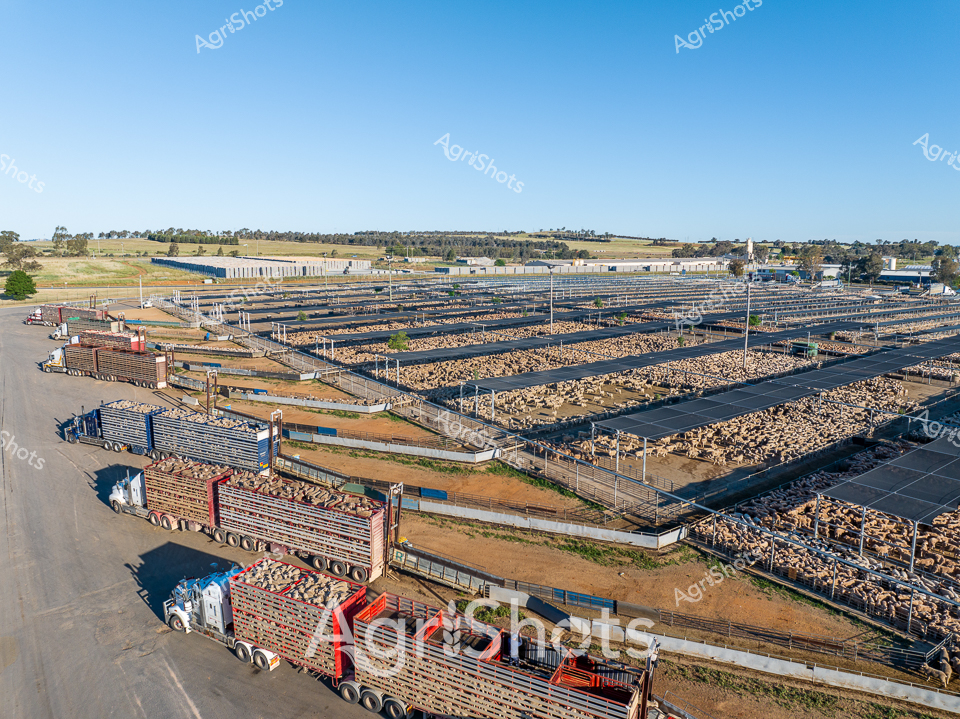
A sprawling livestock sale yard stretches across the golden landscape under a crisp blue sky, capturing the precision and scale of Australian agricultural commerce. Multiple interconnected pens are densely packed with merino sheep, their woolly bodies creating a textured mosaic of cream and tan against the dusty earth and concrete walkways. Massive multi-tiered livestock trucks in vibrant reds and blues wait alongside the pens, their complex trailer configurations designed for efficient animal transport across rural New South Wales. The meticulously organized facility features wide lanes, sturdy metal fencing, and strategically placed shade sails offering protection from the intense Australian sun. Early morning light casts sharp shadows across the sale yards, highlighting the systematic layout and revealing the robust infrastructure that supports the region's critical sheep trading industry. This aerial view encapsulates the professional, no-nonsense approach of Australian agricultural markets - a testament to generations of livestock management expertise and economic precision.
 Image
Image
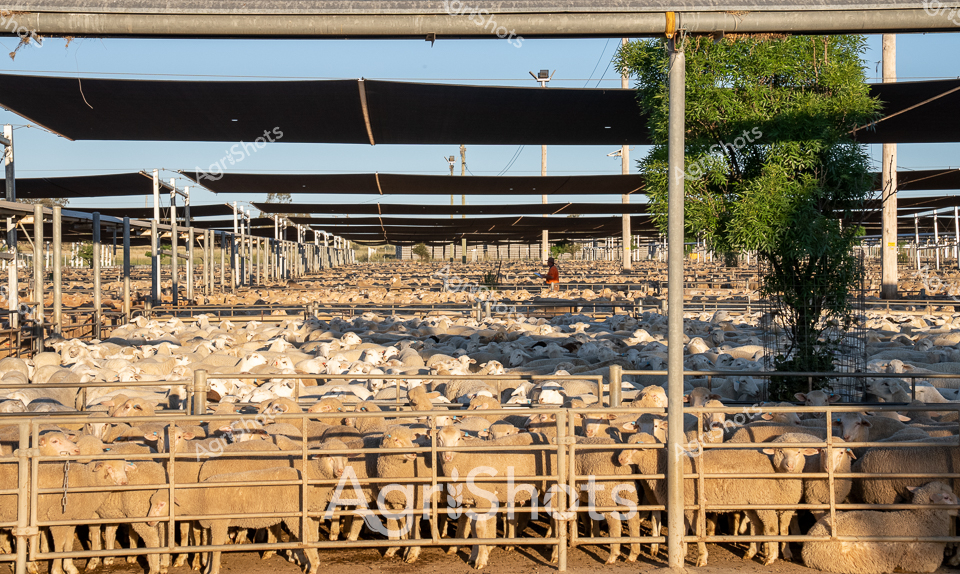
Merino lambs huddle in neat rectangular pens beneath expansive black shade sails, creating a geometric landscape of woolly white bodies at a modern Australian livestock facility. The carefully engineered overhead protection shields the young sheep from intense midday sunlight, a critical agricultural innovation in managing livestock comfort during hot rural conditions. Gleaming galvanized metal fencing divides the packed pen areas, with a lone tree providing additional natural shade at the facility's edge. Dozens of uniform lambs press close together, their fleece a uniform creamy white against the dusty golden ground, highlighting the precision of contemporary sheep farming practices. The overhead shade structure creates dramatic linear shadows and angles, transforming the livestock yard into an almost architectural composition of agricultural infrastructure. This scene captures the intersection of animal husbandry, technological adaptation, and landscape - a quintessential image of Australian agricultural expertise and environmental management.
 Image
Image
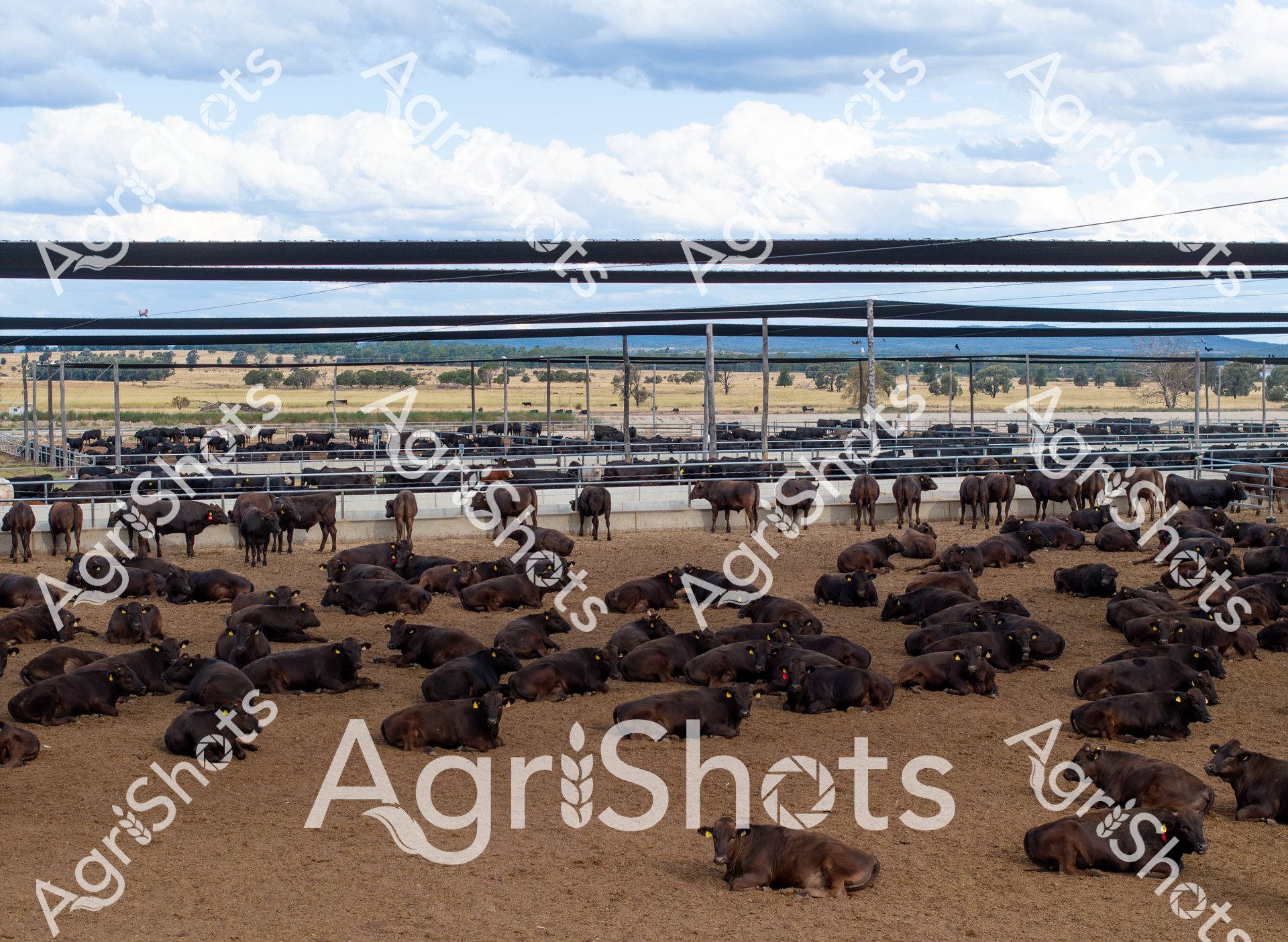
Black Angus cattle densely populate a carefully designed feedlot near Goondiwindi, Queensland, their dark bodies creating a striking contrast against the pale earth and expansive sky. Overhead, a sophisticated network of shade sails provides critical protection from the intense summer heat, allowing the cattle to rest comfortably during the hottest part of the day. Yellow ear tags punctuate the sea of black hides, indicating careful livestock management and individual animal tracking. Some cattle stand while many are recumbent, creating a living landscape of bovine efficiency within precise metal pen boundaries. The background reveals a classic Australian pastoral setting - golden grasslands and scattered eucalyptus trees stretching toward distant blue-tinged mountains, capturing the intersection of modern agricultural technology and timeless rural terrain. This meticulously organized feedlot represents contemporary cattle production, where animal welfare, systematic management, and environmental adaptation converge to support Australia's critical beef industry.
 Image
Image
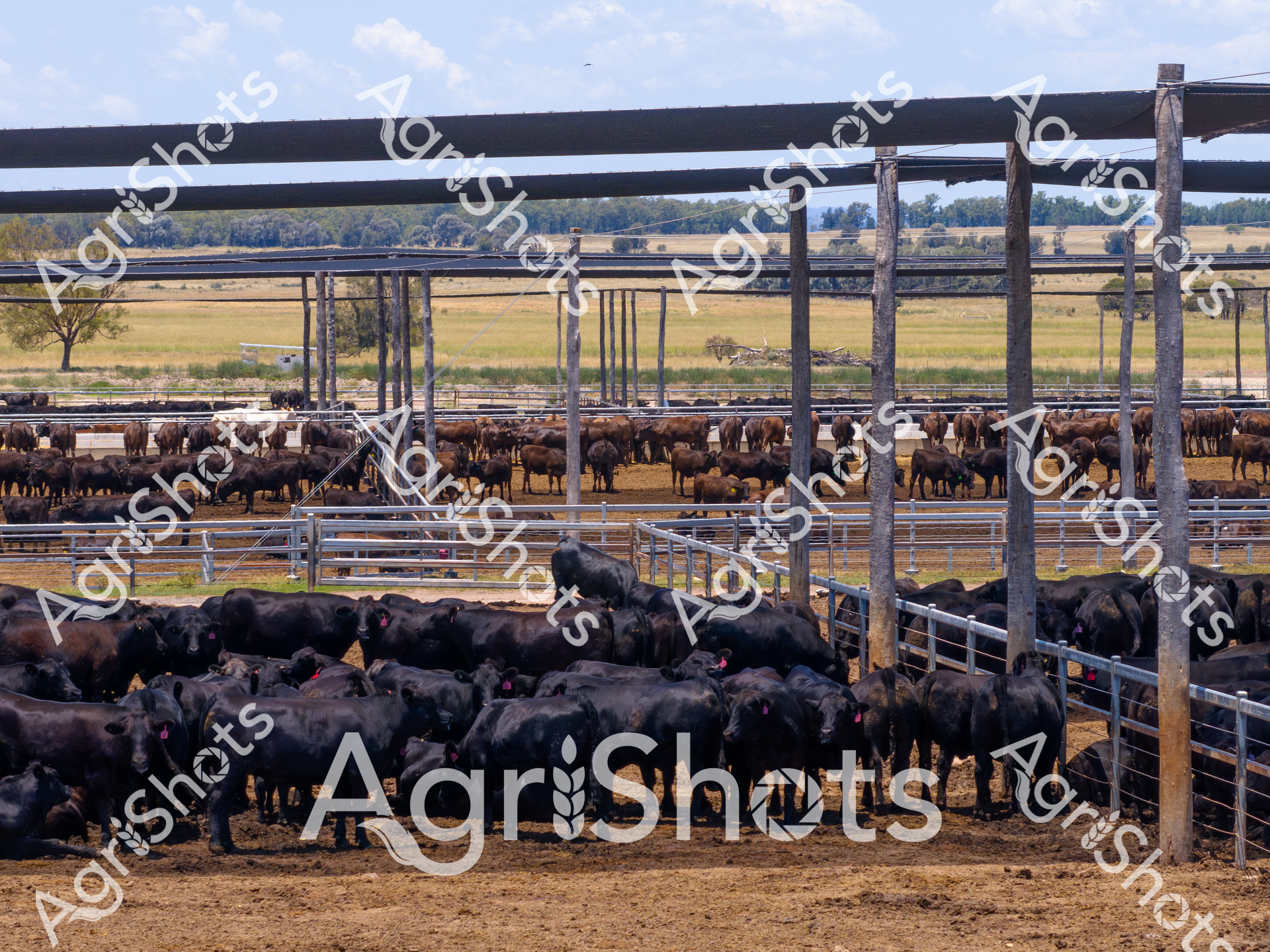
Black Angus and Wagyu cattle cluster densely in a meticulously structured feedlot near Goondiwindi, Queensland, their dark muscular bodies creating a striking contrast against the golden dry pasture and expansive blue sky. Robust timber posts and sleek metal fencing define multiple pens, with carefully engineered shade sails providing critical relief from the intense summer heat. The pristine infrastructure reflects sophisticated modern cattle management, with each pen precisely organized to optimize animal welfare and agricultural productivity. Clusters of black cattle with distinctive pink ear tags stand closely together, their glossy coats highlighting the premium genetic lines of this high-value beef production system. The landscape beyond the feedlot reveals a classic Australian rural panorama - scattered eucalyptus trees, open grasslands, and distant tree lines stretching to the horizon under a luminous cloudscape. This image captures the sophisticated agricultural engineering and careful stock management that defines contemporary Australian beef production, showcasing the intersection of animal husbandry, environmental design, and agricultural innovation.
 Image
Image
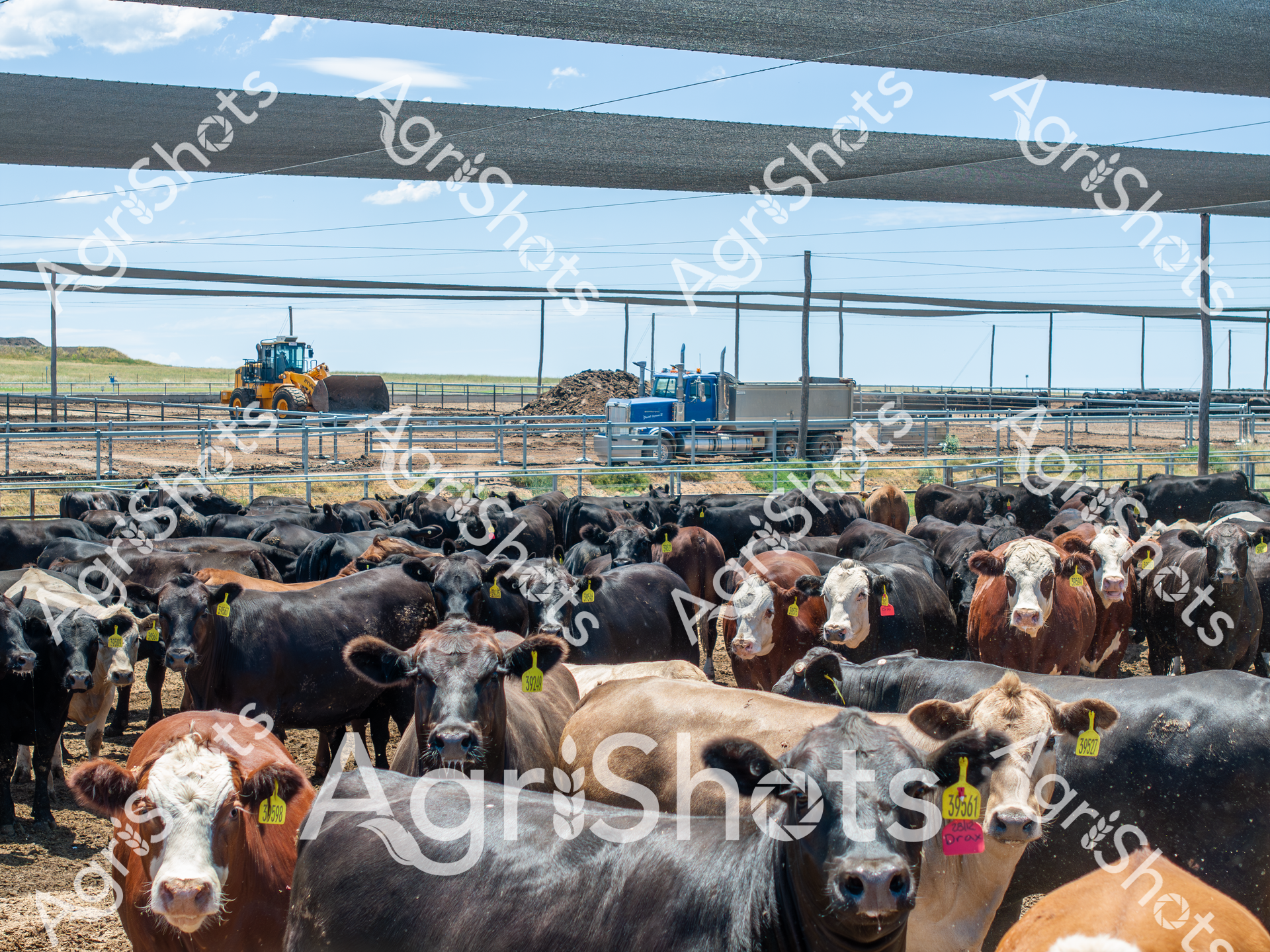
Muscled beef cattle crowd a shaded feedlot under expansive shade sails in Queensland's Goondiwindi region, their diverse coats ranging from deep charcoal to rich russet and spotted white. Numbered yellow ear tags identify each animal, highlighting the systematic management of this modern agricultural operation. A robust yellow front-end loader stands ready in the background, preparing to manage manure and maintain the pristine pen environment during the intense summer heat. The carefully designed infrastructure - with its steel railings, strategic shade structures, and carefully maintained ground - demonstrates the precision of contemporary cattle farming. Sleek black Angus and red-tinted cattle stand shoulder-to-shoulder, reflecting the genetic diversity carefully curated by agricultural professionals. The stark landscape beyond the feedlot - with its flat horizons and minimal vegetation - emphasizes the engineered nature of this controlled agricultural ecosystem, where every element is meticulously planned to optimize livestock health and productivity.
 Image
Image
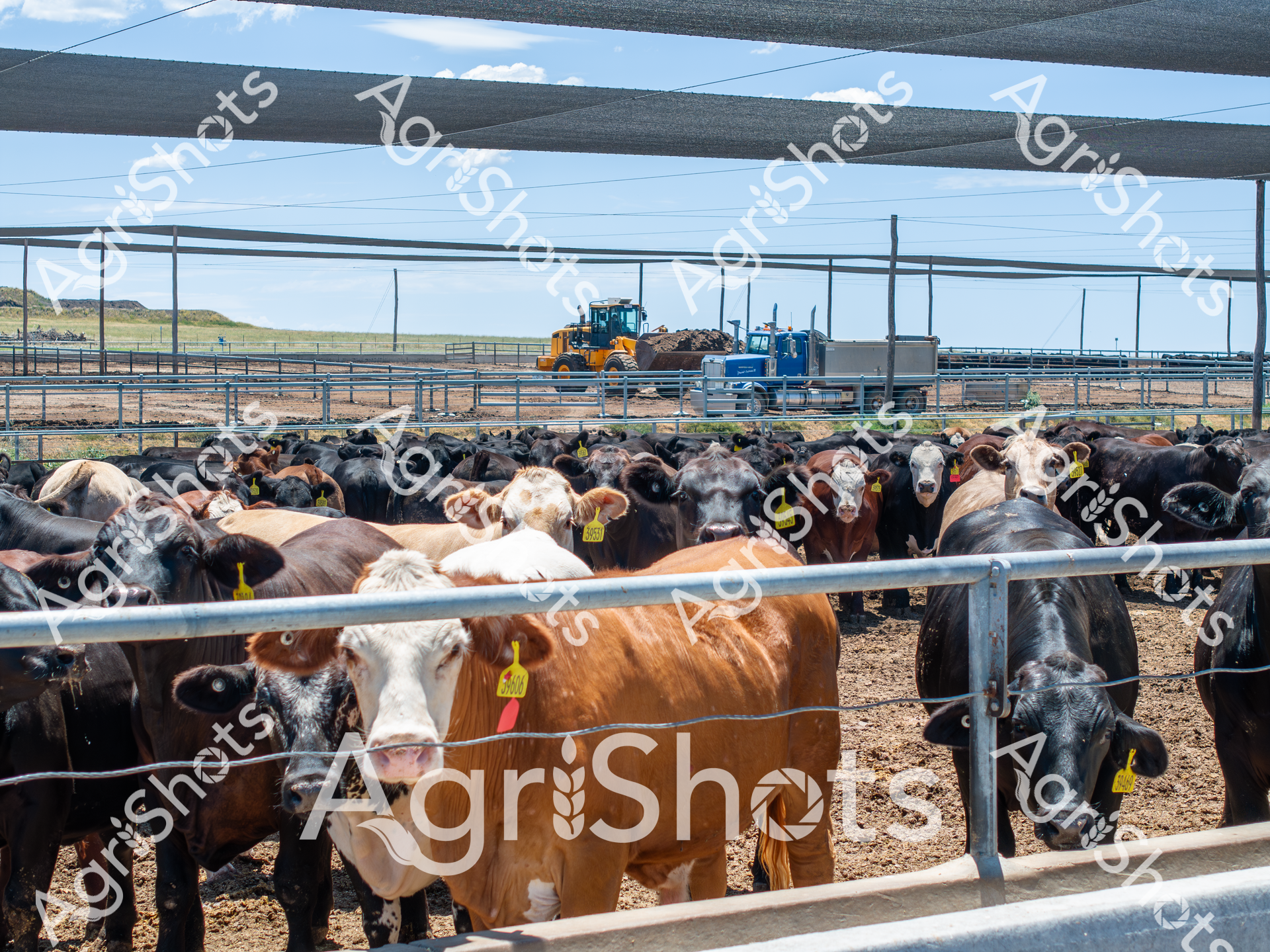
Baking under the expansive Queensland sky, this bustling feedlot near Goondiwindi pulses with agricultural precision. A dense herd of beef cattle - a mix of black, brown, and white-faced breeds - stands clustered within carefully engineered metal pens, each animal tagged with bright yellow identifiers. In the background, a robust blue truck and yellow front-end loader stand ready for pen maintenance, highlighting the sophisticated waste management infrastructure critical to modern intensive cattle farming. Shade sails stretch overhead, providing crucial protection from the relentless summer heat, their geometric lines contrasting with the organic mass of cattle below. The earth is a pale, compacted terrain, telling stories of constant movement and meticulous management. This scene encapsulates the industrial scale of contemporary Australian beef production - a complex choreography of animal husbandry, environmental adaptation, and technological intervention that defines large-scale agricultural operations in the region's challenging landscape.
 Image
Image
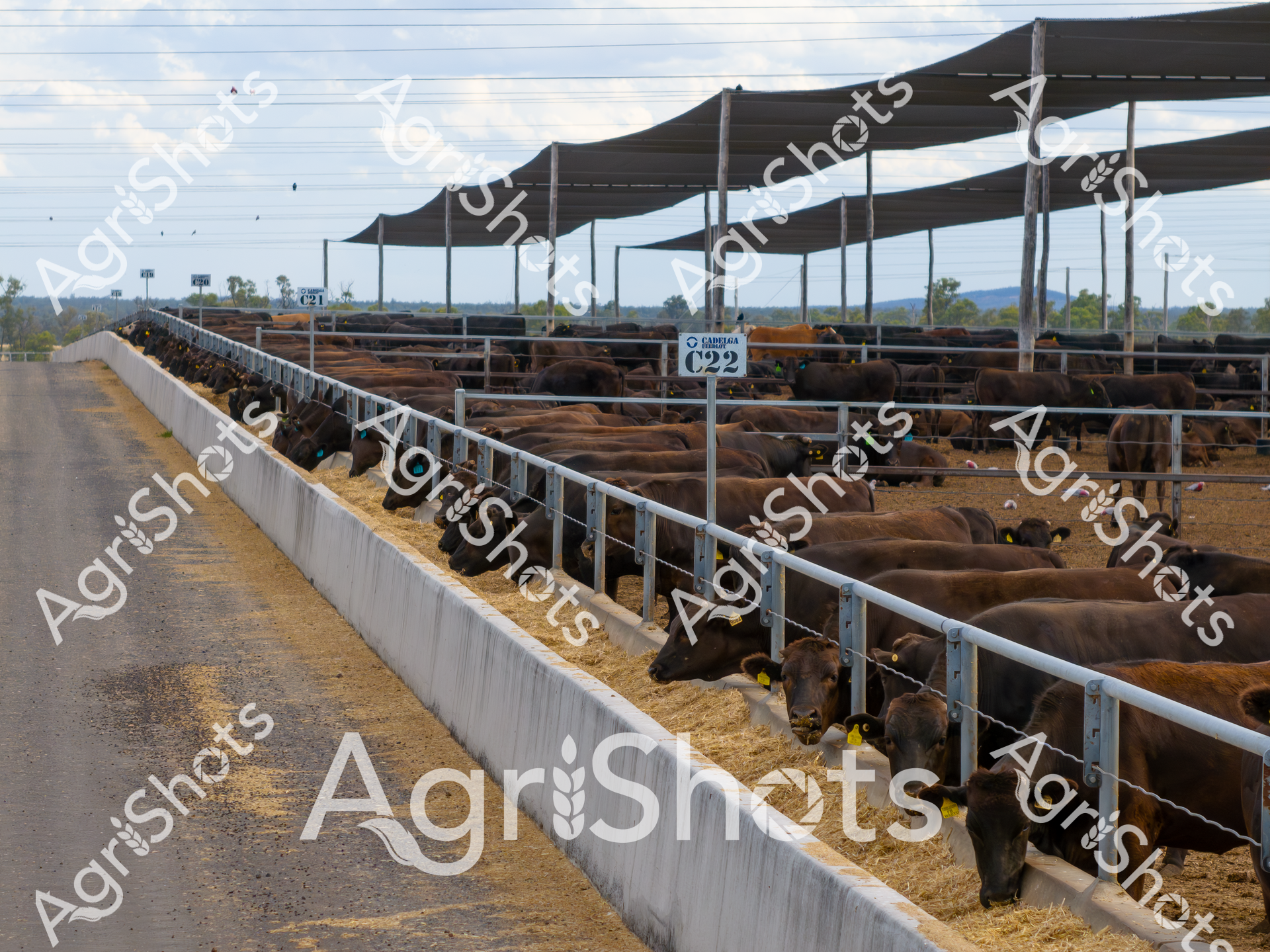
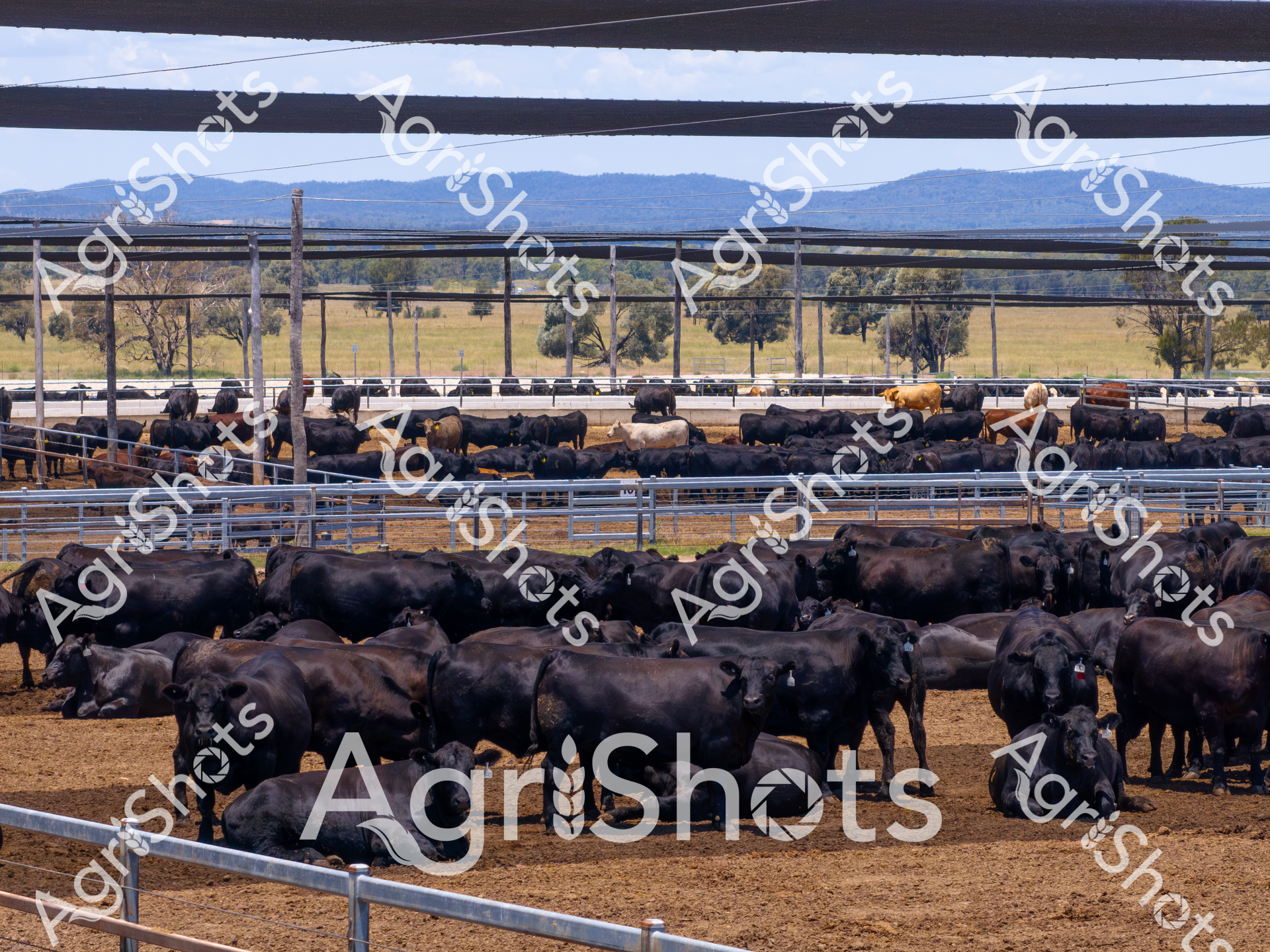
Sleek black Angus cattle huddle beneath expansive shade sails at a meticulously managed feedlot in Queensland's Goondiwindi region. Neat concrete feeding troughs line the carefully arranged pens, with yellow ear tags identifying each animal and numbered pen markers providing systematic organization. The harsh summer landscape is softened by industrial shade structures that protect the livestock from intense Australian heat, creating a regimented yet purposeful agricultural environment. Straw bedding provides comfort for the densely grouped cattle, who stand closely together, their rich dark brown coats contrasting against the pale ground and grey metallic infrastructure. Overhead power lines and distant mountain ranges frame the scene, highlighting the intersection of industrial farming and natural landscape. The feedlot represents a sophisticated approach to cattle management, demonstrating precision agriculture techniques that optimize animal welfare and production efficiency in challenging regional conditions.
 Image
Image
Muscular black Wagyu cattle cluster in neat paddocks beneath expansive shade sails, creating a meticulously organized feedlot landscape near Goondiwindi. Rolling blue mountain ranges frame the distant horizon, contrasting against the golden grasslands and rich ochre ground of the livestock holding pens. Dense groups of sleek, dark cattle stand and rest across multiple interconnected metal-railed enclosures, their powerful bodies highlighting the breed's robust musculature and premium genetic lines. Overhead shade structures provide critical protection from the intense Queensland summer heat, demonstrating sophisticated agricultural management techniques that prioritize animal welfare and performance. The strategic layout of the feedlot - with multiple tiered paddocks, precise animal groupings, and carefully engineered environmental controls - reflects the high-tech precision of modern Australian beef production. This scene captures the intersection of agricultural expertise, animal husbandry, and landscape management, presenting a compelling visual narrative of Queensland's sophisticated cattle farming industry.
 Image
Image
In the harsh expanse of a Queensland cattle feedlot, a dedicated worker battles the summer heat, meticulously cleaning a water trough surrounded by a herd of pristine Wagyu cattle. Dressed in a crisp blue work shirt and protective cap, the worker leans into his task with purposeful determination, wielding a long-handled tool to clear and refresh the critical water source. Shade sails stretch overhead, providing a temporary respite from the intense Australian sun, while rows of black-coated Wagyu cattle with distinctive yellow ear tags stand testament to the precision of modern agricultural management. The dusty feedlot floor contrasts sharply with the cloudy sky, creating a landscape that speaks to the challenging environment of cattle husbandry. Every movement speaks to the careful attention required in maintaining livestock health and comfort, with the worker's focused posture highlighting the demanding yet essential nature of agricultural work. The scene captures the intersection of advanced animal husbandry and the raw, unforgiving beauty of the Australian agricultural landscape.
 Image
Image
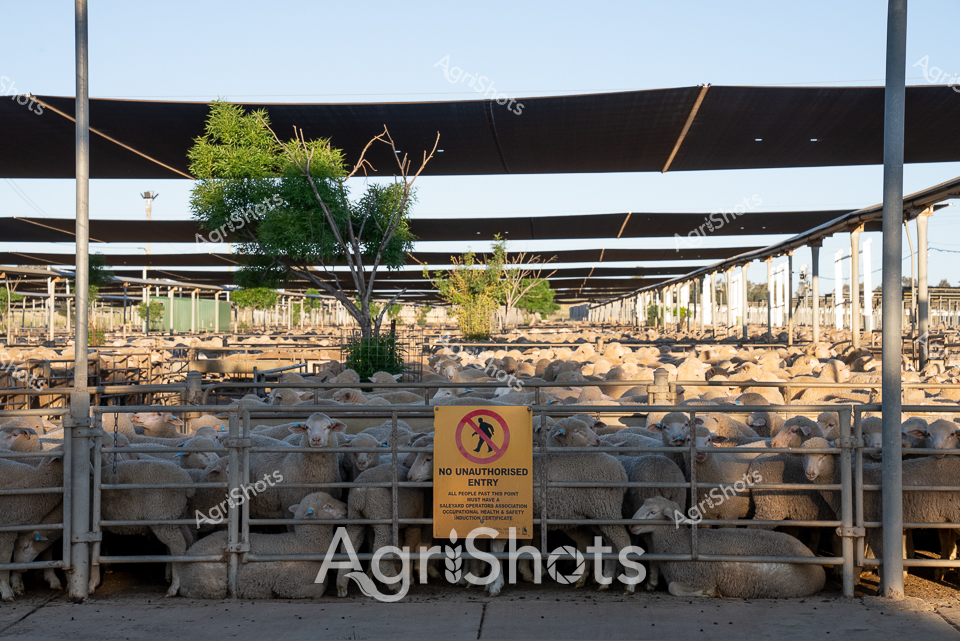
Dense flock of merino sheep crowd together in metal-fenced holding pens under expansive shade sails at a rural livestock sale yard. Crisp morning light filters through black and white shade cloth structures, casting geometric shadows across the packed yards. A prominent yellow "No Unauthorized Entry" sign stands out against the sea of woolly bodies, emphasizing strict agricultural biosecurity protocols. Verdant green trees punctuate the industrial infrastructure, softening the mechanical lines of metal gates and steel support poles. The sheep—compact and uniform—represent classic Australian agricultural breeding, their fleece a uniform creamy-beige that speaks to generations of careful merino cultivation. This meticulously organized sale yard captures the systematic efficiency of Australia's livestock trading ecosystem, where careful management, animal welfare, and commercial precision converge in a quintessential rural economic landscape.
 Image
Image
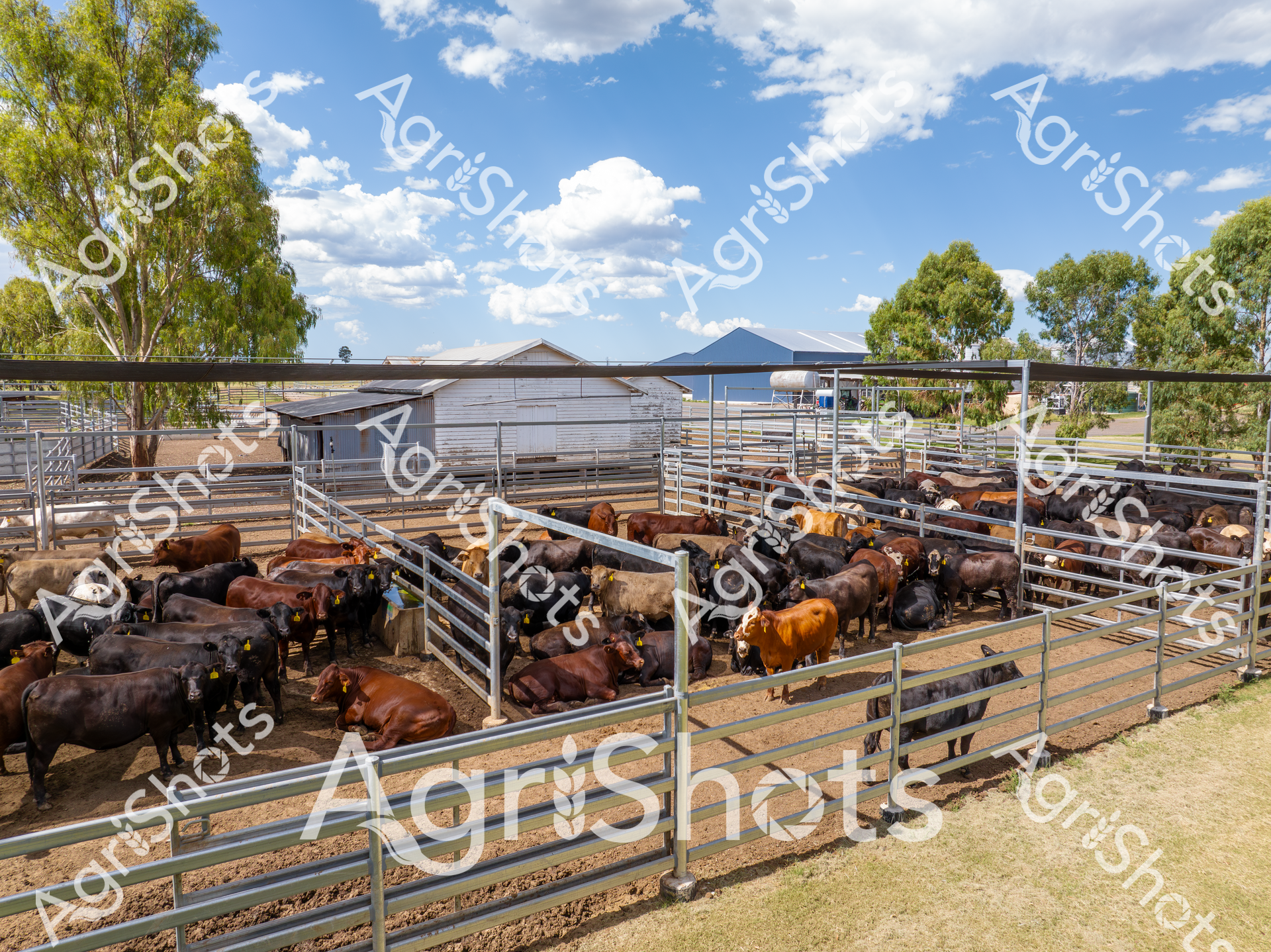
A vibrant livestock yard bustles with energy under the expansive Queensland sky, where a herd of robust beef cattle congregates in meticulously organized metal holding pens. Rich earth tones dominate the scene - deep mahogany, chocolate brown, and black cattle crowd the carefully maintained yard, each tagged with a distinctive yellow identifier. Surrounding gum trees provide a verdant backdrop against brilliant blue skies punctuated by fluffy white clouds, creating a quintessential Australian rural landscape. The cattle, a mix of breeds typical to northern Queensland, stand and rest in the compact yard, their muscular frames suggesting prime beef stock prepared for transport. A weathered corrugated iron shed sits in the background, offering additional context to this professional agricultural setting. The precise arrangement of galvanized metal fencing and the careful management of the livestock yard demonstrates the sophisticated approach to modern cattle farming in the Goondiwindi region, where agricultural expertise meets practical infrastructure.
 Image
Image
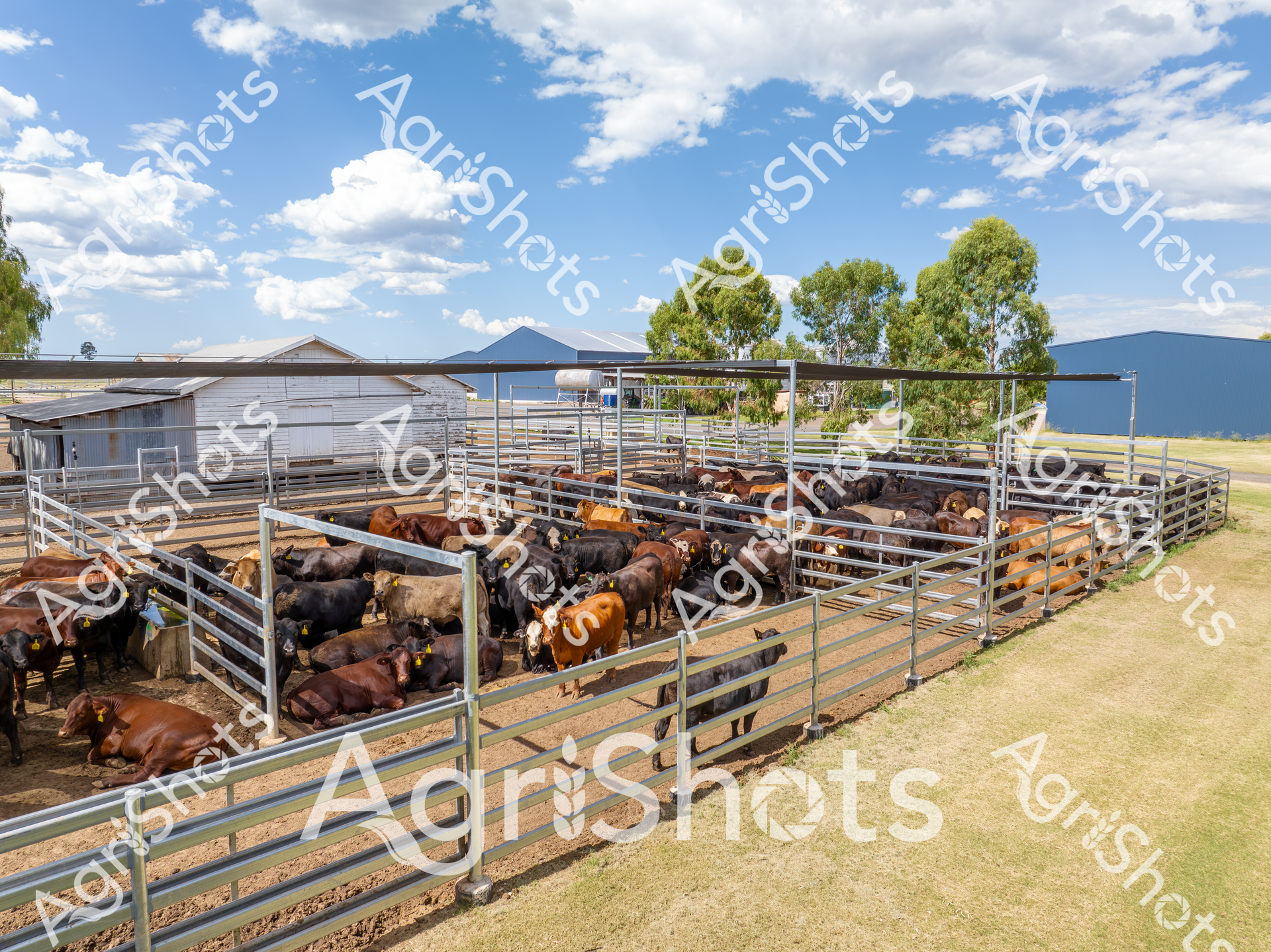
Muscled beef cattle cluster in neat metal yards under vast Queensland skies, their rich auburn, chocolate, and black hides gleaming in the mid-morning sunlight. Sturdy steel livestock panels create a precise geometric pattern, dividing the herd into manageable sections near a weathered rural shed and expansive blue industrial building. Yellow ear tags punctuate the animals' coats, marking each beast for identification and tracking. The landscape reveals a classic Australian cattle station - gum trees providing dappled shade, manicured grass verges contrasting with the packed earth of the holding pens, and puffy cumulus clouds drifting across an impossibly blue horizon. These cattle represent the backbone of northern Queensland's agricultural economy, carefully managed and prepared for potential transport or sale. The scene epitomizes rural agricultural infrastructure - functional, methodical, and designed with the precision that defines modern Australian livestock management.
 Image
Image
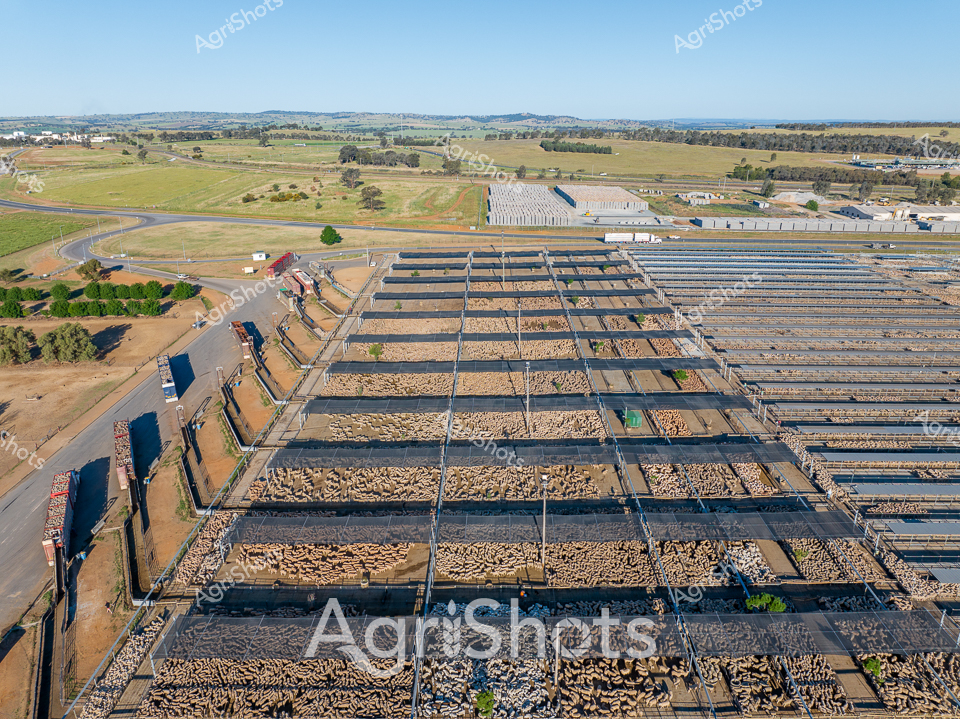
In the golden light of early morning, a vast livestock sale yard stretches across the undulating pastoral landscape of rural New South Wales. Hundreds of sheep cluster in neat, geometrically divided holding pens, their woolly forms creating a dense, textured carpet of beige and white against the dark fencing. Robust road trains and cattle trucks line the perimeter, ready to transport livestock, while modern shade sails provide crucial protection from the intense Australian sun. The surrounding farmland rolls away to distant hills, with neat paddocks and scattered gum trees framing the expansive agricultural infrastructure. This meticulously organized sale yard represents the heartbeat of Australia's sheep industry - a sophisticated, efficient system where farmers, traders, and agricultural professionals converge to trade livestock, sustaining a critical sector of the nation's agricultural economy. The aerial perspective reveals the scale and precision of modern farming practices, showcasing how technology and strategic design transform traditional livestock trading.
 Image
Image
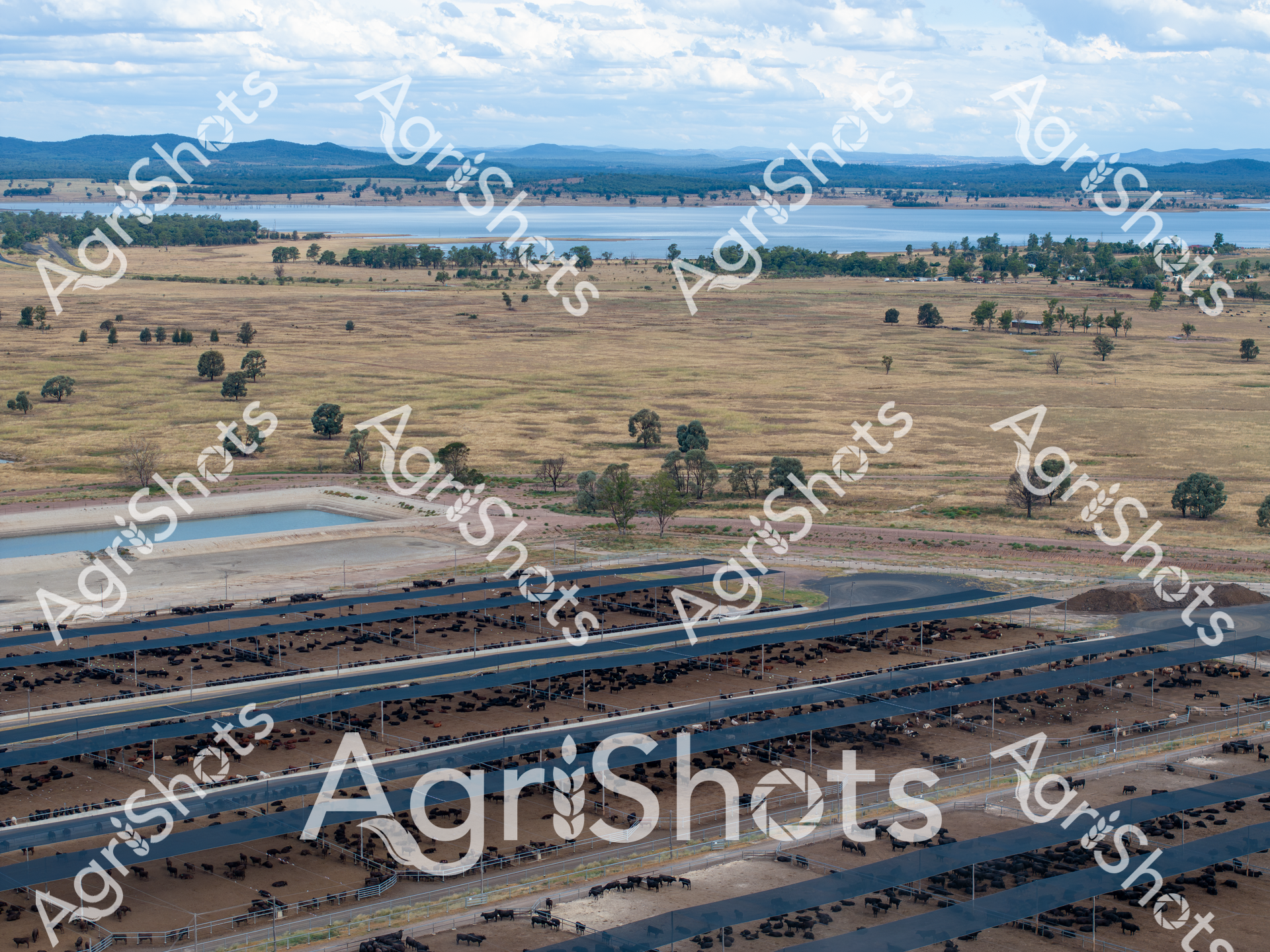
Expansive cattle feedlot stretches across the undulating pastoral landscape of Queensland's Goondiwindi region, a testament to modern agricultural engineering. Meticulously designed parallel feeding lanes are sheltered by striking blue-grey shade sails, providing critical heat protection for hundreds of black cattle during the intense summer months. Careful infrastructure design allows efficient movement and management, with wide concrete lanes separating densely packed livestock areas and providing access for feeding and monitoring. In the background, a vast golden grassland extends toward distant blue mountain ranges, with a large water reservoir reflecting the cloudscape, highlighting the strategic water management essential to this agricultural operation. The feedlot represents a sophisticated approach to cattle production, balancing animal welfare with systematic agricultural productivity. The layered landscape captures the complexity of contemporary Australian agriculture - where precision engineering, environmental adaptation, and livestock management converge in a single, breathtaking vista.
 Image
Image
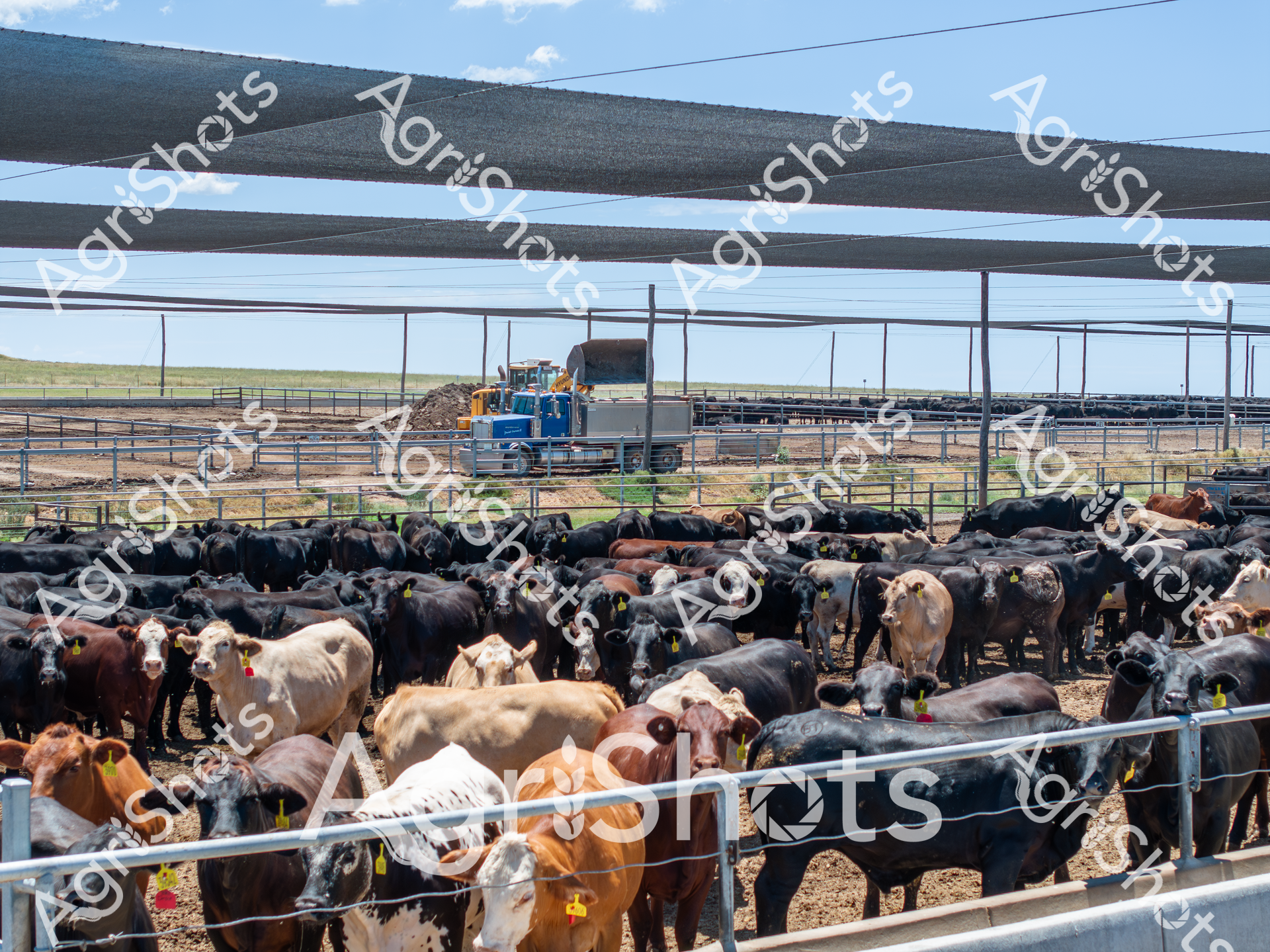
Tightly packed within a meticulously maintained feedlot near Goondiwindi, a diverse herd of cattle clusters beneath expansive shade sails. Sleek black Angus and rich brown-toned cattle stand shoulder to shoulder, each marked with a distinctive yellow ear tag, signaling careful livestock management. A robust blue truck and heavy machinery positioned in the background suggest ongoing pen maintenance, with workers systematically managing manure and preparing the feeding area for optimal animal welfare. The harsh Queensland summer landscape stretches beyond the metal fencing, with bright sunlight and cloudless skies emphasizing the importance of the overhead shade protection. Yellow tags punctuate the sea of cattle coats - deep charcoal, rich mahogany, and creamy white - creating a living tapestry that speaks to careful breeding and agricultural precision. The scene captures the intricate balance of modern cattle farming: strategic infrastructure, animal comfort, and systematic land management working in harmonious collaboration.
 Image
Image
Nestled in the golden plains of Queensland's Goondiwindi region, a sprawling cattle feedlot stretches across the landscape, a testament to modern agricultural precision. Hundreds of black cattle occupy meticulously designed feeding pens, sheltered by long blue-grey shade sails that protect the livestock from the intense summer heat. The expansive facility sits against a backdrop of distant blue mountains and a serene lake, creating a striking contrast between industrial agricultural infrastructure and the natural landscape. Carefully engineered water channels and feeding lanes divide the pens, allowing efficient movement and management of the cattle herd. The surrounding countryside appears dry and sun-bleached, with scattered eucalyptus trees punctuating the golden grasslands, highlighting the critical role of infrastructure in supporting livestock production in challenging Australian agricultural environments. This aerial view captures the scale and sophistication of contemporary beef production, where strategic design meets environmental adaptation.
 Image
Image
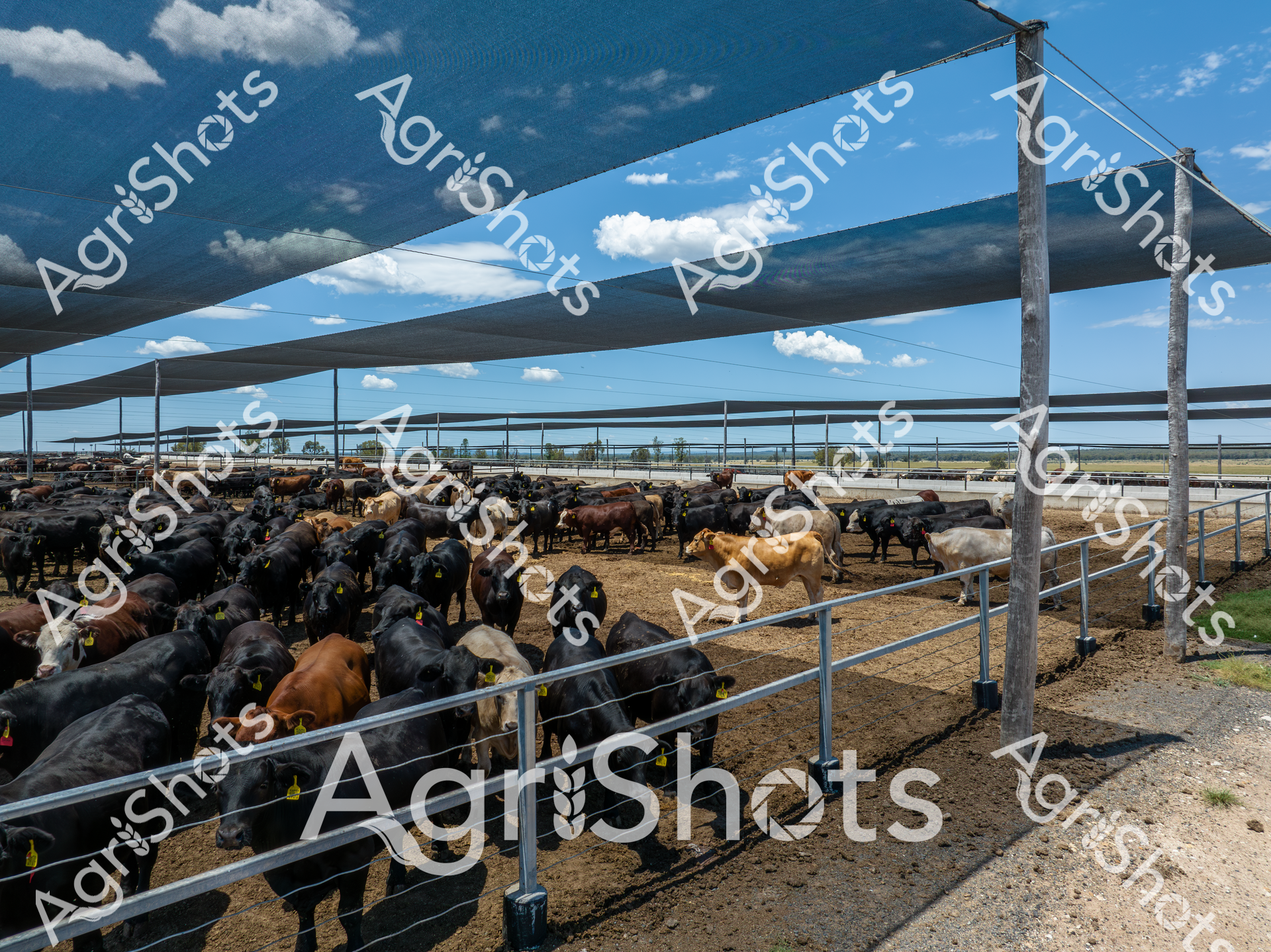
Compact and tightly grouped, a diverse herd of beef cattle cluster within a meticulously engineered feedlot near Goondiwindi, Queensland. Sleek black Angus cattle intermingle with rich russet-brown and cream-colored animals, each bearing a distinctive yellow ear tag, suggesting careful livestock management. Expansive shade sails stretch overhead, providing critical protection from the intense summer sun, their geometric lines creating a striking contrast against the brilliant blue sky dotted with pristine white clouds. The carefully constructed metal railings and packed earth paddock demonstrate sophisticated agricultural infrastructure, designed to optimize cattle weight gain and animal welfare in the challenging Queensland climate. Yellow ear tags and the uniform layout reveal a professional, data-driven approach to cattle production, where each animal represents a carefully tracked investment. The scene captures the intersection of modern agricultural science and traditional cattle farming, showcasing how Queensland's beef industry balances efficiency, animal care, and environmental adaptation.
Well, you've ploughed through the whole field!
No more crops to harvest here, mate.
Try searching for something else in our library of 50,000+ royalty-free media: